Decisions per Gigabyte: 20 Small Strategy Games That Weigh Less Than One Shooter
Deckbuilders, RTS, colony sims, tactics and 4X — each under 15 GB, each on Steam, each with embedded gameplay so you can watch before you pay. A recon with no sponsors and no listicle filler: 48 candidates in, 20 out, every number checked against Steam as of July 31, 2026.
🎮 20 games + a bench💾 ≈65 GB all together🇺🇦 2 Ukrainian▶ gameplay in every card📅 data cut 31.07.2026
Black Ops 7 asks for 116 GB at launch — and grows to ~300 if you install everything it thinks of itself. The twenty games in this recon weigh ≈65 GB combined. Half of one shooter — and that half holds more strategic decisions than its entire campaign plus the season passes.
That is not a paradox, that is accounting. Gigabytes in a modern game buy 4K textures, cinematics and voiceover in seventeen languages. All of it sells the trailer beautifully and adds nothing to the only question strategy ever asks: what will you decide next turn, and what will it cost you. Gigabytes buy textures. They do not buy decisions.
Why this recon now: first, 2023–2026 turned out to be a golden age of small strategy games — tools got cheap, and tiny studios started out-designing publisher mastodons. Second, an adult schedule leaves 30–60 minute sessions, and these games are engineered exactly for them. Third, your SSD is not made of rubber, and a cloud backlog is self-deception with a progress bar.
An honest warning from the other side of the trench: small size is not a virtue by itself. Sometimes pixel art is a style, sometimes it is an alibi. So the filter was double: weight under 15 GB and a mechanic that exists nowhere else — plus the live Steam rating as a sanitary line. Of 48 candidates, 20 survived to the final; eight more sit honestly on the bench with an explanation of what exactly failed them.
How to read the cards
Every game carries a passport: genre, weight, Steam price in hryvnias, rating (the percentage of positive reviews and their count — never one without the other), a typical session length, and an H/M confidence label on the numbers. Plus our joke-metric DpG — “decisions per gigabyte”: the rating percentage divided by the weight in gigabytes. The formula is deliberately dumb and honest: it does not measure genius, it measures density. Songs of Syx with its megalopolis in 300 megabytes gets shamelessly favored by it.
Under every card there is embedded YouTube: gameplay or an honest review, so you can see the game in motion before paying. A click on the preview loads the player (before the click, the page pulls nothing from YouTube — and nothing tracks you).
Quick navigation
Widget 01 · Personal picker
Pick your game in 30 seconds
Three questions — three personal recommendations from the list below. No signup, no cookies, no “the algorithm thinks”.
1/3 · What mode is your brain in today?
2/3 · How much time do you actually have?
3/3 · How much disk space are you willing to give?
Your three:
The logic is open: mood match ×2, session match ×1, the weight limit is hard. Ties are broken by Steam rating.
The Shelf: 20 Games
Widget 02 · Shelf filter
Narrow the list to yourself
15 GB
Showing 20 of 20 — everything fits.
The filters drive the cards below and the comparison table rows. Without JS you simply see all 20 — minus the magic.
№01
Inscryption
genre: deckbuilderstudio: Daniel Mullins Games · Canadayear: 2021size: 3 GB Hprice: ₴349Steam: 96.8% · 147 363 reviewssession: ~40 min M
Inscryption isn't a deckbuilder — it's field surgery without anesthetic: to put a strong beast on the table, you cut open a weaker one yourself.
Blood costs more than mana here — sacrificing your own card on the table outweighs any spell. Over a single playthrough, the operating room changes its whole profile three times: a pseudo-3D table with a webcam, a 16-bit RPG, a pixel-art horror adventure — and everywhere, the same diagnosis for the patient. One twist even asks you to point your device's camera at the screen to "scan" a homemade card back into the game.
A session runs 40 minutes, but that's enough time for the story to peel back a second layer under the skin of the first. Save it for evenings when you want a plot with a scalpel, not another "one more turn."
That same year, 2022, the game took both the IGF Grand Prize and Game of the Year at the Game Developers Choice Awards — a rare double. A million copies sold in under three months: turns out audiences love watching an autopsy.
Inscryption is the first game in history to win both the IGF Grand Prize and Game of the Year at the Game Developers Choice Awards in the same year (2022).
Sales topped 1 million copies in under 3 months after the PC release (October 19, 2021 - January 2022).
The story is split into 3 acts, each with completely different mechanics and visual style, within a single playthrough.
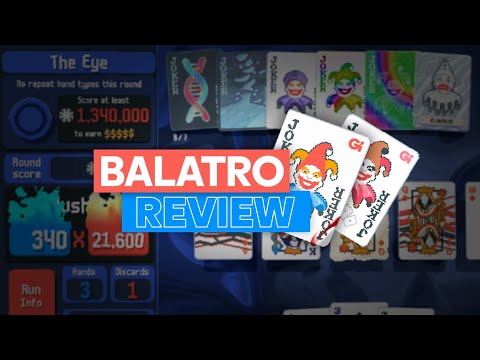
genre: deckbuilderstudio: LocalThunk · Canadayear: 2024size: 0.15 GB Hprice: ₴260 ₴325Steam: 97.8% · 195 856 reviewssession: ~30 min M
This isn't poker for money — it's a controlled chain reaction in a deck of cards: you draw a pair or a flush not to win the hand, but to set off a cascade of multipliers that rips the score to shreds.
150 Jokers rewrite the scoring formula itself — 105 are available from your very first run, the other 45 have to be coaxed out with specific conditions. The strongest hand here isn't the strongest by poker's own rules, but the one that resonates with whatever Joker lineup you've got this run. There's no progress between runs: everything flares up and burns out in a single session.
A session runs 30 minutes and weighs a mere 150 megabytes — and it still eats your whole evening, then one more, the 'last' run.
Over 5 million people have already lost their sense of moderation to the Jokers, and The Game Awards handed the game three wins out of five nominations — not one of them for protecting your sleep.
150 unique Joker cards in the base game: 105 are available right away, the other 45 unlock through specific conditions.
Over 5 million copies sold as of January 2025 — less than a year after its February 20, 2024 release.
At The Game Awards 2024, the game took home 3 wins (Best Indie, Best Debut Indie, Best Mobile Game) out of 5 nominations; in 2025 it added a BAFTA for Best Debut Game and Game of the Year at the Game Developers Choice Awards.
genre: deckbuilderstudio: Shiny Shoe · USAyear: 2025size: 3 GB Hprice: ₴515Steam: 95.3% · 10 007 reviewssession: ~60 min M
Monster Train 2 doesn't line its fighters up in a row — it stacks them floor by floor up a train car: this is high-rise defense, and the assault always climbs up from below.
The mechanics shove enemies and allies between floors — up or down, whichever floor is more convenient for them to die on. At the start of a run you pick a combination of two clans (five in total) and stitch their cards into one synergy, defending the Pyre on the top floor. The sequel adds unlockable Pyre Hearts — cores with different passive bonuses that you first have to earn by clearing challenges.
A session runs an hour, so this is an evening with nothing else on the calendar, not a coffee break.
Metacritic put it at 87/100, Steam players at 95.3% positive; for a sequel that landed exactly 5 years after the original, this isn't a re-release — it's a second siege of the same fortress, just with better artillery.
Metacritic 87/100, and on Steam it's "Overwhelmingly Positive" (95% out of roughly 5,000 reviews) as of release.
The sequel offers 5 clans to choose from, each with its own set of cards and synergies that can be combined in pairs.
It released on May 21, 2025 - exactly 5 years after the original Monster Train came out (2020).
genre: deckbuilderstudio: Sad Socket · Brazil / USAyear: 2025size: 0.49 GB Hprice: ₴299Steam: 92.5% · 22 679 reviewssession: ~12 min M🇺🇦 Ukrainian loc.
9 Kings builds an entire kingdom faster than your tea has time to cool: not a strategy game but medieval fast food — from the first brick to a war with the neighboring king in one sitting.
You don't lay cards out one at a time here — you toss them on top of one another right on the table, like ingredients into a frying pan, and out of that come thousands of build combinations. City economy and troop deployment run at the same time, in real time, so pausing to think is a luxury this game doesn't give you. One full cycle — from the foundation to the final battle — takes 10-15 minutes.
This is a dish for one snack between meetings, not an all-night dinner. And by the way: this is a rare case for the guide — a game that speaks Ukrainian right out of the box.
Over 250,000 copies sold in early access's first week, over 400,000 in the first month: the recipe worked. It weighs in under 0.5 GB — less than the average podcast — with enough decisions packed in to last a whole season.
Over 250,000 copies sold in early access's first week (May 2025), and over 400,000 in the first month (Wikipedia).
About 92-93% positive reviews on Steam, from several thousand reviews shortly after release.
Nominated for Best Early Access Game at the Golden Joystick Awards 2025.
genre: deckbuilderstudio: Pengonauts · Canadayear: 2025size: 3 GB Hprice: ₴189 ₴270Steam: 97.1% · 4 266 reviewssession: ~40 min M
StarVaders isn't a tactics game — it's version control for combat: don't like a move, you revert one commit, not the whole repository.
Cards here aren't spells with a mana cost — they're orders given to a mech, bound by the grid's geometry: the tile decides what's even possible. Chrono tokens let you roll back the last move and replay a botched combination without restarting the whole run. The three mechs — Gunner, Stinger, Keeper — are three structurally different decks, not one game wearing three costumes: the collection holds over 400 cards and artifacts across 12 pilots.
A session runs 40 minutes — pick it up in the evening when you want a calculated fight, not a random meat grinder.
Metacritic gave it 85/100, Steam players put it at 98% positive out of roughly 3,700 reviews: a rare case of critics and crowd agreeing. 100 Steam achievements are waiting for anyone who actually masters all three decks, not just the one comfortable favorite.
Steam rating of "Overwhelmingly Positive" - 98% positive out of roughly 3,700 reviews.
The collection includes over 400 unique cards and artifacts, 3 mechs, and 12 pilots to choose from.
The full 1.0 release launched on April 30, 2025, with a Metacritic score of 85/100 and 100 Steam achievements in the game.
This isn't a city-builder — it's a rotation at an outpost you'll be ordered to retreat from before you've even finished reading the manual. Sooner or later the poisonous Blightstorm will wipe the settlement off the map, and all you carry home from each cycle are your stripes: seals, decrees, the Queen's favor.
Five species — humans, beavers, lizards, foxes, harpies — pull needs in different directions, and the friction between them is always about supply lines, never feelings, so you rebuild the balance from zero for every new garrison. The game has already sold over 1,000,000 copies, holds a 91 on Metacritic, and 95% positive reviews on Steam — a scoreline from a command staff that plans ahead, not a finger jabbing at random.
Queue it up for an evening when you want to command, not click: one cycle runs about 90 minutes, and the session closes out neatly before lights-out.
You don't lose here because your garrison was weak — you lose because you got attached to the beavers and gave them too much authority.
Sold over 1,000,000 copies on Steam (passed that mark in March 2024).
Metacritic score of 91; 95% positive on Steam across more than 34,000 reviews.
Nominated for Best Strategy/Simulation Game at the 27th D.I.C.E. Awards (2024).
This isn't a critter village — it's a hydraulic-engineering exam, and the river itself is the examiner. Water here isn't set dressing, it's an actual flow simulation: every season the river runs shallow, toxic 'bad water' creeps in right behind it, and the dams and sluices are yours to calculate.
The beavers here build vertically — pilings, suspension bridges, multi-story structures spanning ravines — and picking a faction, Folktails or Iron Teeth, sets a different pace for the whole economy. The game sold over 1,000,000 copies while still in Early Access, and after nearly 4.5 years of testing and 96% positive reviews on Steam, one thing is clear: you do eventually pass the exam, just not on the first try.
Play it once you're ready to watch water levels, not just click 'build': the session still fits that same 90 minutes, but a drought doesn't check your schedule first.
What drowns you here isn't slowness — it's the confidence that one dam will be enough.
Sold over 1,000,000 copies while still in Early Access (by 2023).
Early Access ran almost 4.5 years: launched September 15, 2021, full 1.0 release on March 12, 2026.
The Steam version supports 15 interface languages, including Ukrainian.
genre: colony & citystudio: Gamatron AB · Swedenyear: 2020size: 0.29 GB Hprice: ₴515Steam: 94.5% · 9 000 reviewssession: ~90 min M
This isn't a strategy game running on averaged stats — it's demography with no rounding: instead of flattening the crowd into one 'population' number, the game keeps track of every individual person, with a job, needs, and a path across the map. The same resident you just saw behind a market stall will march into battle tomorrow wearing armor you personally made for him.
The engine simulates more than 40,000 individual units on a single map at once — and one Swede is doing it solo, since 2015, with no studio behind him. SsethTzeentach's review in April 2024 racked up almost a million views in two days and tripled the active Steam audience, from roughly 529 to 1,600 players.
Queue it up when you're ready to read in English — there's no localization — and you want to track your state at the level of individual people, not a headline reading 'economy growing.' The session fits the usual 90 minutes, though the scale tempts you to stay longer.
Losses here aren't counted in abstract units — the one who dies is that exact peasant you saw behind the counter yesterday.
Jake Blomquist (Gamatron AB, Sweden) has been developing the game solo since 2015.
The engine simulates 40,000+ individual resident units simultaneously on a single map.
SsethTzeentach's review (April 2024) racked up nearly 1 million views in 2 days and tripled the number of active Steam players (from ~529 to ~1,600).
Ostriv has no abstract stockpiles — this is circulation you can watch with the naked eye: grain doesn't travel from field to mill, and flour from mill to bakery, through some invisible system; a specific resident carries it there on his own two feet. A traffic jam on the road isn't just a queue — it's literally a clogged blood vessel.
You draw roads here as freeform curves instead of laying them on a grid, so the town ends up looking like an actual 18th-century Ukrainian village, not a building kit. The alpha already holds more than 60 building types and 7 maps, and behind all of it, since 2014, is one person from Kharkiv — the team only grew past that in 2018.
On Steam the game holds 95% positive reviews, and SteamSpy estimates it's already settled by 200,000 to 500,000 owners — not bad for a one-person project. Queue it up when you want to watch one village's life unfold instead of racing a megacity — here even 90 minutes pass more slowly, because every resident walks instead of teleporting.
If someone in the village is starving, don't look for a bad harvest — look for the miller who forgot the way to his own mill.
One developer (yevhen8, Kharkiv) started the project in 2014 and only expanded the team in 2018.
On Steam the game holds 95% positive reviews and 200,000-500,000 owners according to SteamSpy estimates.
The alpha version already has more than 60 building types and 7 maps (official site ostrivgame.com).
genre: colony & citystudio: Arcen Games · USAyear: 2026size: 5 GB Hprice: ₴399Steam: 91.6% · 2 086 reviewssession: ~6 h M
This isn't a city conquered by tank columns — it's a coup from the inside: you're a newly-awakened AI recruiting network towers and scout androids, right up until the city itself notices it's no longer run by a human.
Fail a story branch and you don't replay the same level — you play a new 'timeline' carrying the previous one's consequences. A single timeline runs 3-10 hours; a full playthrough on the hard difficulties is 50+ hours, with 4X base management constantly tipping over into XCOM-style tactical battles and choices that follow you into the next run.
It's the spiritual successor to Arcen Games' Skyward Collapse-The Last Federation-Stars Beyond Reach lineage, not a sequel to the cult classic AI War, no matter how stubbornly the press keeps drawing that parallel. Set aside a whole weekend for this one, not an evening: nobody stages a coup in a hurry.
91% positive reviews on Steam — and not one of them warns you that the toughest opponent here isn't a corporation, but a choice you made three timelines ago.
A single 'timeline' is a separate run averaging 3-10 hours by playtester estimates; a full playthrough with hard difficulties runs 50+ hours.
The game launched into Early Access on January 31, 2025 with 4 story chapters available, and the full 1.0 release landed on March 6, 2026.
91% positive reviews among roughly 1970+ user ratings on Steam.
genre: RTS & defensestudio: Digital Sun · Spainyear: 2025size: 10 GB Hprice: ₴399Steam: 89.2% · 4 249 reviewssession: ~60 min M🇺🇦 Ukrainian loc.
This isn't a builder, it's an operating theater. Every brick here is an incision, and if you get the drop angle wrong, the wall lands on your own archer squad instead of the enemy.
By day you build in tiers — wood for quick patches, stone for a long siege, and every block carries real physical weight. By night the same map turns into an operating theater against the Horrors, and wall height dictates the arc of your archers' shots: architecture here is diagnosis, not decoration. The studio took the game from Early Access to a 1.0 release in eight months, and Metacritic prescribed an 82 out of 100 — not a bad prescription for surgery without anesthesia.
Good for an evening when you want to calculate angles, not mash 'attack': one mission runs about an hour, and it covers both the build and the siege.
Ten gigabytes on disk, but enough decisions for a full surgical protocol: before you charge into battle, work out who your own wall is about to crush.
The Steam version has a Ukrainian-language interface — a rarity for an indie RTS this detailed.
The game's Metacritic score is 82/100, and 89% of its 2,248 English-language Steam reviews are rated 'Very Positive'.
Digital Sun took the game from Early Access (launched July 22, 2024) to its 1.0 release in exactly 8 months — March 20, 2025; the same studio released Moonlighter back in 2018.
The king here isn't a manager pacing the sideline. He's a player-coach: by day he chalks tactics onto the map, by night he takes the field himself against the horde.
You don't collect resources — gold drips in on its own from every building you raise, the way a won half earns you prize money, so your whole focus goes to the fight, not the logistics. The cycle of 'build by day, hack through the night' replaces the usual tower-defense waves: the game has 10 maps and 9 weapon types for the hero, and each weapon is a different tactical setup, not a cosmetic swap.
Good for 25 minutes in the evening, when you want to win matches, not grind out a season in the league: the game weighs in at just 1 GB — smaller than a texture pack for other games.
Low-poly graphics and zero micromanagement aren't a simplification — they're a roster cut down to the starting five: all that's left on the field is the fight.
Full release landed on October 11, 2024, after 14 months of Early Access that began on August 2, 2023.
The game has 10 maps, 9 weapon types for the hero, and more than 50 unlockable perks.
Within a year of release the game sold nearly 1 million copies and holds a 95% positive rating (from more than 10,900 reviews) on Steam.
This isn't an RTS about armies — it's an epidemic containment protocol: the enemy here isn't a unit but a fluid that seeps into every hollow in the terrain like an infection through tissue, and the primary weapon isn't a cannon but drainage.
A network of power poles, turrets, and terraformers all serve one goal: raise or cut the terrain so the disease drains itself straight into a trap. The main campaign runs 20 missions and about 15 hours, where the landscape matters more than the army, and firing a shot is an admission that you declared quarantine too late.
The fourth game in a series running since 2009, and the first one in it to go fully 3D. Sit down with this one when what you're after isn't combat, but weeks spent figuring out where to drain the infection before it finds you.
94% positive reviews out of 3829 ratings on Steam belong to people who got it: what wins here isn't a finger on the trigger, but a hand on the terrain.
The main campaign has 20 missions; a full playthrough takes about 15 hours.
It's the fourth entry in a series that started in 2009; Creeper World 4 is the franchise's first fully 3D game.
94% positive reviews out of 3829 user ratings on Steam.
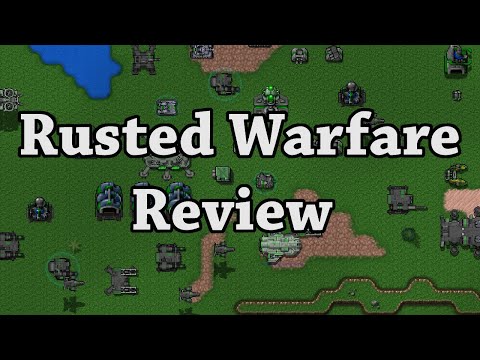
genre: RTS & defensestudio: Corroding Games · Australiayear: 2017size: 0.29 GB Hprice: ₴99Steam: 96.4% · 7 452 reviewssession: ~20 min M
This isn't a new strategy game — it's the Total Annihilation engine with rust on the hood: stripped down, oiled up, and restarted by a single developer until it now hauls thousands of units on screen at once without choking.
The Total Annihilation formula — a commander that doubles as your builder, resource extractors, macro over micro — isn't reinvented here, just polished for modern hardware. The Steam Workshop is alive and well: players write their own units, missions, and maps in Lua and publish them without studio approval, so there's always more content than you can keep up with.
It started in 2011 as one developer's Android hobby project, didn't reach Steam until 2017, and hit iOS in 2020; the free demo alone has 3.7 million downloads on Google Play. Play this when you want to command an army of thousands of units on a weak laptop, not admire shaders.
96% positive reviews out of roughly 6500 ratings on Steam — the old engine still pulls its weight, and it couldn't care less about the rust on the hood.
Started in 2011 as a solo Android project by developer Luke Hoschke; didn't reach Steam (PC) until 2017, or iOS until 2020.
The free demo alone has 3.7 million downloads on Google Play.
96% positive reviews (Overwhelmingly Positive status) among roughly 6500 user ratings on Steam.
genre: RTS & defensestudio: GSC Game World · Ukraineyear: 2016size: 8 GB Hprice: ₴279Steam: 82.3% · 16 065 reviewssession: ~60 min M🇺🇦 Ukrainian loc.
This isn't a strategy game, it's the thermodynamics of battle. You're not leading characters here — you're managing the pressure of a crowd thousands strong, and every cannonball ricochets according to a law you last saw in a school physics textbook.
Thousands of units fight on screen at once instead of the usual 100-200 in modern RTS games, and the economy runs on five resources and 100 technologies, so peacetime drags on longer than in Age of Empires. Combat isn't about micro-managing a single squad — it's managing the chaos of mass: 12 nations, 70 unit types, and up to 8 players at once turn every skirmish into a statistic, not a duel.
Good for an evening when you've got a free hour and want to work out siege logistics instead of watching your ping: one session eats up a solid hour — a full lab practical in ballistics.
The game weighs in at 8 GB, made by Kyiv's GSC Game World — the studio behind S.T.A.L.K.E.R. — and it counts victory by mass, not click speed: what wins here isn't the quickest hand, but the most precise statistics.
The developer is GSC Game World, a Ukrainian studio; Cossacks 3 came out on September 20, 2016, as a remake of the 2001 original.
The base game has 12 nations, 70 unit types, 100 technologies, and more than 140 historical buildings.
Battles support up to 8 players at once, and on-screen armies are counted in the thousands — a signature trait of the series since 2001.
genre: tacticsstudio: Suspicious Developments · United Kingdomyear: 2024size: 3 GB Hprice: ₴415Steam: 98.0% · 12 010 reviewssession: ~15 min M
This isn't tactics, it's a blueprint. No hit percentages, no hidden dice roll — the seer sees the consequences of a move before you take it, and you read the fight the way an engineer reads a bridge schematic before the concrete gets poured.
The hook is physical knockback: you can punch an enemy through a window, shove them down a staircase, or throw them onto an ally, and the level turns into a chain of dominoes, not a firefight. You can rewind a turn as many times as you want before it locks in, so you can test out an insane combo with zero penalty for failure: what matters here is calculation, not reflex.
Good for a short 15-minute break, when time's tight and your brain wants a hard problem, not autopilot: the game weighs just 3 GB and runs in English only, with no Ukrainian localization, so you'll need a little language engineering of your own.
Right after launch the game hit third place in Steam sales, and Metacritic gave it 87 out of 100: deterministic tactics sells better than random chance.
Released on August 22, 2024, and immediately became the third-best-selling game on Steam.
Won the Excellence in Design award at the Independent Games Festival 2025.
Metacritic score of 87/100, with 97% positive reviews across more than 10,000 Steam reviews.
The Last Spell isn't base defense, it's running a full structural overhaul on a front line: every morning you patch whatever the undead horde breached overnight, and count how many bricks you've got left before tomorrow's assault.
You reinforce or repair each wall segment individually, while your squad is just three to five mages against waves of enemies that thicken with every night. A hero's death here isn't a unit reskin: it's the permanent loss of a build you spent hours on.
Sit down to this in the evening, when you genuinely have 120 free minutes and the appetite to count moves instead of just clicking — and be ready for one hero not to make it to morning.
The 27th D.I.C.E. Awards nominated it for Strategy/Simulation Game of the Year, its Metascore sits at 82, and two of the three planned expansions are already out. Ukrainian localization is included — probably the only mercy this game will ever show you.
A nomination for Strategy/Simulation Game of the Year at the 27th D.I.C.E. Awards (2024).
2 expansions already out (Dwarves of Runenberg, 2024; Elves of Amberwald, 2025), with a third — Tales of Torment — planned for early 2026.
500,000-1,000,000 owners per SteamSpy estimates, Metascore 82/100.
genre: tacticsstudio: Overhype Studios · Germanyyear: 2017size: 2 GB Hprice: ₴399Steam: 88.1% · 28 428 reviewssession: ~2 h M
Battle Brothers isn't recruiting a company, it's maintaining a personnel file on every single soldier: a wound never heals without a trace, it goes into the record as a permanent penalty, and there's no erasing it after that.
Death here isn't a reskin, it's real permadeath: a veteran with forty battles behind him dies just as finally as a recruit on his very first. Three big paid expansions (Warriors of the North, Beasts & Exploration, Blazing Deserts) and two free ones added new enemies and lands where exactly this happens.
One contract takes maybe twenty minutes, but a campaign is an evening that quietly devours the night too: "one more fight" works here exactly like "one more turn."
89% positive reviews out of 25,764, three paid expansions and two free ones — numbers from a community that's used to burying its favorite veterans. There's no Ukrainian localization, so you'll have to understand "permadeath" without a translation.
89% positive reviews out of 25,764 on Steam (rated "Very Positive").
3 major paid expansions (Warriors of the North, Beasts & Exploration, Blazing Deserts) plus 2 free DLCs added during support since its release on 24.03.2017.
101 achievements in the Steam version of the game.
Shadow Empire isn't a 4X strategy, it's a design bureau for an entire planet: terrain, resources, and factions get assembled from scratch by every new campaign, and even the map underfoot is already an engineering problem, not a finished landscape.
You don't pull armor and infantry from a catalog, you design them yourself out of chassis, weapons, and armor plating; the simulation runs on 30+ unit types, 100+ tech branches, and 200+ stratagems for running a state. Every staff officer is a named individual with their own skills, not a stat line.
This is a game for a full 90 minutes, when nothing's pulling your attention away and your brain wants to build a state from zero, not finish someone else's.
Metacritic holds it at 78, Steam sits at 82% positive across more than 1,400 reviews, and nearly all of it was built single-handedly by Vic Reijkersz over 4-5 years. It weighs exactly 1 GB — the rest of the footprint is just your attention.
Metacritic score of 78/100; 82% positive reviews among more than 1,400 Steam ratings.
The simulation spans 30+ unit types, 100+ tech branches, and 200+ "stratagems" for running a state.
Built almost single-handedly by French designer Vic Reijkersz over 4-5 years; released 3 December 2020.
genre: 4X & grandstudio: League of Geeks · Australiayear: 2024size: 8 GB Hprice: ₴740Steam: 88.3% · 1 699 reviewssession: ~4 h M
Solium Infernum isn't conquering Hell by the sword, it's a hostile takeover of the board of directors, where curses get voted in instead of shares: there's no battlefield anywhere, and the winner is whoever's scheme outlasts the meeting.
Up to eight archdevils simultaneously spin conspiracies, curse rituals, and public insults in the Hall of Hell, and the currency here is reputation and fear — both of which one well-played intrigue can wipe out in a single turn. Multiplayer is asynchronous for 2-6 players, so a match drags on for weeks of real time between the turns of busy people.
A single sitting at the screen can easily burn through two to four hours — this isn't an evening format, it's a dedicated block of time for those ready to hold alliances in their head for days.
The 2024 remake by League of Geeks holds 88% positive reviews from more than 1,500 ratings; the 2009 original was made by one person, Vic Davis. It weighs 8 GB, and your allies will sell you out far faster than that.
The original came out in 2009 from solo developer Vic Davis (Cryptic Comet); League of Geeks released the remake on 22 February 2024.
On Steam the game holds a "Very Positive" rating — about 88% positive reviews from more than 1,500 ratings.
The game features up to 8 archdevil contenders for the throne, with asynchronous multiplayer for 2-6 players.
Click a column header to re-sort; click a row to jump to that game’s card. The filters above apply here too.
# ↕
Game ↕
Genre ↕
Size, GB ↕
Price, ₴ ↕
Steam, % ↕
Reviews ↕
Year ↕
Session, min ↕
DpG ↕
01
Inscryption
deckbuilders
3
349
96.8
147 363
2021
40
32
02
Balatro
deckbuilders
0.15
260
97.8
195 856
2024
30
668
03
Monster Train 2
deckbuilders
3
515
95.3
10 007
2025
60
32
04
9 Kings
deckbuilders
0.49
299
92.5
22 679
2025
12
189
05
StarVaders
deckbuilders
3
189
97.1
4 266
2025
40
32
06
Against the Storm
colonies
5
399
94.5
37 003
2023
90
19
07
Timberborn
colonies
5
490
96.0
40 765
2026
90
19
08
Songs of Syx
colonies
0.29
515
94.5
9 000
2020
90
323
09
Ostriv 🇺🇦
colonies
0.59
329
95.0
7 570
2020
90
162
10
Heart of the Machine
colonies
5
399
91.6
2 086
2026
360
18
11
Cataclismo
RTS/defense
10
399
89.2
4 249
2025
60
9
12
Thronefall
RTS/defense
1
285
96.2
23 397
2024
25
96
13
Creeper World 4
RTS/defense
4
515
94.9
4 703
2020
30
24
14
Rusted Warfare
RTS/defense
0.29
99
96.4
7 452
2017
20
329
15
Cossacks 3 🇺🇦
RTS/defense
8
279
82.3
16 065
2016
60
10
16
Tactical Breach Wizards
tactics
3
415
98.0
12 010
2024
15
33
17
The Last Spell
tactics
2
515
91.4
13 539
2023
120
46
18
Battle Brothers
tactics
2
399
88.1
28 428
2017
120
44
19
Shadow Empire
4X/grand
1
740
83.9
1 930
2020
90
84
20
Solium Infernum
4X/grand
8
740
88.3
1 699
2024
240
11
The “Decisions per Gigabyte” Map
X axis — install size in gigabytes (logarithmic, because Balatro and Cataclismo are two orders of magnitude apart). Y axis — percentage of positive Steam reviews. Dot size — review count, color — genre. The bottom-right corner is empty on purpose: heavy and bad simply was not allowed in — while the top-left corner is the whole thesis of this recon, drawn with data.
Widget 03 · Interactive map
20 games on the “weight × love” plane
Hover (or tap) a dot to see the game, its weight, rating and DpG. DpG = rating ÷ gigabytes: a joke-metric with an honest formula.
The Bench: 8 Games That Did Not Make It — and Why
Honest sport requires showing not only the squad but also who was left out. Here are eight strong ones that lost to the finalists on a specific point: either you have already heard of them without us, or a number let them down.
They Are Billions(85.1% · 4 GB) — the genre-defining zombie tower defense — but it is 2017 and you have already heard of it; its niche in the list is held by the fresher Cataclismo
Frostpunk(92.7% · 8 GB) — a brilliant frozen guilt-management sim, struck off by the single criterion of non-obviousness: it has long lived in every top list
Into the Breach(94.2% · 0.39 GB) — perfect chess with mechs in 0.4 GB — same story: a classic that everyone already recommends
Cobalt Core(96.0% · 0.49 GB) — an excellent space deck-tactics game (96%) that lost its seat to StarVaders — fresher and even leaner in the same niche
Slice & Dice(96.9% · 0.1 GB) — tactics on physical dice, 97% and 0.1 GB; one thing was missing — campaign depth against the finalists
Dome Keeper(92.3% · 1 GB) — a hypnotic dig-and-defend loop; 20-minute sessions, but the strategic layer is thinner than the twenty's
Stacklands(96.1% · 0.2 GB) — a village made of cards in 200 MB (96%); charming, but by hour ten the formula runs dry
Mechabellum(83.8% · 20 GB) — the best mech autobattler of today — disqualified on weight: 20 GB against our 15 limit
Mindustry(95.7% · 0.2 GB) — a factory that feeds its own defenses, 200 MB and open source; but the developer is fully anonymous, and our origin filter demands verifiability. There are zero Russian traces — yet a rule is a rule: what we cannot verify, we do not put in the shop window
Methodology: How We Picked
The pool. 48 candidates: a base list plus a separate hunt for fresh 2025–2026 releases and niche gems under 5 GB.
Hard filters. Install size ≤15 GB per Steam system requirements; must be on Steam; no Russian studios (we checked the developer’s country, not the store flag).
Numbers without middlemen. Hryvnia prices, ratings, review counts, sizes and localizations come straight from the Steam API, snapshot of 31.07.2026. That earns the H label. Typical-session estimates are expert judgment — that is the M label.
The quality filter. A sanitary rating line of ~82%, or a mechanic that exists nowhere else. Then genre balance, so the shelf would not collapse into 20 deckbuilders.
Video. Every YouTube embed was verified technically (oEmbed) as alive and embeddable — not by eyeballing.
Honesty and Limits
The steelman against this recon: “install size is an arbitrary filter; there are masterpieces above 16 GB too; a Steam rating measures popularity, not depth; and ‘DpG’ is a joke with a calculator.” All true. The answer: the filter never claimed canonical objectivity — it cuts off one specific pain (a stuffed SSD and three free hours a week), and we ourselves labeled DpG a joke-metric with an honest formula.
What else you should know about the limits of this data:
Sizes drift. Patches and DLC change requirements; we take the “available space” figure from Steam as of 31.07.2026. A real install can differ by ±20–30%.
Prices are regional and sale-prone. The hryvnia tags are base prices on the snapshot date; Steam sales regularly cut them in half. If you see a lower one — good for you.
A rating is not a verdict. 82% on a niche wargame with 3K reviews and 82% on a hit with 100K live in different universes; that is why the count always stands next to the percentage.
Taste is a variable. The shortlist was assembled by an analytical pipeline with human curation under a “non-obvious small strategies” mandate; it is a recommendation, not truth. The twenty-first game of your personal list may turn out to be the main one.
Session length is an estimate. “A typical run” is measured by community experience, not a stopwatch; with the sticky ones, the “one more turn” variance stretches till morning.
FAQ
What could disqualify a game from this list, even a great one?
Three things: weight above 15 GB per Steam requirements (that is how Mechabellum and its 20 GB went out), a Russian developer studio (no exceptions), or a rating clearly below the sanitary line with no unique mechanic to compensate. Some of the “great ones” are simply known to everyone — they sit on the bench, so your time is not spent on five-year-old news.
I have a weak laptop with no GPU. What here will run?
Set the filter to “up to 2 GB” — everything that remains was engineered for modest hardware: 2D, pixel art, or minimalism as a style. Deckbuilders and turn-based tactics are the safest bet: they do not need frames per second, they need your brain. A separate bonus: almost all of them live beautifully on Steam Deck.
Why are Civilization, StarCraft or Heroes III not on the list?
Because this is a recon, not a memorial. You know the big names without us — the point of this page is the games that are easy to miss: they do not buy billboards, they buy your next three evenings with mechanics. Besides, part of the classics simply fails the weight filter or has long lived in another price league.
Where are the Ukrainian games here, and does the rest have Ukrainian localization?
The final list has 2 Ukrainian games — Ostriv (one person building an 18th-century Ukrainian village) and Cossacks 3 by Kyiv-based GSC. Games with official Ukrainian localization carry a 🇺🇦 mark in the card passport — that information comes from the Steam API, not from hearsay. No flag means the game is in English, which for most genres here is no barrier.
How do I watch gameplay without leaving the page?
Every card has embedded YouTube: gameplay or a review. Before you click, it is just a preview image — nothing loads and nothing tracks you; after the click a full player opens (via youtube-nocookie). Every video was verified technically: alive, embeddable, not a Short.
What Next
Building a workstation for long sessions? See “The 2026 Productivity Setup” — the chair and the light matter more than the GPU.
After “one more turn” at 2 a.m. — “The Shutdown Protocol”: how to switch off a brain that just optimized a settlement.
 ▶ INSCRYPTION | Psychological Horror Card Game Masterpiece? · Boomstick Gaming