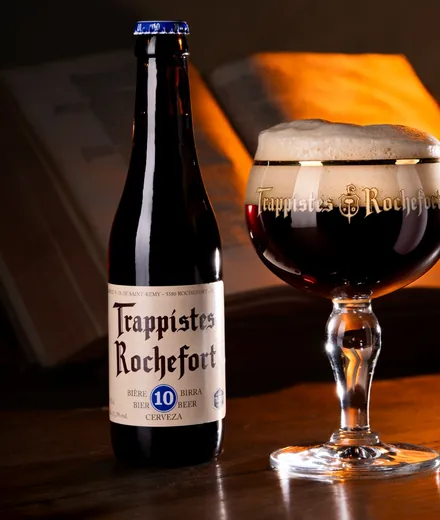
Winner · dark
Rochefort 10
Trappistes Rochefort · Trappist, dark strong
- ABV
- 11.3%
- Serve
- 12-14 °C
- Centrifuge + fresh yeast
- Not heated · reference book
Coffee, chocolate, spice, roasted malt. Dense and intense.
20 Belgian beers that referment in the bottle. Plus a check of famous brands: which are alive, which were restarted, and which show no signs of life.
Method: the Live Sediment Test - three questions for a bottle, in order of weight.
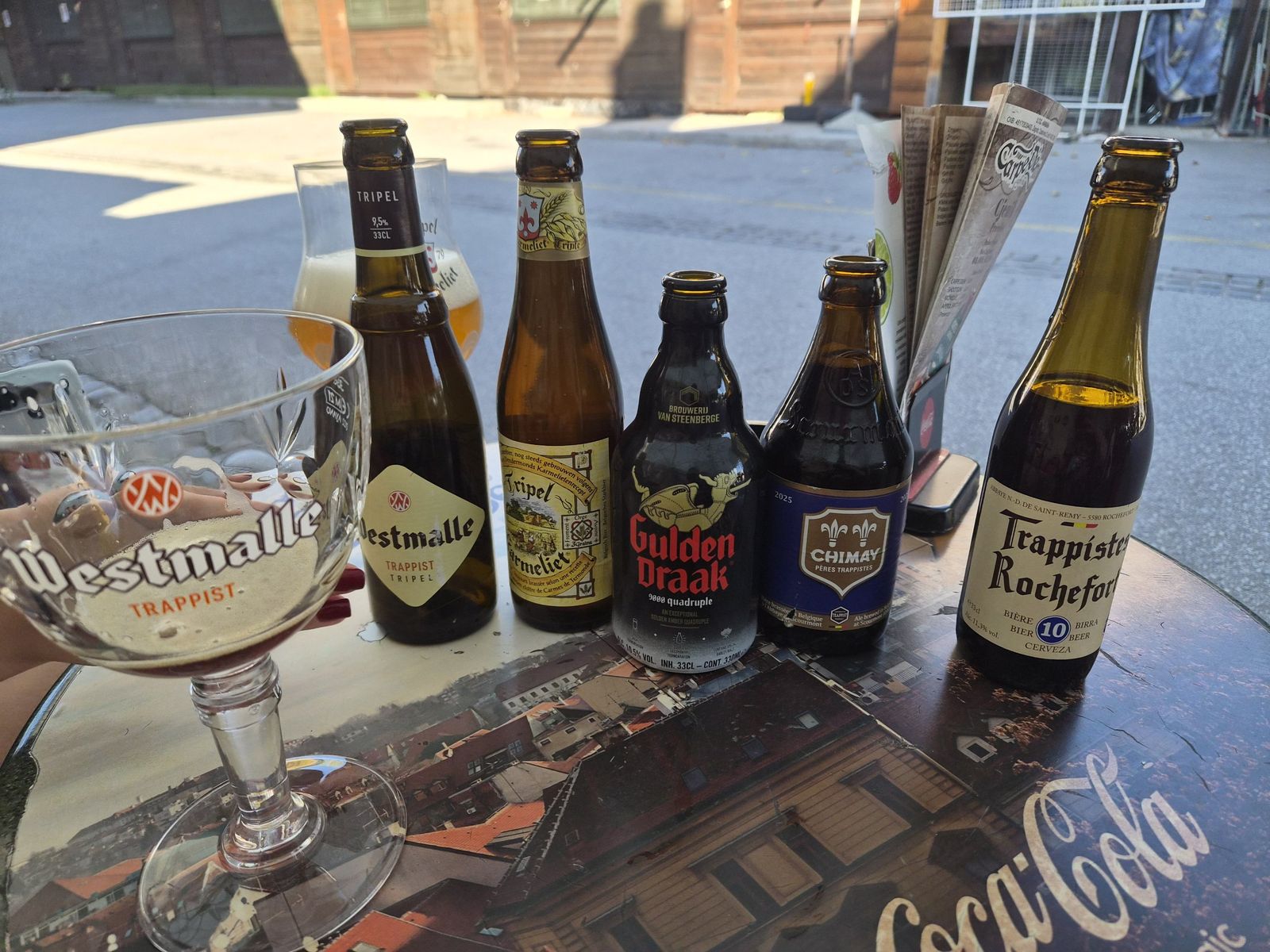
Zagreb, late September. A round table on the pavement, its top printed with an old Coca-Cola poster. Five Belgian bottles on it. Two winners emerged fast: Rochefort 10 and Westmalle Tripel. The interesting part was working out why those two.
In 1876 Louis Pasteur published a book not about milk but about beer. In «Études sur la bière» he described a heating step that kills microbes. Beer learned to survive the road, the heat and the warehouse. The yeast died along with the microbes.
A century and a half later, Trappist monks do something that looks like sabotage. They spin the beer through a centrifuge and strip out the yeast. Then, right before bottling, they put fresh yeast back in. The beer referments for a few more weeks. And it keeps living on the shelf.
What carries the flavour is not the missing filter but live yeast in the bottle. «Unfiltered» on the label is a promise. Sediment at the bottom is proof.
Filter, heat, refermentation. Only one of the three really matters.
Belgian labels carry three words that blur into one in your head. They are three different operations.
Westmalle describes its process plainly. The beer goes through a centrifuge, then the brewer adds sugar and active yeast. And on a separate line: «we do not pasteurise». So Trappist Westmalle is technically filtered. And alive.
Hoegaarden is the mirror case. The brewery honestly says the beer is not filtered. But it strips the yeast in a centrifuge, pasteurises the beer and adds fresh yeast for refermentation. It's an aquarium where the water was boiled and the fish were added afterwards. The fish are alive. The water isn't.
Sediment isn't dirt. Sediment is a pulse.
Three questions for a bottle. The order matters.
The Live Sediment Test is three questions. You ask them in order of weight, not in the order they appear on the label.
Unfiltered, unheated, refermented in the bottle. Westvleteren 12, Pannepot.
Yeast removed and fresh yeast added back, beer not heated. Westmalle, Rochefort, Chimay.
Beer heated, then given new yeast. Hoegaarden, Straffe Hendrik, Brugse Zot.
No live yeast claimed in the bottle. Leffe Brune, Kasteel Donker, canned Duvel and Tripel Karmeliet.
The brewery stays silent. Hold the bottle up to the light.
The first question is the one that counts. The second matters less, the third least of all. And «unfiltered», the word the label sells, answers only the third.
The strongest argument against this guide.
Pasteurisation is not a crime. Pasteur was solving a real problem: beer soured and spoiled on the road. Heat made it stable. Hoegaarden tastes the same in Zagreb as in Lisbon. For millions of people that is what quality means.
Live beer is fragile. Heat, light and time hit it harder. A bottle of Westmalle that spent two years next to a bar radiator can lose to a fresh pasteurised one. Live beer ages. Sometimes beautifully. Sometimes like cheese forgotten in a car boot.
One more thing. Some tasters pick up «cooked» notes in heated beer. Others notice no difference. I found no blind test that settles it.
What this argument doesn't explain: why stable beer so often sells itself through abbeys, monks and the word «tradition». Stability is an honest advantage. It just rarely gets printed on the label in large letters.
Pick a bottle from the list or answer three questions yourself.
You can check a bottle offline too. Hold it up to the light: a thin layer at the bottom is yeast. Then look for one of these phrases on the label.
| Phrase | Language | Meaning |
|---|---|---|
| refermented in the bottle · bottle conditioned | EN | refermented in the bottle |
| hergist op fles · nagisting op de fles | NL | refermented in the bottle |
| refermentée en bouteille | FR | refermented in the bottle |
| ongefilterd · non filtrée | NL · FR | unfiltered |
| niet gepasteuriseerd · non pasteurisée | NL · FR | unpasteurised |
Sediment isn't dirt. Sediment is a pulse.
24 bottles found in most bars. Filter by verdict.
| Beer | Live yeast | Heat | Filter | Verdict | Source |
|---|---|---|---|---|---|
| Westvleteren 12 | yes | no | no | Fully alive | brewery |
| Pannepot | yes | no | no | Fully alive | brewery copy via retailer |
| De Dolle Oerbier | yes | no | no | Fully alive | label; sour, different profile |
| Scotch de Silly | yes | no | no | Fully alive | secondary source |
| Westmalle Tripel / Dubbel | yes | no | centrifuge | Alive | brewery |
| Rochefort 6 / 8 / 10 | yes | no | centrifuge | Alive | reference book and press |
| Chimay Bleue / Rouge / Triple | yes | no | centrifuge | Alive | brewery and reference book |
| St. Bernardus Abt 12 / Prior 8 / Tripel | yes | not stated | centrifuge | Alive, heat not stated | brewery |
| Duvel (bottle) | yes | not stated | centrifuge | Alive, heat not stated | brewery and press |
| McChouffe / La Chouffe | yes | not stated | no | Alive, heat not stated | older copy and a blog |
| Gouden Carolus Classic / Imperial Dark | yes | not stated | no | Alive, heat not stated | secondary sources |
| Tripel Karmeliet (bottle) | yes | not stated | no | Alive, heat not stated | brewery; filtration per Wikipedia |
| Malheur 12 | yes | not stated | not stated | Alive, heat not stated | brewery |
| Hoegaarden | yes | yes | centrifuge | Restarted | brewery |
| Straffe Hendrik Quadrupel | yes | yes | filtered | Restarted | brewmaster: filtered at -1 °C, heated to 78 °C |
| Brugse Zot Dubbel | yes | yes | filtered | Restarted | brewmaster: same process |
| Gulden Draak 9000 | not stated | not stated | not stated | Not proven | brewery does not say |
| Affligem Dubbel | not stated | not stated | not stated | Not proven | sources conflict |
| Leffe Brune | no | not stated | filtered | No signs of life | filtered; no refermentation claimed |
| Grimbergen Double | no | not stated | not stated | No signs of life | no refermentation claimed |
| Kasteel Donker | no | yes | filtered | No signs of life | secondary sources |
| Bush Ambrée 33 cl | no | no | filtered | No signs of life | brewery: only the 75 cl referments |
| Tripel Karmeliet (can) | no | not stated | not stated | No signs of life | brewery FAQ |
| Duvel (can) | no | not stated | centrifuge | No signs of life | sold as Single Fermented |
One brand can earn two verdicts. Duvel and Tripel Karmeliet referment in the bottle. The same brands in a can don't. The breweries say so themselves.
An abbey on the label is not an abbey in the brewhouse.
Only ten breweries in the world carry the Authentic Trappist Product mark. Five of them are in Belgium: Westmalle, Westvleteren, Chimay, Rochefort and Orval. The rules are strict. The beer is brewed within the monastery walls, by monks or under their supervision. The money covers the abbey's living costs, and the rest goes to charity.
The mark depends on the monks, not the recipe. In 2021 the last monk left the Achel abbey and the beer lost the mark. In 2023 the abbey was sold to a private owner. The beer stayed on the shelves. The mark left with the monk.
Abbey beer is a different story. Leffe is brewed by AB InBev in its own plants. Grimbergen is brewed by Carlsberg outside Belgium and by Heineken inside it. Affligem belongs to Heineken. The abbey lives on the label. The monks live in the logo.
Two winners and one hypothesis.
Winner · dark
Trappistes Rochefort · Trappist, dark strong
Coffee, chocolate, spice, roasted malt. Dense and intense.
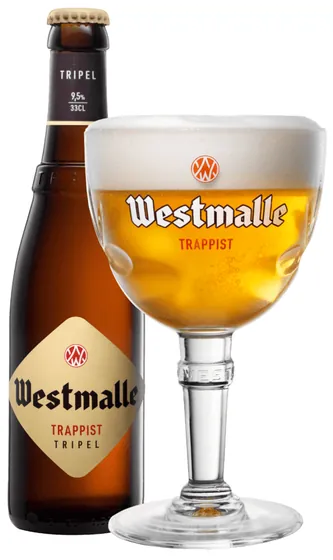
Winner · pale
Westmalle · Trappist, tripel
Ripe banana, hop nose, soft creamy body, bitter finish.
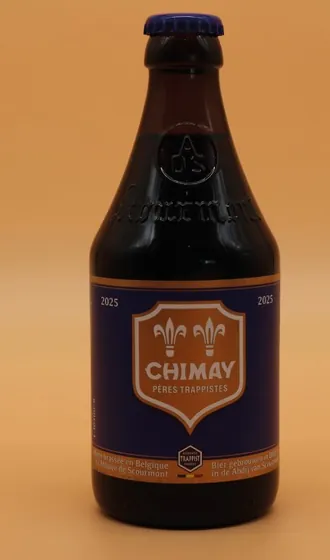
9% · Lost to Rochefort 10
Creamy caramel, mocha, spice
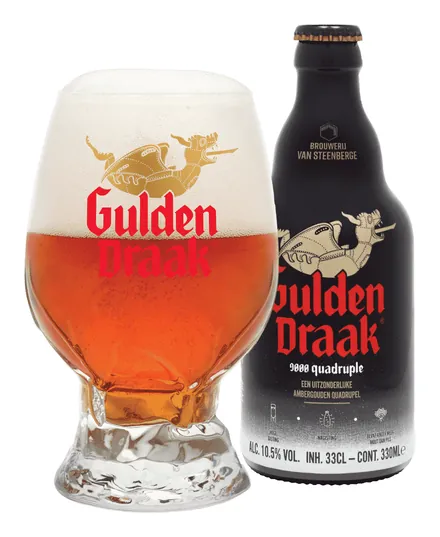
10.5% · Lost to Rochefort 10
Amber quad: fruity, sweetish, round
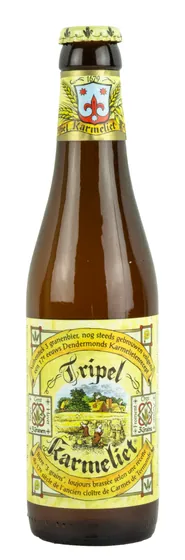
8.4% · Lost to Westmalle Tripel
Three grains, lemony spice, softer and sweeter
In both pairs, the winner had the stronger Trappist yeast character and the drier finish. Rochefort 10 beat Chimay Bleue and Gulden Draak 9000. Westmalle Tripel beat Tripel Karmeliet.
I first filed Westmalle Tripel under wheat beers. It isn't one: barley malt, sugar, 9.5%. So on the pale side it's tripels that work for me, not wits.
Depth and yeast matter more than sugary sweetness.
The test: put Pannepot or Scotch de Silly next to Rochefort 8 or St. Bernardus Abt 12. If the sweet ones win, caramel is what you're really after.
Pick what you already like. Get three live bottles.
The number on a card is its place by closeness to the line's winner. Scores from 1 to 10 are saved in your browser.
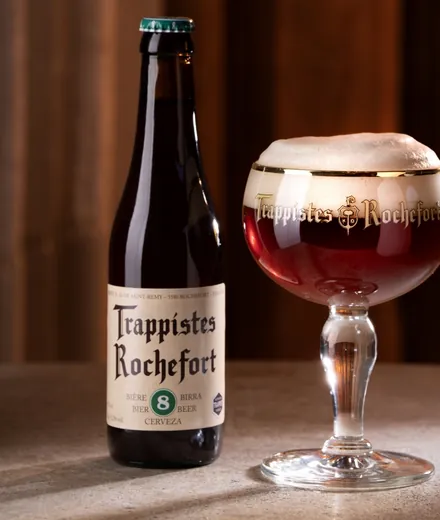 1
Trappistes Rochefort · Trappist, dark strong
Caramel, dark berries, spice, full body.
Same brewery and yeast as Rochefort 10, two points lighter and fruitier. The safest next step.
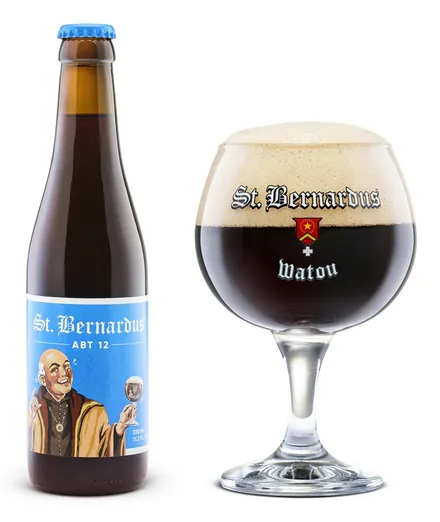 2
St. Bernardus, Watou · quadrupel
Very fruity, soft and round, long bittersweet finish.
The most available quad in the Rochefort 10 class. Softer, less coffee.
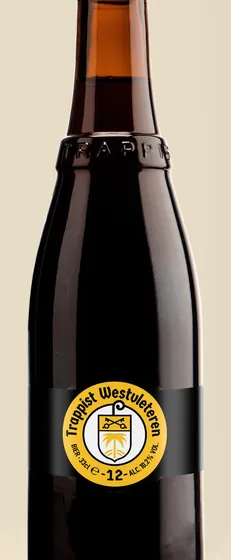 3
Abdij Sint-Sixtus · Trappist, dark strong
Caramel, chocolate, raisins, nuts, full body, warm finish.
The only Trappist its brewery explicitly calls unfiltered. Officially sold only at the abbey: if a bar has it, order it.
«bottled unfiltered · not pasteurised»
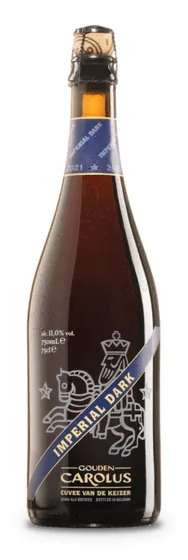 4
formerly Cuvée van de Keizer Blauw
Het Anker, Mechelen · dark strong
Roasted malt, caramel, plum, vanilla, chocolate.
Rochefort 10 weight with more caramel and vanilla. The brewery says it ages up to ten years.
«met nagisting in de fles, ongefilterd»
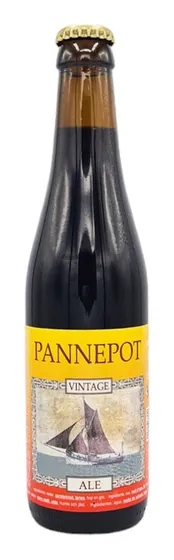 5
De Struise Brouwers · Belgian dark strong
Caramel, toffee, prune, fig, coffee, spice, creamy head.
The closest thing to 'buttery and caramel'. Niche: look in specialist shops.
«Unfiltered. Unpasteurized. Bottle-conditioned.»
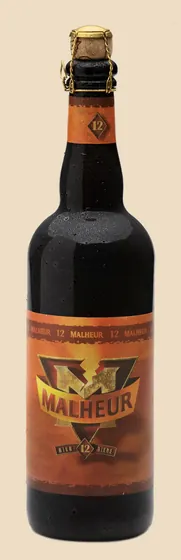 6
De Landtsheer · dark strong
Full and round: coffee, nuts, honey, rum notes from dark candi sugar, dry finish.
The strongest on the list. A dry finish, like Rochefort 10.
«bottle-conditioned»
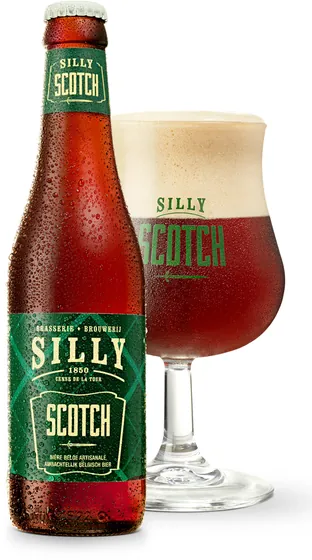 7
Brasserie de Silly · Belgian scotch ale
Honey, caramel, raisin brioche, prune. An almost liqueur-like body.
The most caramel at its strength. A litmus test for how much sweetness you actually like.
«met hergisting in de fles, niet gepasteuriseerd, ongefilterd»
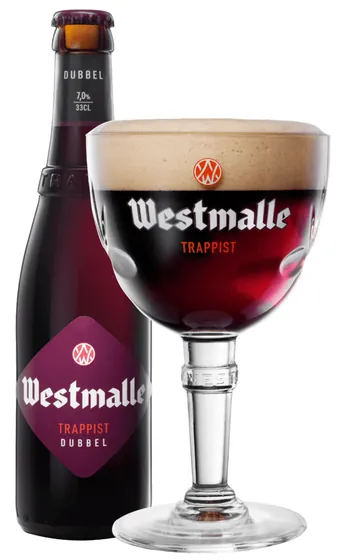 8
Westmalle · Trappist, dubbel
Caramel, malt, ripe banana, creamy head, long dry finish.
The Westmalle Tripel brewery in its dark version. The brewery states plainly that it does not pasteurise.
«We do not pasteurise our beers»
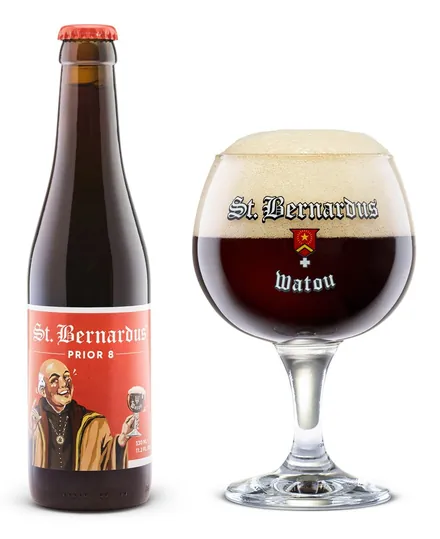 9
St. Bernardus, Watou · dubbel
Fig, dates, red apple, caramel, roasted malt.
Abt 12's lighter sibling. Drink it next to Westmalle Dubbel.
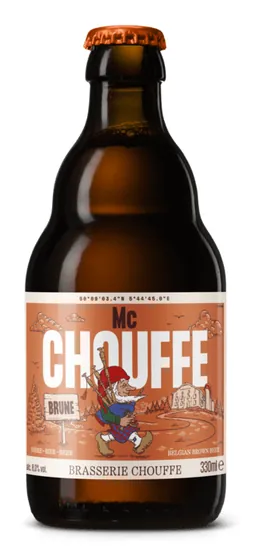 10
Brasserie d'Achouffe · Belgian brown
Caramel, anise, liquorice, pear, soft body.
Unfiltered and easy to find. Lighter than the other darks.
«non filtrée, refermentée en bouteille et en fût»
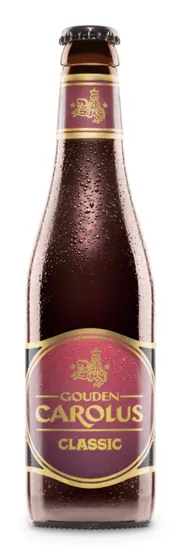 11
Het Anker, Mechelen · dark specialty
Sweet caramel and bitter chocolate, fruit, full body.
Imperial Dark's younger sibling: the same caramel, less alcohol.
«bottle conditioned… bottled unfiltered»
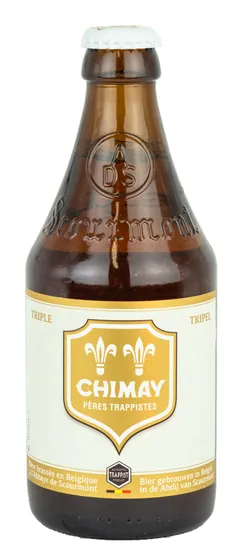 1
Cinq Cents, white label
Chimay · Trappist, tripel
Fruity and floral, yeast spice, velvety body, orange peel, moderate bitterness.
The other Trappist tripel you can easily buy. Closest to Westmalle in yeast character.
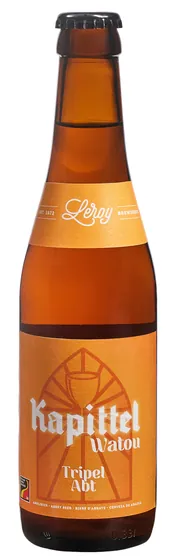 2
Leroy (Van Eecke), Watou · amber tripel
Full, round, lightly sweet, a touch of hops, warm finish.
The fullest-bodied tripel here. A bridge between the dark and pale lines.
«nagisting op de fles»
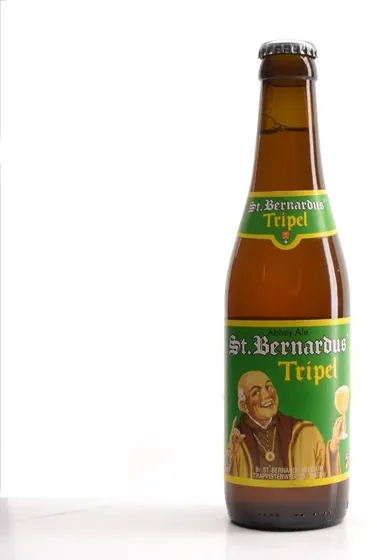 3
St. Bernardus, Watou · tripel
Sweetish nose, floral-fruity palate, bitter and sweet in balance.
Softer and sweeter than Westmalle.
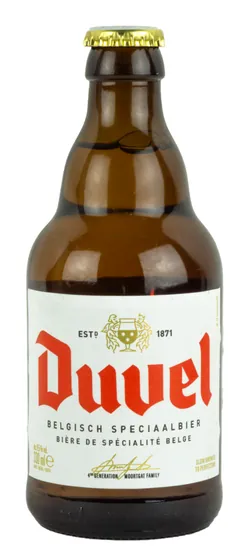 4
Duvel Moortgat · strong golden
The driest here: fruit, hops, bitterish finish, very lively.
A dryness test. Bottle only: the can is not refermented.
«The beer ferments again in the bottle»
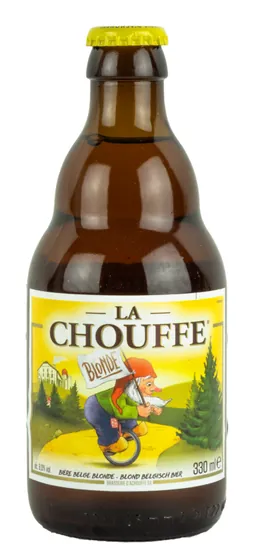 5
Brasserie d'Achouffe · strong blond with coriander
Coriander, citrus, spicy finish, hazy.
Spicier than a tripel. If it works for you, it's the yeast spice you like.
«non filtrée refermentée en bouteille»
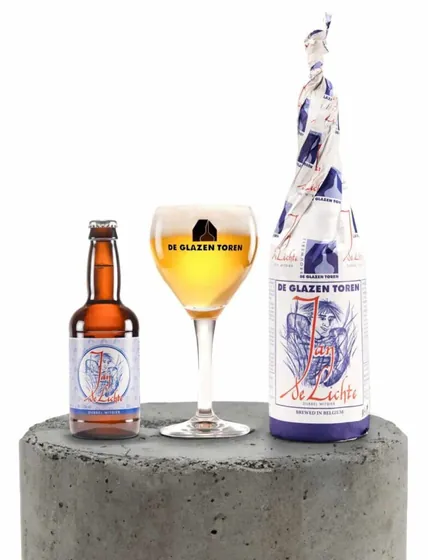 1
De Glazen Toren · double witbier
Barley and wheat, coriander, curaçao. Soft but intense, dry finish.
The nearest thing to a 'wheat tripel'. The strongest wit on the list.
«slightly veiled»
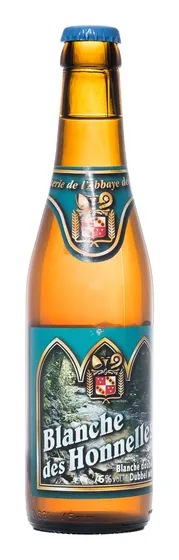 2
Abbaye des Rocs · three-grain wit with oats
Bread, cereal, a caramel note, peppery dryness. Amber and hazy.
Oats give it body. The only wit with a caramel note.
«refermentées en bouteilles»
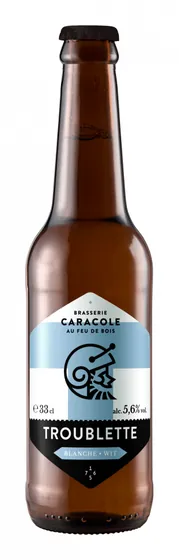 3
Caracole · witbier
Hazy, lemon, coriander, citrus finish.
Both unfiltered and bottle-refermented, both confirmed. The brewery boils over a wood fire.
«non-filtrées… refermentation en bouteilles»
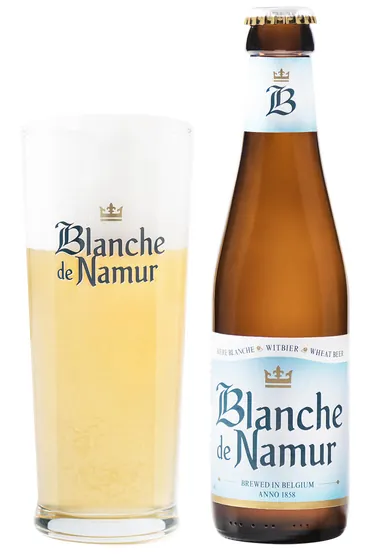 4
Brasserie du Bocq · witbier
Hazy, smooth and mellow, coriander, orange peel.
The brewery itself tells you to swirl the bottle to lift the yeast. The lightest on the list.
«only the Blanche de Namur is not filtered»
Built from your scores on the cards. The top five are your next order.
Empty for now.
Four places where the test lies or stays silent.
Live beer is sensitive to heat and light. An old warm bottle can lose to a fresh stabilised one.
The same brand in a can often isn't refermented. Tripel Karmeliet and Duvel say so themselves.
Most breweries say nothing about pasteurisation. That's why each card shows where a fact comes from: the brewery, a reference book or a secondary source.
If you love Gulden Draak, the test won't cancel that. It only explains why other bottles may taste deeper.
Savska cesta 28, by the Cibona tower. A small Belgian pub: a strong Belgian list and a few Croatian craft beers.
A shop-bar near the Sava. Over 600 labels, including rare Belgians. Check the address before you go: the shop has moved.
Vlaška 68. An old-school bar with rare Belgian bottles. Mostly a daytime place: quiet on weeknights.
No. Westmalle, Chimay, Rochefort and St. Bernardus run the beer through a centrifuge and add fresh yeast and sugar before bottling. The beer referments in the bottle. Westvleteren, by its brewery's account, bottles without filtering.
Not always. Hoegaarden and De Halve Maan beers are heated and then given fresh yeast to referment. The test calls them restarted. What's left without live yeast is beer that is filtered, heated and simply bottled.
Hold the bottle up to the light: there should be a thin layer of yeast at the bottom. On the label, look for «refermented in the bottle», «hergist op fles», «refermentée en bouteille» or «bottle conditioned».
Pour Trappists slowly and leave the last centimetre in the bottle. With a wit, do the opposite: leave a little, swirl up the yeast and top up your glass.
For live beer, yes. Canned Tripel Karmeliet is not refermented, the brewery says. Canned Duvel is sold as «Single Fermented». If you want it alive, buy the bottle.
Next time, before you read the menu, hold the bottle up to the light.
Pasteur taught beer not to spoil. The Trappists taught it not to die. You can see the difference at the bottom.
Sediment isn't dirt. Sediment is a pulse.
How to use it. Pick a bottle in the test, find your taste in the matcher, score bottles on the cards. Scores are saved only in your browser.
Filtration and pasteurisation data come from brewery sites, reference books and secondary sources. Each card shows where a fact comes from. Checked in September 2026. Table photo by the author; bottle photos from brewery and retailer sites.