Why Ukrainian YouTube Matures Faster Than Ukrainian Politics
Media creators mature faster than the state not because they're more virtuous — they have a shorter accountability loop. On the asymmetry of punishment speed, and where the analogy breaks.
73 Seconds and the 38th Second
NASA needed 73 seconds for organizational blindness to become wreckage in the sky. Space Shuttle Challenger launched at 11:38 a.m. on January 28, 1986, and broke apart over Florida 73 seconds later. The Rogers Commission found that the right solid rocket booster’s O-ring had failed in the cold at launch, that Morton Thiokol engineers knew this, had warned about it — and went silent under institutional pressure. The signal was there. The loop that would have forced it to be heard in time was not.
In Ukraine, sometimes all it takes is seven years for blindness to simply receive a new set of regulations.
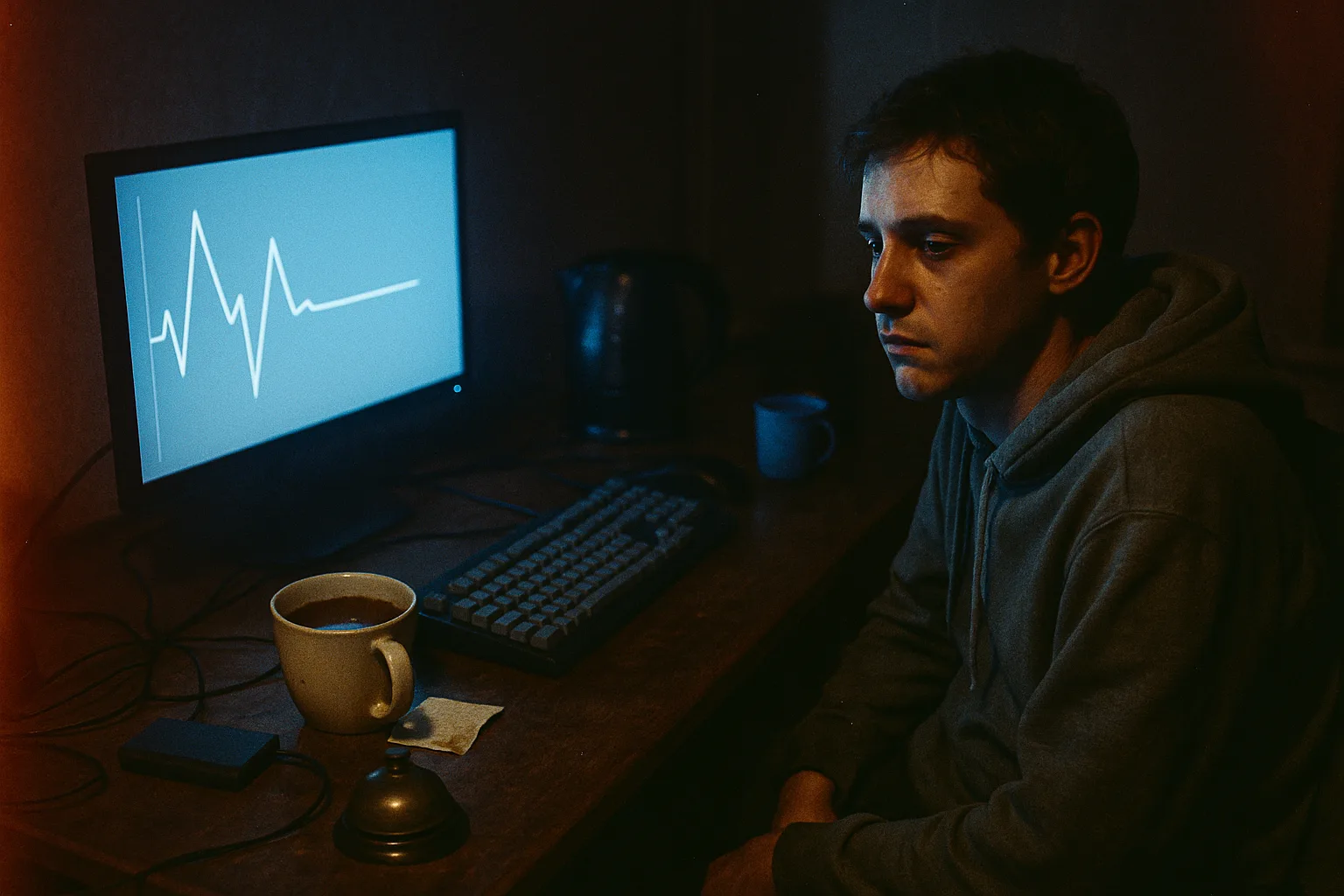
At two in the morning, a guy opens YouTube Studio. Not for inspiration — for the verdict. The retention curve drops at the 38th second — exactly where he had placed three seconds of pompous intro. The graph showed a corpse: this is where the viewer left. By morning the intro is dead. Not because someone ordered it. Because the numbers have no manners.
In the same country, 8,513 bills are lying in the queue. 19.3% adopted. The rest — into archive, without feedback, without a public bill, without a 2 a.m. review of the curve.
Not “YouTubers are better people.” They just have a shorter loop.
The Accountability Loop
Start with the mechanics, because without them everything else is just opinion journalism.
There are institutions where failure is visible to the public the next day. There are institutions where failure is visible to an internal cabinet a year later — or not at all. This difference is the accountability loop: the distance between the moment of a mistake and the moment someone pays for it.
An institution matures where someone cannot pretend the cash register isn’t working.
| Trait | Mature institution | Institution without a bill |
|---|---|---|
| Who sees the failure? | Public / client / donor | Internal cabinet |
| How fast does the signal arrive? | Day / week | Year / term / never |
| Is there an exit? | Unsubscribe / refusal / donation disappears | None or prohibitively expensive |
| Is there a voice? | Comment / complaint / public pressure | Formal procedure |
| Is there an owner? | Name, date, amount, result | ”Committee,” “process,” “circumstances” |
| What happens after failure? | Rebuild or die | Press release or silence |
A YouTube channel lives in the left column. The Verkhovna Rada lives in the right. The difference is not in people’s intentions. The difference is where the cash register is located.
Organizational theory has the concepts of exit and voice — Hirschman laid it out in 1970: how systems receive signals of dissatisfaction. Exit: a person simply leaves — unsubscribes, goes to a competitor, refuses the service. Voice: a person shouts — files a complaint, votes, protests. The first mechanism is fast and blunt. The second is slow and expensive, but carries information. Mature institutions have both. Institutions that are maturing have at least one.
YouTube as a Daily Court
According to Digital 2025, YouTube’s potential advertising reach in Ukraine is approximately 21.6 million people. According to OPORA (2024), 59.5% of Ukrainians received news via YouTube — the second result among social media after Telegram (78.1%). Not “the main source,” not “a TV replacement” — but a figure that means: if you made a mistake on this platform, half the country knows about it by the next morning.
Imagine a court where sessions are daily. The verdict is instant. There’s no appeal because there’s no one to appeal to: the viewer has already left. You’re not re-elected once every five years. You’re dismissed right now, by pressing “next.”
At three in the morning the editor cuts the first 15 seconds for the fifth time. The analytics showed: this is where people leave this week. Not because the editor insisted. Because the number speaks unambiguously. The retention graph is not a poll asking “are you satisfied with your deputy?” It’s a hard verdict with no mitigating circumstances.
But here’s the first caveat, and it matters. In baseball (if you’ve seen Moneyball), managers trusted scouts for decades — their intuition, their rituals, their right words. Then on-base percentage statistics arrived and destroyed those rituals. YouTube did to retention what Moneyball did: killed the scouts, installed the metric. But Goodhart warned: when a measure becomes a target, it stops being a signal of quality. Retention held up by anxiety and anger is not a win — it’s Moneyball where you’re counting not victories but twitches of the viewer’s nervous system. We’ll return to this.
UA-language content on YouTube: before 2022 — essentially zero. By October 2023 — 45% (Centre for Content Analysis). The market punished those who stayed in Russian — with unsubscribes and declining reach. Without a single law, without a ministry directive. The audience voted with their feet, and creators felt it in their revenue.
Those who switched lost an average of 24% of income (NYT, April 2023, sample of 20 channels). And continued. The market wasn’t lying. It was simply, as always, counting not truth but behavior. Its conscience lives in the same department as the warranty on a cheap power bank.
The conscience of platforms isn’t switched off. It just was never included in the base package.
Ukrainian Creator-Institutions: Receipts
Two in the morning. On the kitchen table — not inspiration, but a spreadsheet in Excel. He scrolls through analytics: RPM, retention, revenue for the month. A cup of tea cools next to it. In the banking app — the amount from which he’ll pay two editors and a scriptwriter tomorrow. Not “the studio” — from his own card. He is personally responsible for every hryvnia and every second of retention. Without a five-year term. Without immunity. With one guarantee: if tomorrow’s video fails, he pays today, with his card.
That is an institution. Not a building with a sign saying “Ministry.” A kitchen table where there is an owner — a name, a date, an amount.
But the million-subscriber channels are boring. They’ve already grown up. The most interesting thing happens one floor below: the second echelon — solo operators and small teams maturing right now, before our eyes, without a single conglomerate behind them.
| Channel | Niche | Subscribers (June 2026) | Growth | Who makes it | Why it’s already an institution |
|---|---|---|---|---|---|
| Telebachennya Toronto (Toronto Television) | satire | 972k | since 2012, spike after 2022 | solo (Vintoniv) + production | a “pseudo-Canadian” character who never breaks character |
| Istoriya Bez Mifiv (History Without Myths) | history | 937k | 0 → 937k in 6 years (since Apr. 2020) | team 3+ | blocked in Russia — and grows precisely because of it; publishes regularly, like an editorial office |
| Zahin Kinomaniv (Film Buffs Squad) | film / culture | ~715k (Apr. 2026) | ~110k → 715k in 5 years | solo (Hordiyenko) | quit theatre and moved to Kyiv for the channel — all-in with his whole body |
| WAS: Popular History | history | 632k | YouTube arm of a text outlet, since ~2021 | team of 5 (Ladvishchenko) | releases every Sunday at 12:00, like a factory; Patreon + its own media outlet |
| Ostanniy Kapitalist (The Last Capitalist) | economics | 371k | since 2019 | solo (Krasnopyorov) | grew two publishing houses (“Kurkul”, “Kapital”) and a 5,200+ student school out of one channel |
| Klyatyi Ratsionalist (The Damned Rationalist) | science / video essays | 356k | ~30k (2019) → 356k | solo | ~$2k/mo on Patreon as early as 2021 — audience instead of salary |
| Pani Kalyna | early childhood education (UA) | 348k | 137 videos — and already 348k | author not public | a faceless educational pipeline: the brand rests on the product itself |
| Dvokolesni Khroniky (Two-Wheeled Chronicles) | travel / cycling | 99.1k (was ~455k) | reverse: −78% | family project | paused since 2024: as of May 2024 Muliar is on a solo round-the-world expedition in support of Ukraine |
| Amanogawa | anime dubbing | 15.6k (YT) | 208 titles / 4,091 episodes since 2020 | team 5+ | dubbing studio born of a COVID-era community; main output on its own platform, YT is just the storefront |
Nine stories — not a single budget code, not a single conglomerate. Someone quit the theatre. Someone grew two publishing houses out of a video blog. Someone has been dubbing anime for six years with five enthusiasts, because otherwise it won’t exist in Ukrainian at all. All of them sit the same exam daily before the only examiner who doesn’t take bribes — the retention graph.
And look at row eight: the loop cuts both ways. The family project went on pause — and the audience didn’t wait: minus 78% in two years, without a single resolution. In the Rada, the same “cessation of activity” finishes out a full term.
The youngest floor — Ukrainian-language AI and tech breakdowns — doesn’t even have its million-subscriber channel yet: the niche is so fresh that public trackers barely register it. But that’s exactly where the loop is shortest. The topic changes every week; a channel either keeps up today or is obsolete in a month. Maturation here is measured not in years — in releases.
Recall the scene from Spotlight: journalists digging through cardboard boxes for months, tired eyes, a dim office — and the scale of the system emerges slowly. A slow bill, but inevitable. Bihus.Info is Spotlight with a deadline: January 19, 2024 — the publication that revealed the SBU was surveilling its own journalists. January 31, 2024 Zelensky signs the dismissal of the head of the relevant unit. Twelve days from publication to resignation. No parliamentary committee convenes a single session in that timeframe.
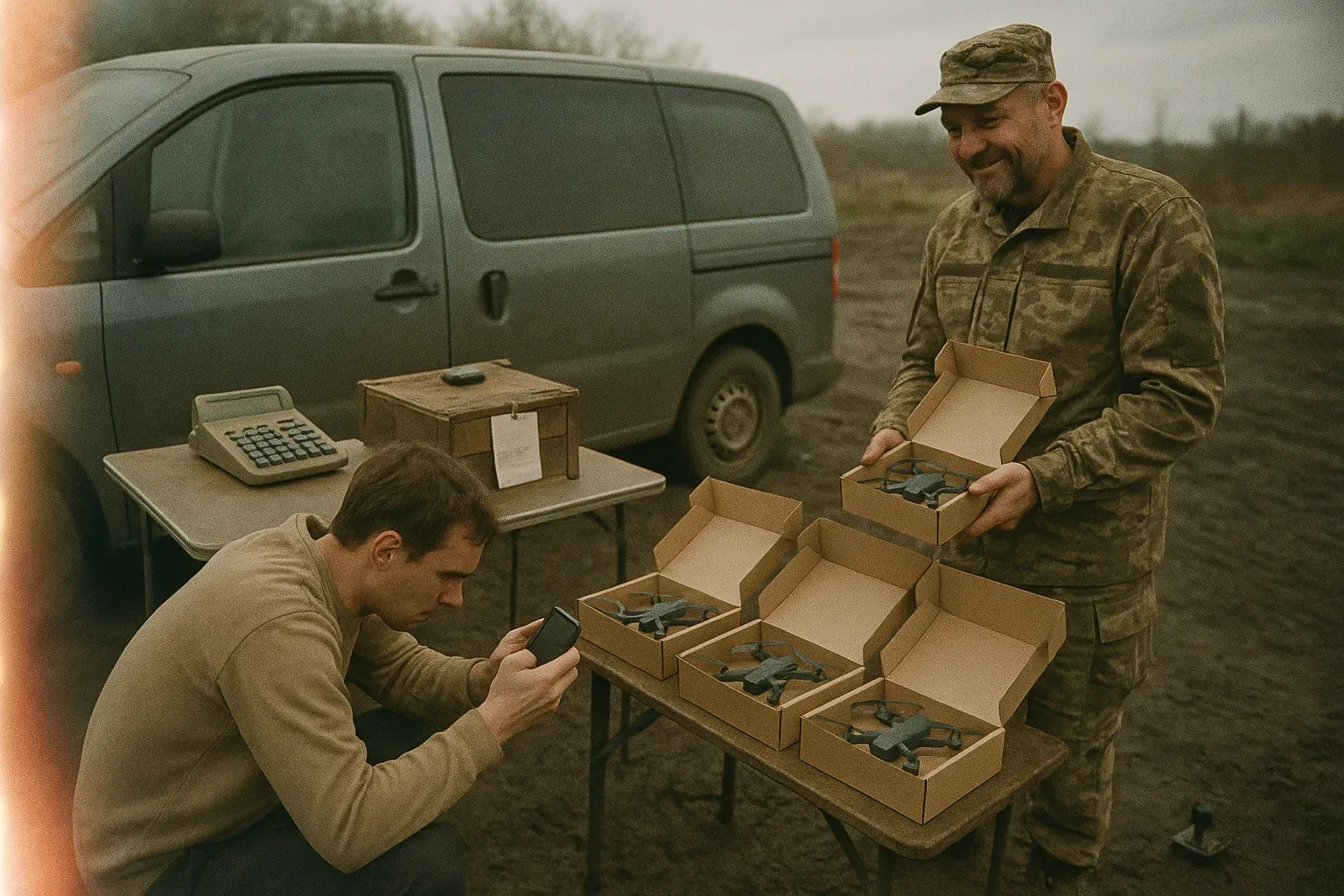
Sternenko: Sunday livestreams, public photo reports with the party number on the box, battalion name, amount spent. For 2025 the foundation reported ~₴3.1 billion raised and ~118,000 drones; the foundation’s cumulative counter shows over 280,000 FPV drones. This is a public P&L. The audience is the auditor. 2.03 million subscribers, anyone can verify the delivery.
Kyiv Independent: founded November 2021, without an editorial office, without a building, without state funding. By end of 2025 — 25,000 paying members. Churn — less than 2%. Seventy percent of revenue from readers. The Verkhovna Rada is trusted by 12–18% of the population. Kyiv Independent monetizes trust better than parliament earns it.
Nashi Groshi (Our Money) documented $1.2 billion in saved state funds through 70+ procurement investigations. AIR Media-Tech crossed 1 trillion views in early 2023.
This is not the exception. It’s the model. Let’s call it simply: the accountability loop. An institution matures where someone cannot pretend the cash register isn’t working.
| Feedback loop | Mature institution behavior |
|---|---|
| Daily retention graph + unsubscribes | Sternenko reworks his presentation weekly; delivery photo is the standard, not the exception |
| Reader churn <2% (Kyiv Independent) | 70% revenue from audience → editorial accountable to readers, not sponsors |
| 12 days from publication to dismissal (Bihus) | Investigation = mechanism for personnel decisions, not just a story |
| Reinvesting reputation in new projects | AIR scales to 3,800+ partners; audience is an asset, not a metric |
The Rada as a Frozen Loop
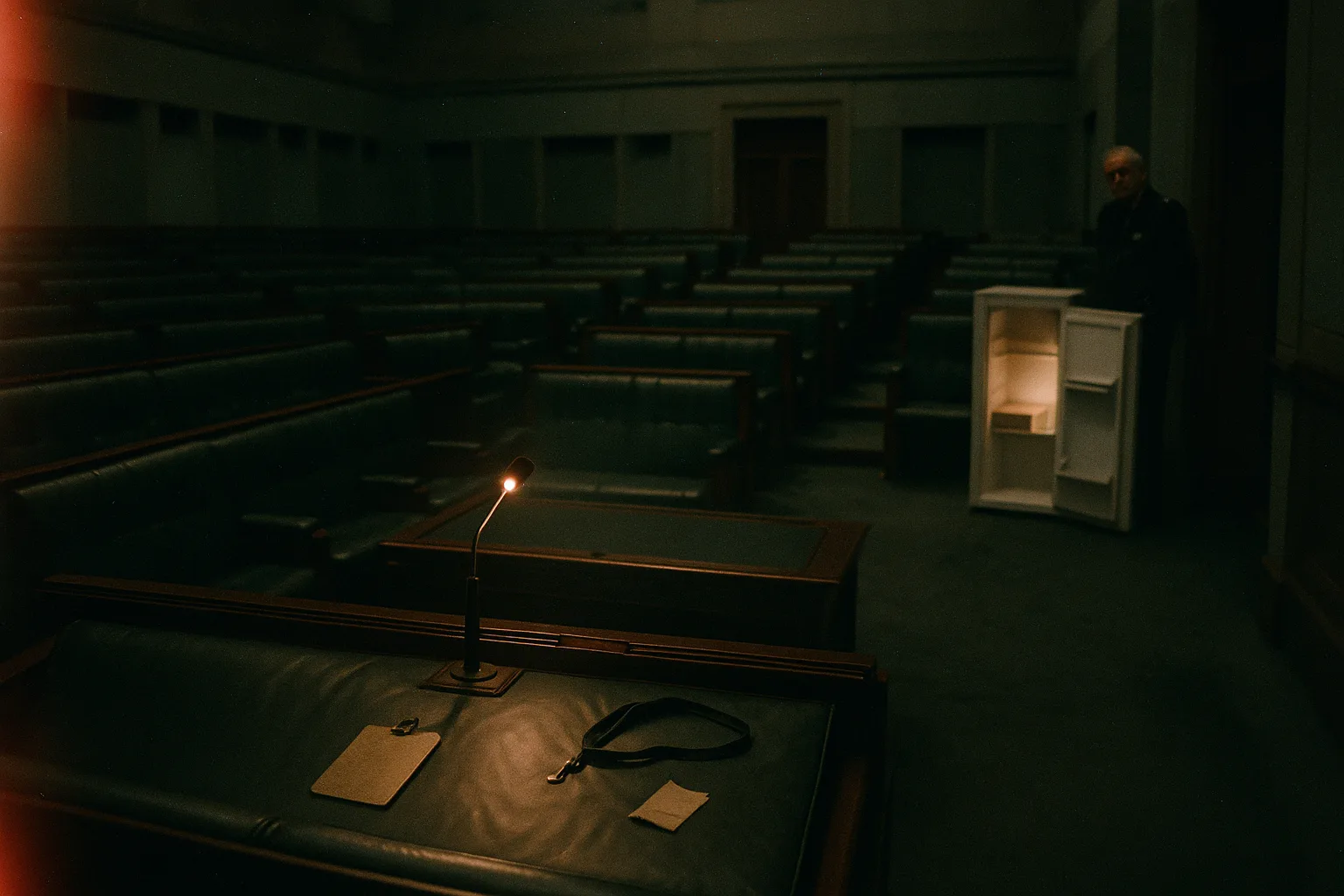
The main character of Ukrainian politics right now is not the deputy and not the voter. The main character is an expired mandate: documentarily alive, biologically exhausted, with the smell of a refrigerator nobody has opened in a long time.
In the TV series Chernobyl there’s a moment that still stands before the eyes: the dosimeter reads 3.6 roentgens — “not critical” — because its scale simply hits the maximum. The device doesn’t lie. It’s just too small for the truth. And the protocol still demands “don’t panic.” That’s what politics without real-time feedback looks like: the instrument has hit the ceiling, reality goes off the scale above it, and the rulebook still requests everyone remain calm.
April 21, 2019 — presidential elections in Ukraine. July 21, 2019 — parliamentary elections. It is now June 2026. Both elections are seven years old. The 9th convocation of the Rada began as a genuine breakthrough: ~80% of deputies were newcomers, the average age of new arrivals was 39, 61% had no prior political experience. Maturation through accountability — that’s what this page promised. And then the renewal mechanism was switched off.
And here it’s important to stop — not in defense, but for precision. February 25, 2025 the Rada passed Resolution No. 13041: elections only after sustainable peace. 268 votes were cast for it. The day before, on February 24, a similar attempt failed — only 218 for. Not unanimously, not without discussion. It didn’t pass on the first try.
Martial law — Article 19 of the Law on the Legal Regime of Martial State — prohibits holding elections. The logic is clear: elections under occupation and shelling make no sense. Legally — airtight. Mechanically — the loop has stopped.
Where is the retention graph? A deputy also has a retention curve. It’s just called “sociology,” comes out once every few months, and arrives only after the patient has already voted for their own coma. Trust in the Rada — 12–18% — but you cannot unsubscribe from it. There is no “unsubscribe” button. There’s only a button that reads “endure,” in patriotic design and locked in by resolution.
What happens to an institution when its punishment mechanism is stopped?
Corruption Perception Index: Ukraine — 35/100, 105th place out of 180 (Transparency International, CPI-2024). In 2023 it was 36/100 and 104th — meaning even the small improvement partially rolled back. Judicial vacancies: 2,096 unfilled positions (29.6% of the bench, October 2024), accumulating since 2019 — the year the HQCJ was paralyzed. The same year as the elections. Not a dictatorship, not a conspiracy, not a lodge with a cat on the lap. Worse: a procedurally correct standby mode, where everything is legal but the air is already a little stale.
Seventy deputies who left the Rada since 2019 were replaced — by party lists, without by-elections. Every replacement — appointed, not elected. The YouTube equivalent: imagine a top channel that closed was automatically replaced by a channel from the same network, with zero audience vote. That’s what a “legal pause” looks like translated into the language of accountability.
The mechanism isn’t broken. It’s simply standing still. And institutions in which the mechanism stands still — don’t mature. They are preserved.
Where the Analogy Breaks
Here is where I cut my own thesis.
A fast loop is not a virtue. It is selective pressure. And pressure grows everything indiscriminately.
YouTube deleted the channel of Diana Panchenko (~1.8 million subscribers) in August 2025 following Ukrainian investigations into state treason. In April 2024 it had only been geoblocked in Ukraine — not fully deleted. Between those two points: a year, millions of views, and a steady Kremlin narrative on air. The algorithm did not distinguish between “quality analysis” and “emotional content at the right moment” — it counted seconds of retention. Panchenko knew how to hold a viewer. That was enough. The bill came — but first the market fed this for years.
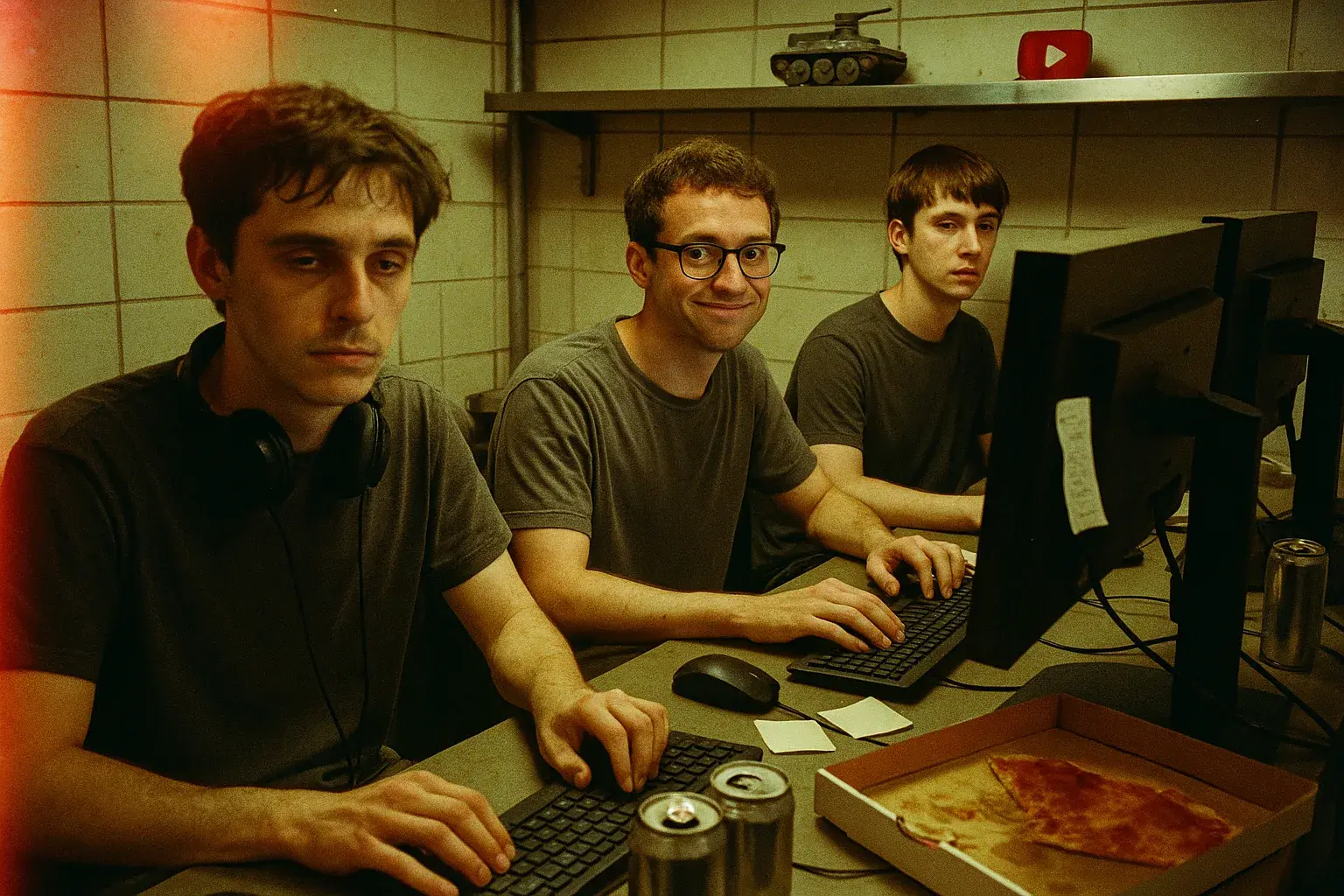
Channel24 and Pryamyy: 90–100 videos per day. This is no longer an editorial office. It’s a meat grinder with an SMM department and a small monetization icon on the handle. The war provided an endless stream of events; the algorithm rewards volume and anxiety; monetization counts thousands of views. Result: an industrial clickbait factory — the very one in this essay’s main photo. The same loop grows Bihus — and this.
And there’s Goodhart: when retention becomes the target, it stops being a signal of quality. It becomes a target you shoot at with anxiety, anger, betrayal. The fast feedback loop didn’t stop this — it generated it. The algorithm has no conscience. It only has data.
Zolkin: 2.33 million subscribers, over a billion views, interviews with Russian prisoners of war. Domestic audiences didn’t react — ratings grew. International observers noted concerns about Geneva Conventions compliance. The fast loop doesn’t distinguish “accountability” from “spectacle.” It only distinguishes “being watched” from “not being watched.”
Then there’s structural fragility. According to an IMI survey (January 2025), 35% of editorial offices had over 75% of their budget from American grants; another ~16% had between 50 and 75%. When American aid was frozen in February 2025 — a crisis began. The entire beautiful media ecosystem was half-standing on a single foreign patron. “Independent” from the state — but not from the donor.
And here is the main caveat that needs to be carved above the entrance:
YouTube delivers accountability, but not representation. A subscriber is not a citizen. A view is not a vote. A donation is not a tax. A million views is not a mandate. A surgeon and a butcher both work with a knife, but we don’t confuse one for the other.
YouTube is merely a morgue with better analytics. Politics is the same morgue, just without labels on the bodies.
Exit Without a Mandate, Voice Without Speed
Hirschman formulated it in 1970: organizations receive signals either through exit (leaving) or through voice (speaking up). Exit — one click, no explanations, no ceremony. Voice — a complaint, a vote, a protest, a committee appeal. A healthy system needs both: exit alone and there’s no constructive feedback; voice alone and there’s no punishment for ignoring it.
A creator has both mechanisms. Exit: unsubscribe. Instant, no cost, no explanation. Voice: comment, public pressure, an alternative channel, donating to a competitor. Also fast enough and cheap enough.
Parliament has only voice — and in wartime it is frozen. Elections are the most expensive form of exit, and they’re unavailable. Petitions exist, but carry no binding force. Protests are possible, but extraordinarily costly when every mass gathering has a price in attention, risk, and time. Parliamentary inquiries exist, but response timelines are measured in months. Journalism exists — and as we’ve seen, sometimes it fires within 12 days. But that is not a systemic mechanism, it’s a fire brigade.
The result of the asymmetry: the creator has punishment without legitimacy; parliament has legitimacy without fast punishment. A subscriber can unsubscribe without any authority to do so. A citizen can only vote through a procedure that doesn’t currently exist. One mechanism is too cheap, the other is too expensive. Both produce a distorted signal.
It’s important here not to overcorrect in the other direction. Cheap exit without voice is also a pathology. If everyone just unsubscribes and no one shouts, the platform never gets quality feedback — only aggregate numbers without explanation. An unsubscribe says “something is wrong,” but not what exactly. That’s why the most mature creator-institutions combine both: exit numbers as a thermometer, comments-complaints-reader letters as the diagnosis. Kyiv Independent reads its churn and calls the people who unsubscribed. That’s voice after exit. Parliament reads nothing after the voter “unsubscribes” from turnout.
The same fast loop explains why the front line and volunteers are ahead of the Rada in public trust. But the feedback of the front is paid for with lives — romanticizing speed is cruel. Speed without legitimacy is not democracy, it’s a market. And the market, as we’ve already seen, can feed Panchenko for years.
What Can Be Installed Without Elections
The lesson is not to put YouTube creators in parliament. The lesson is not that the Rada must shoot Shorts and chase views.
One lesson: the accountability loop can be installed without waiting for elections.
A public receipt is not a concept, it’s a mechanism. Sternenko didn’t invent “a culture of accountability.” He simply published a photo of a drone with the battalion number and the date. The audience became the auditor — without a law, without a single Cabinet resolution. Bihus.Info didn’t wait for the prosecutor’s office to open a case. They made a documentary — and Zelensky signed the dismissal twelve days later.
There are specific levers you can pull between electoral cycles: public bill-tracking with deputies’ names and voting timestamps — not “the committee reviewed” but “Deputy X voted against on February 14 at 4:03 p.m.”; budget expenditures in real time, not as an annual PDF; mandatory live broadcast of committees where everything actually gets decided; an open declaration registry with property-change search; a public dashboard of judicial vacancies with those responsible for filling them. None of these mechanisms require elections. None require a constitutional amendment. They only require a decision: that people have the right to see this today, not after a term.
This is not a substitute for elections. It’s a prosthetic nervous system between elections. A budget dashboard — at least a light bulb in the refrigerator. No mechanism provides representation. No mechanism solves the mandate problem. But at least one ensures the bill arrives before seven years have passed — and that it arrives with an address, not just “circumstances arose.”
There is, by the way, an irony here. Some of these mechanisms already exist — partially. NACP publishes declarations. Prozorro is open. The Rada broadcasts plenary sessions. But all these tools remain in the format “the data is there if you know where to look” — not in the format “here is your monthly statement from the Rada.” The difference between those two formats is the difference between a refrigerator with food in it and food delivery. Technically the same thing. In practice — different universes.
And this is uncomfortable not only for the Rada. Each of us has our own little Verkhovna Rada inside: a project without a deadline, a team without metrics, a relationship without a conversation, a business process without an owner. There too there is no unsubscribe button. There too everyone votes to extend their own chaos, because the protocol is run by an internal secretary with “after the holidays” syndrome.
The accountability loop is not only about the state. It’s about any system where someone decided the cash register was optional, not standard equipment.
When the Bill Arrives
The entire difference comes down to one thing: when the bill arrives.
Two players, one audience. One plays to the public — and knows the verdict tomorrow at nine when he opens YouTube Studio: retention, unsubscribes, revenue. The other also plays to the public — but the bill arrives in five years. Or maybe it doesn’t arrive at all, because martial law.
The difference is not in intentions. The difference is in when you pay.
On February 24, 2022, at four in the morning, two timers were switched on. One accelerated — the crisis frequency bound the audience to personal trust in real time. The other stopped — the electoral timer froze at that same second. One shock, two trajectories.
The most mature institutions in Ukraine right now are the ones that can be fired by Tuesday. The army — because every decision has an address and a date. Bihus.Info — because their next video either confirms them or buries them. Sternenko — because next Sunday will show whether people come back.
The Verkhovna Rada’s 9th convocation entered in 2019 as a revolution. New faces, young, inexperienced. Maturation through accountability — that’s what they promised. But the system proved stronger. The loop didn’t accelerate — it simply stopped.
Here the most honest thing is to stop and say: neither the Rada nor individual deputies “chose” not to mature. They ended up in a structure where the punishment mechanism was removed not from malice but for legal and security reasons. Challenger also didn’t “decide” to break apart — it got caught in a system where warning signals couldn’t reach those who could have changed something. The difference is that after Challenger, NASA rewrote its protocols. We don’t know what the Rada will rewrite after the pause.
Now Resolution No. 13041, 268 votes in favor, February 2025. Elections after sustainable peace. Technically legal. Mechanically necessary. And structurally — that same retention graph where the viewer left at the 38th second and the editor doesn’t know yet. The accountability loop is stopped — not cancelled, not destroyed. Stopped. The question is not “why,” the question is: what will happen when it starts up again. Whether there will be anyone who remembers the cash register exists.
He’ll find out in five years.
If he finds out at all.
If this essay saved you one illusion — support NeuroDrift. Bills arrive here too: the domain, the server, the time, the nervous system. We just don’t vote to pretend they don’t exist.
Frequently asked
What is 'the accountability loop'?
It's the distance between the moment of a mistake and the moment someone pays for it. An institution matures at exactly the speed of that loop. For a YouTube creator it's daily — unsubscribes, retention, revenue arrive the next morning. For the Verkhovna Rada it's five-yearly (elections), and under martial law it's frozen. The shorter the loop, the faster the system professionalizes.
Does Ukrainian YouTube mature faster than politics because creators are more honest?
No, it has nothing to do with morality — it's about feedback speed. A creator gets their verdict tomorrow (analytics); a deputy gets theirs in five years (elections), which aren't happening right now. A fast loop forces maturation — but it also grows toxins: that same speed is weaponized by clickbait factories and propagandists like Diana Panchenko. Speed is selective pressure, not virtue.
Is it true that the Rada voted 'unanimously' against elections?
No, that's a widespread myth. On 25 February 2025 the Rada passed Resolution No. 13041 (elections only after sustainable peace) — 268 deputies voted for it, not unanimously. The day before, on 24 February, a similar attempt failed with only 218 votes. The elections themselves are legally suspended under Article 19 of the Law on the Legal Regime of Martial State.
If the elections are legally frozen, what's actually the problem?
The pause is genuinely legally sound — that's not in dispute. The problem is purely mechanical: the loop that forces an institution to mature has been switched off. Even a legal pause leaves the accountability mechanism disabled. The consequences are visible in the numbers: CPI 35/100 (105th place), 2,096 judicial vacancies since 2019, only 19.3% of submitted bills becoming law.
What can be done for accountability without elections?
Install an accountability loop between electoral cycles: public bill-tracking with deputies' names and voting timestamps, real-time budget dashboards, mandatory broadcast of committee sessions, an open declaration registry. None of these mechanisms require elections or constitutional amendments — only a decision that people have a right to see this today, not after a term. This isn't representation. It's a prosthetic nervous system between elections.
Comments
Signed-in readers only — to keep it human, not a bot swamp.