The Economics of Granny Slavery: €470 Billion of Unpaid Care in the EU Alone
Adult children are massively offloading the raising of their own kids onto grandmothers — and the world is starting to issue invoices for it. Chinese courts award compensation for years of childcare, Korean grandmothers say "I didn't want to but couldn't refuse," Spanish cardiologists have described a slave-grandmother syndrome. A region-by-region breakdown — from America's opioid grandfamilies to Ukraine's grandmothers of the war.
On this page
- The three levers that hold it together
- The US: a generation burying its children and raising its grandchildren
- Latin America: the grandmother as migration infrastructure
- The EU: 20% daily in Italy, 2% in the Netherlands
- Europe outside the EU: Britain counts, Moldova stays silent
- Asia: care as a second shift
- Ukraine: the institution nobody ever paid
- What the science says: it’s the dose
- Where the line is — and what people do about it
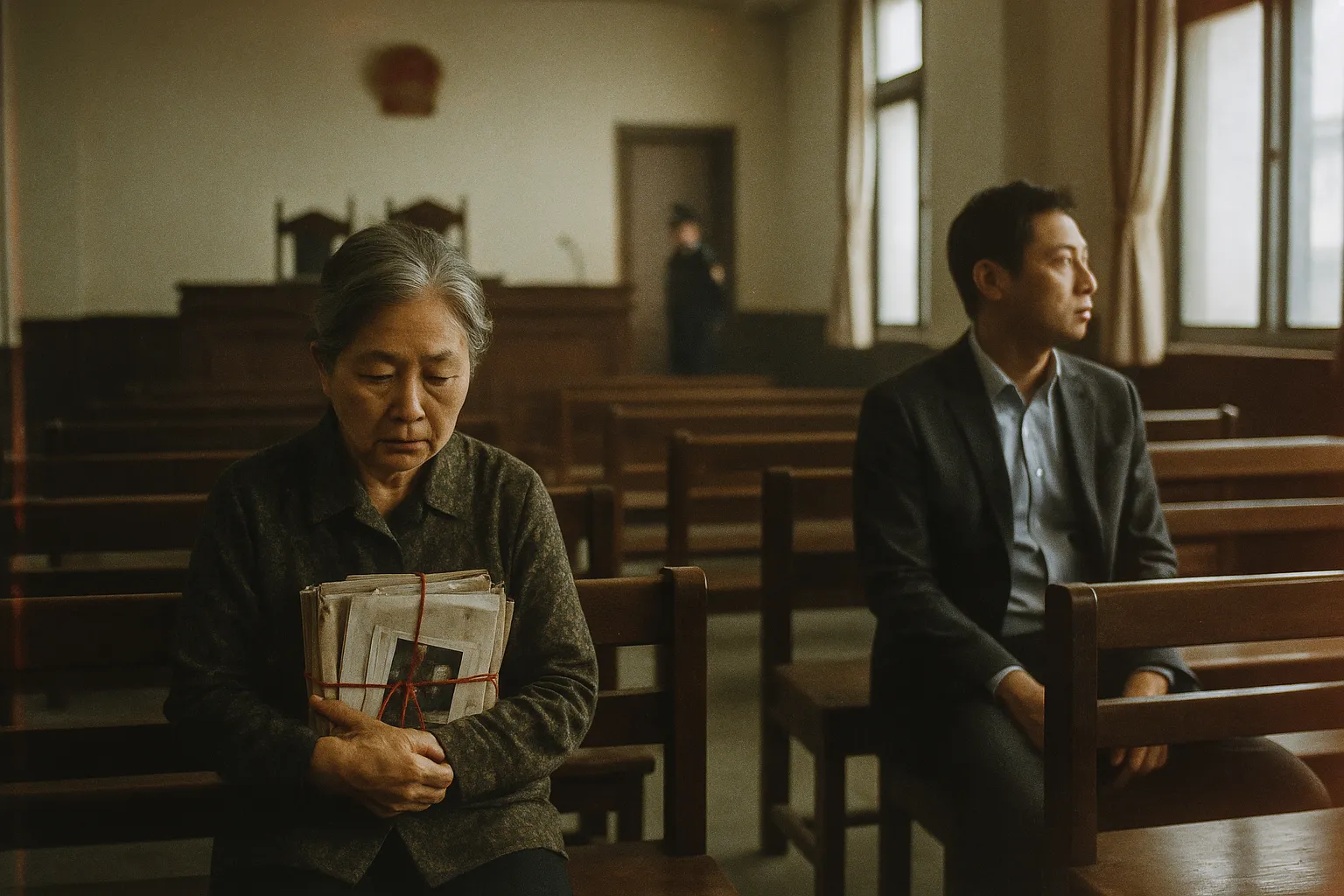
In December 2025, a woman of almost seventy walked into the Songjiang district court in Shanghai. Ms. Xu was suing neither the state, nor an employer, nor her neighbors — but her own son. For fifteen years she had fed, schooled and doctored his daughter. The son, she said, «washed his hands» of the child after his 2014 divorce, and answered her requests for help with his fists — she attached photographs of bruises to the claim. The demand: 360,000 yuan. In January 2026 the parties settled: the son transferred 200,000 — though not to his mother, but to an account opened in his daughter’s name. Even while paying for fifteen years of someone else’s work, he managed not to pay the person who did it.
This is no exotic one-off — it is an established category of Chinese litigation with a name of its own: «dai sun fei», «the grandchild-raising fee». The earliest prominent case dates to 2019, in Sichuan: grandmother Wang spent eight years caring full-time for her grandson while his parents worked in another city, and won 68,000 yuan. Her explanation deserves quoting in full: «I only want to let them know through this lawsuit that it’s their obligation to raise their children. They should respect our contribution.» A Beijing court, in the case of the Cai couple, drew the legal line worth memorizing far beyond China: occasional help is «family mutual assistance» and goes unpaid; but when able-bodied parents shift the child onto the elders for years, that is «obligation-shifting» — and it costs money. The couple was awarded over 120,000 yuan for six years. And it cuts both ways: a court in Tai’an dismissed a grandmother’s 100,000-yuan claim against her daughter-in-law with eight characters that translate roughly as: love for a child is no grounds for an invoice.
Now the number that explains why China’s courts are only the tip of the iceberg. According to the European SHARE survey, 52% of Europe’s grandparents cared for a grandchild at least once in the past year, and 12% do it nearly every day or more than 15 hours a week. Eurofound has priced unpaid childcare in the EU at €470 billion a year — 4.1% of the union’s entire GDP. The Spanish cardiologist Antonio Guijarro gave the condition a clinical name back in 2001: «slave grandmother syndrome» — hypertension, exhaustion, anxiety and guilt in women who «voluntarily and lovingly» pull a second full shift. He called it the pandemic of the twenty-first century — two decades before the word came to mean something else.
And in America the same machine was switched on by chemistry. The fentanyl graveyard also means 321,566 children who lost a father or mother to overdose in a decade — and a huge share of those children were taken in by grandmothers. More on them below. First, how the machine works from the inside.
The three levers that hold it together
Read a few hundred family conflicts — court files, forum threads, interviews — and you will see the whole war is fought with just three tools.
The first is guilt: «we raised you, now it’s your turn». The second is access blackmail: won’t help — won’t see the grandkids. That is not a figure of speech: a survey of two thousand British grandparents found one in seven cut off from easy access to grandchildren, and Cornell’s Karl Pillemer counted 27% of American adults — at least 67 million people — estranged from a family member; grandchildren are almost always the hostages of those ruptures. The third lever is the asymmetry of rights and duties, and it works in both directions: parents demand free labor from the elders while giving them zero say in upbringing; elders demand «grandparents’ rights» while offering no help. A German court in Frankfurt showed the extreme form: in March 2025 an appeals court struck down a ruling that had obliged a grandmother and grandfather to drive their grandchildren to visits with their imprisoned father — twelve trips a month, 23 kilometers each way. The lower court had assigned the couple a logistics duty without even hearing them. Note why it was overturned: procedure — not substance.
The US: a generation burying its children and raising its grandchildren
The American layer of this story is the most brutal, because there the machine was started not by poverty or tradition but by an epidemic. The US Census Bureau did something rare in its bluntness: it overlaid the map of opioid prescriptions on the map of households where adults are raising grandchildren. The match is almost perfect — Mississippi, Arkansas, Louisiana, Alabama. In Mississippi 2.9% of adults are raising grandchildren — double the national average. Keith Lowhorne of Alabama, a former TV news director, is raising his grandson Kyren, who was born with neonatal abstinence syndrome — a baby going through withdrawal in his first days of life. Lowhorne now runs the Grandparents as Parents foundation and hands out food to people like himself: last Christmas his drive delivered presents to 298 children being raised by their elders.
The scale: 2.5 million American children live in grandfamilies — households where grandparents or other relatives raise them with no parents present. The state saves $10.5 billion a year on this: for every child inside the formal foster system with stipends and a caseworker, there are nineteen children relatives carry outside the system — no stipend, no oversight, nothing. The result is predictable: 31% of grandchildren in such households live below the poverty line — double the rate among all American children.
Alongside the tragedy runs the farce — the daily trench war over ordinary babysitting. June 2024: an aunt sends her sister a $72 invoice for one day her niece spent at her house, itemized: $10 for cleaning after a wet bed, $2.50 for five toilet flushes, 50 cents per hand-washing. 2.7 million views. July 2025: a mother-in-law demands $500 upfront for five days with the grandkids — the forum splits down the middle. And the crown of the genre — Sofia Laine’s lawsuit against her own daughter, Vanessa Bryant, Kobe Bryant’s widow: $5 million, computed as $96 an hour for a twelve-hour workday over eighteen years of babysitting. Vanessa answered publicly that her mother «only occasionally babysat» — and called the suit extortion. The case settled quietly. Note the public reflex in all three stories: asking money for care reads as betrayal. Free labor here is not an arrangement — it is dogma.
Meanwhile the arithmetic sides with those who give up and drive to grandma’s: infant care in the US costs more than in-state public university tuition in 38 states, families spend an average of 24% of income on it, and 46% of young children live in «childcare deserts» with no licensed places to be had. AARP has priced the «grandparent economy» at $900 billion a year, $731 billion of it the value of unpaid care: 500+ hours a year per person on average. And 79% say the role is «very rewarding». Both things are true: people love their grandchildren — and the system knows it, which is exactly why it doesn’t pay.
Latin America: the grandmother as migration infrastructure
South of the US the question «should grandma provide care» does not exist — only the question of how many children she will get. Migration made the abuela a load-bearing element: parents go north, money goes south, children stay in between. In Central America roughly half of migrants’ children remain in the home country; Venezuela’s exodus, by the estimate of the Caracas organization Cecodap, left almost a million children without their parents — and, per UNICEF, in more than half the cases the grandparents took them in. Caracas grandmother Noris González, 54, five grandchildren, one with microcephaly, answers the question of what is hardest with one word: «Feeding them.»
Because that is the region’s second twist: here the grandmother is not «help» — she is the breadwinner. Per CEPAL, in four out of ten multigenerational households in the region the elderly member provides over half of family income. Remittances — nearly $48 billion a year into Guatemala, Honduras and El Salvador alone — are the grandmothers’ de facto wage: no contract, no vacation, no sick leave, no pension contributions. Legally she is meanwhile nobody: the Mexican «carta poder» — the power of attorney that lets a grandmother sign consent for her grandchild’s surgery or pick him up early from school — is valid for six months at most, then back to the notary.
In 2025 the machine found a new bottom. A Brookings study counted 146,635 US-citizen children whose parent was detained by immigration enforcement since January 2025; over 22,000 lost both at once. And the darkest documented episode is the story of the Venezuelan grandmother Marlen Ramírez: her grandson was deported to El Salvador’s CECOT mega-prison, contact was cut, and the woman died of a heart attack — the family directly links her death to the stress of not knowing whether the boy she raised was alive. The grandmother as the family’s last emotional infrastructure — and that infrastructure is mortal.
The EU: 20% daily in Italy, 2% in the Netherlands
The European map of this subject looks like two different continents. In Italy a grandchild is cared for almost daily by one grandparent in five; in the Netherlands — by 2%. A tenfold difference — and it is not about family warmth but about nurseries: in Italy’s South, coverage for the youngest runs at 13–16% in Campania, Sicily and Calabria. Demographers call this «unsupported familialism»: the state doesn’t build the infrastructure, so the family plugs the hole with itself — more precisely, with its oldest woman. In Scandinavia the grandmother is a crisis reserve; in Italy, Spain, Greece and Poland she is the load-bearing wall without which the mother cannot go to work. Spanish grandmothers spend 6.2 hours a day with grandchildren, grandfathers 5.3; at the extremes researchers record up to 70 hours a week — not help anymore, but a job and a half. Polish grandparents pull nine hours a week, and employment changes nothing: 62% of working grandparents provide care versus 61% of the retired. Greek grandmothers — nearly ten hours, with no state crutch whatsoever. Back in 2010 a Spanish union official proposed that grandmothers join the general strike — refuse the grandchildren for one day so the country could see what it stands on. The proposal remained a joke. A pity: it would have been the most honest stress test of the European economy.
But the EU also offers the most interesting attempts at honest paperwork. Bulgaria since June 2024 lets a mother transfer her maternity leave to the grandmother — at 90% of insured salary: where the state failed to build nurseries, it at least registered the grandmother as a worker. Portugal gives working grandparents 30 days of leave at 100% pay if the newborn lives with them. Hungary has had a «grandparental leave» since 2020 — though the state publishes no statistics on how many people have used it, and that silence speaks. Germany, meanwhile, legally recognizes exactly two states of a grandmother: either a formal service paid by bank transfer, deductible up to €4,000 a year, or a free gift of love. A third option — «we’ll sort it out family-style» — the German tax office does not provide.
Europe outside the EU: Britain counts, Moldova stays silent
Britain — where a nursery place for a child under two costs around £12–15 thousand a year and five million grandparents provide regular childcare — manages to price this labor four incompatible ways at once: £3.5bn, £7.3bn, £17bn and £96bn, depending on who is counting — charities, forums or an insurer with a marketing calculator. Nobody knows the true figure, and that too is a diagnosis: labor no one intends to pay for is not worth counting precisely. Britain’s one genuinely honest mechanism is pension credits for grandchild care: parents sign their National Insurance credit over to the caregiving relative — over 200,000 applications in nine years, up to £328 of annual pension per year credited.
British forums, meanwhile, are the theme’s most honest mirror. In a Mumsnet thread where the author declared that «grandparents must provide childcare for free», she was asked, verbatim: «Are you in a cult?» And in April 2026 a woman in her sixties wrote the saddest thread of the genre: working full-time, carrying all the grandchild care, «it’s exhausting — and ultimately we are not at our best with our grandchildren». The forum replied without anesthesia: «Carry on like that and you might not get to your pension, let alone see your grandkids become young adults.»
At Europe’s other end the same subject plays without forums or calculators. In Moldova, which a third of the population has left since independence, the children of labor migrants are counted with a fourfold spread: 25 thousand per the government, 50 per IOM, 100 per an older UNICEF estimate. Nobody knows exactly — and that is also an answer. Lilia Mutruc, who left her 2.5-year-old daughter with her own parents and went to trade at a Romanian market, told AFP the sentence worth all the statistics: «For many years, her crying echoed in my head.» Researchers of this region have also documented the most cynical figure in the entire global economy of care — the cascade: Moldovan and Romanian women go to Italy to care for other people’s elderly as «badanti», and when they return, they sit down to raise their own grandchildren, carried until then by another grandmother. Care flows up the chain of money and down the chain of women. The academic literature calls this global care chains; the Albanian scholar Julie Vullnetari named the phenomenon more directly — «orphan pensioners» — and titled her paper on rural Albania «Does your granny eat grass?». In Georgia, where migration separation has touched 39% of all children, children’s mental disorders quadrupled in six years.
Asia: care as a second shift
We have seen China in its courtrooms — now the scale. How many «left-behind children» the country has depends on who counts: about seven million under the narrow official definition, over sixty million under the broad one. The tenfold fork is itself a political fact: the state counts narrowly so the number stays small. Under the narrow definition, 96% of left-behind children are raised by grandparents. The mirror flow — 18 million elderly «laopiao», the old drifters: 43% of them moved to a strange city for one purpose — to nanny a grandchild, with no local registration, insurance or social ties. Nurseries cover under 8% of Chinese children below three — the grandmother here is not a choice but the only existing infrastructure. The generation is shifting, though: the same review found 70% of families reporting elders’ reluctance to provide care, and 61-year-old Ms. Lu supplied the line that belongs above this whole subject as an epigraph: «Having grown old, a person has the right to live their own life. Caring for a grandchild is a choice, not an obligation.»
South Korea named the phenomenon — «hwanghon yuka», twilight parenting — and measured it with a precision found nowhere else. A fresh study by the state institute KWDI: caregiving grandparents pull an average of 26.8 hours a week — nearly half a full-time job. And the central number of this whole article: 53.3% of them say they did not want to do it — but could not refuse their children. 73.7% report growing physical fatigue; nearly half want to stop now. The same Korea was Asia’s first to start paying: Seoul since 2023 transfers 300,000 won a month to a relative caring for a toddler 40+ hours a month — four thousand families applied in the program’s first three months. Money didn’t remove the conflict, only made it visible: in one viral story a mother-in-law who had priced her nanny services at 2 million won a month abruptly changed her mind and took the job for free — the moment she learned the daughter-in-law’s own mother was willing to do it for nothing. Competition for the grandchild beat the price list.
The Philippines expose the mechanism’s gender floor: when the father goes abroad, the mother raises the child; when the mother goes, the father, per the classic research of sociologist Rhacel Parreñas, «steps aside», and the child passes to grandmothers and aunts. Estimates of migrant workers’ children run from one and a half to nine million — no one takes a census of an «invisible population» that bothers nobody. And Japan is the control group of the whole experiment: grandparents co-reside with grandchildren in under 7% of cases versus 20%+ in Korea, daily care is physically impossible — and there is no «twilight parenting». Not because the Japanese love their grandchildren less. Because the structure gives no one to lean on anyone.
Ukraine: the institution nobody ever paid
On this map the Ukrainian grandmother is an old, proven institution that the war did not create but mobilized. The model «kids grow up at grandma’s because the parents earn abroad» was field-tested back in the 2000s: it was called «euro-orphans», and in some districts of Zakarpattia and Bukovyna migrant workers’ children made up, by estimates of the time, up to a third of all children. Radio Svoboda cited a grimmer figure: Ukraine’s boarding institutions held over a hundred thousand children for decades, but where in the early 2000s 40% of them had no living parents, by the late 2010s it was just 8%. Nine «orphans» in ten were orphans with living parents.
The war cut families in half — in both directions at once. 5.86 million Ukrainians abroad, 76% of them women and children: a mother left with her child — a grandmother left without her grandchild. Over a million people in the Armed Forces, 90% men: a father at the front — a grandmother receiving a grandchild. The kindergarten network meanwhile collapsed from 13.9 to 11.6 thousand institutions in four years, and for the first time the problem is not waiting lists: places exist, but a third of parents who keep children home fear air alarms, another 13% — the absence of a shelter. An empty kindergarten is not a solved queue. It is a child taken home «to grandma», because the shelter is terrifying.
Here is what the machine looks like in one person. Olena Dubynina moved from Sloviansk to Lviv in spring 2022 — following her son Andrii, wounded near Marinka. He died in July. The mother of his five children had abandoned the family even earlier. Olena raises all five grandchildren alone — from five-year-old Bohdan to seventeen-year-old Mykyta, who dreams of becoming an artillery officer like his father. The state is present in this story as a monthly guardianship allowance — 7 to 12 thousand hryvnias depending on the child’s age — and legally that is the child’s money, which the guardian accounts for. A grandmother’s wage does not exist as a category.
And here Ukraine’s legal paradox crawls out. De facto the state counts on grandmothers daily: kindergartens are empty, mothers are abroad, fathers are at the front. De jure the grandmother is a supplicant: in a landmark case that reached the Supreme Court, a grandmother whom the psychological assessment found «worthy in all respects» was allotted two hours a week — Saturdays, at the mother’s home, strictly in her presence. Two hours for worthy-in-all-respects. A full shift when the system finds it convenient; a two-hour limit the moment the grandmother dares to want something herself. The state’s answers to the care crisis — «eNursery» from 2026 and «eKindergarten» only from 2028 — treat the future. The present is being carried, unpaid, by women over 55.
What the science says: it’s the dose
Now the promised cherry — because the science here says something unexpected to both camps.
The Berlin Aging Study followed over five hundred people aged 70–103 for two decades — and found that among grandparents who helped episodically with grandchildren, mortality was 37% lower than among peers who helped no one. Half of the caregiving grandmothers were alive ten years after the first interview; half of the non-helpers had died within five. Grandchildren in moderate doses are literally medicine. Evolutionary anthropologists are unsurprised: Kristen Hawkes’s «grandmother hypothesis» has long argued that human longevity itself is an evolutionary product of grandmothering: Hadza women digging up tubers for their grandchildren allowed their daughters to give birth more often.
But the dose has a second end. An Australian study of women’s aging found an inverted U-curve: the best cognitive shape belongs to grandmothers minding grandchildren one day a week; at five or more days, working memory is worse than in those who do no minding at all. And where care stops being a choice — among custodial grandparents who replace parents entirely — a meta-analysis finds systematically worse mental health; in one included study, 41% of custodial grandmothers had clinical-level depression. The same act — «mind the grandchild» — heals at one dose and cripples at another. The difference between those doses has a simple name: consent, and the ability to stop.
The global backdrop, for scale: the International Labour Organization counts 16.4 billion hours of unpaid care every day — the equivalent of two billion people working eight-hour days for free, 9% of world GDP, $11 trillion a year. 76.2% of those hours are carried by women. The grandmother’s shift is simply the last, quietest floor of that pyramid.
Where the line is — and what people do about it
No ready-made academic scale of «where family ends and exploitation begins» exists — but the research literature yields a working frame of three tests. Exploitation begins where a person cannot say «no» without consequences, has no substitute and no right to a break — and is the last to learn her own schedule. Pass all three tests and it is a gift and a mutuality, however many hours it takes. Fail even one — and it is unpaid work, however tenderly it is named.
The practices that already work are prosaic to the point of indecency. Talk terms before the child is born, not after the third blow-up — «talk about these things at the beginning, not wait until an issue arises», family psychologists advise. Fix the days, hours and veto right — in writing, as a care agreement; it sounds cold exactly until you compare it with the alternative — a courtroom in Shanghai. Pay — in money, as in Seoul and Berlin; or at least in pension credit, as in London; or in official leave, as in Sofia and Lisbon. And strike from the family vocabulary the formula «grandma’s home anyway» — because that is the seed from which grow the seventy-hour weeks of Spanish grandmothers, the 53% of Korean ones who «couldn’t refuse», and the photographs of bruises in a Shanghai court file.
We have written before about what happens to a family that sees a person as a function — in men and in women. The grandmother is the third act of the same play, with worse bargaining power: less time, less health, and the smallest voice of all. The best thing you can do with a grandmother while you have one is not to appoint her the default nanny, but to ask her fifty questions about her own life while she can still answer.
The generation that raised us without robot vacuums, food delivery or two-year parental leave is now being asked to raise one more generation — free of charge, by default, with gratitude as the only currency. China’s courts, Korea’s ministries and Bulgaria’s parliament have already understood what most families have not: if labor can be measured in hours, it can be paid — and the person can be asked whether she wants to do it. The whole game changes with one shift: a grandmother’s help stops being the default and becomes a gift. And gifts, unlike obligations, have a strange property: people want to give them.
Frequently asked
What is «dai sun fei» and why do Chinese courts award money to grandmothers?
带孙费 — «a fee for raising the grandchild». Since 2019 Chinese courts have handled a steady stream of cases in which grandparents sue their own children for years of childcare — with awards from 68,000 to 200,000 yuan. The courts' logic: by default, care is «family mutual assistance», but when able-bodied parents dodge their child for years, that is «obligation-shifting» — and it must be paid for. Some claims are rejected: love, the courts say, cannot be monetized.
How many grandparents actually look after grandchildren?
In Europe, per the SHARE survey, 52% of grandparents cared for a grandchild at least once in the past year, and 12% do it almost daily or 15+ hours a week. In Italy one in five provides daily care; in the Netherlands — 2%. The difference is not love but nursery places. In the US, 69% of grandparents physically care for grandchildren, averaging 500+ hours a year, and 2.5 million children are raised in households with no parents present at all — by older relatives.
Does caring for grandchildren harm health or improve it?
It depends on the dose. The Berlin Aging Study found mortality 37% lower among grandparents who helped episodically. But an Australian study found an inverted U-curve: one day a week — the best cognitive shape; five or more days — worse working memory than in those who do no care at all. And among full-time custodial grandparents, one study found 41% with clinical-level depression.
Is it normal to pay a grandmother for childcare?
A growing number of countries answer «yes» — officially. Seoul has paid relatives 300,000 won a month for 40+ hours of care since 2023. Bulgaria since 2024 lets a mother transfer maternity leave to a grandmother at 90% of salary. Britain credits caregiving relatives toward their state pension — over 200,000 applications. Germany lets parents deduct up to €4,000 a year paid to a grandparent under a formal arrangement. The family taboo on money is a cultural habit, not a law of nature.
Where is the line between family help and exploitation?
Three working tests: can the person say «no» without financial and social consequences; is there a real substitute and a right to a break; was the schedule agreed in advance rather than imposed by the fact that «there is no one else». If even one test fails, it is no longer a gift — it is unpaid work without an employment contract. The key word is not «care» but «consent».
Comments
Signed-in readers only — to keep it human, not a bot swamp.