Winner's Curse in Business: How Victory Triggers Status Spending and Ends in a Cash Gap
First came the success. Then — a new sign, a new office, a new standard of living 'to match the status.' And then, quietly, came the box-office flop — and what killed it wasn't the fall, it was that very victory. A technical dissection of the most expensive asset in the economy and in life: a win silently switches on spending on image that strangles exactly what won. The winner's curse, diworsification, the peacock's handicap, and Orson Welles's Xanadu — on why the cash drowns more often after the toast than after the crisis.
I. Nobody goes bankrupt from defeat as often as from victory
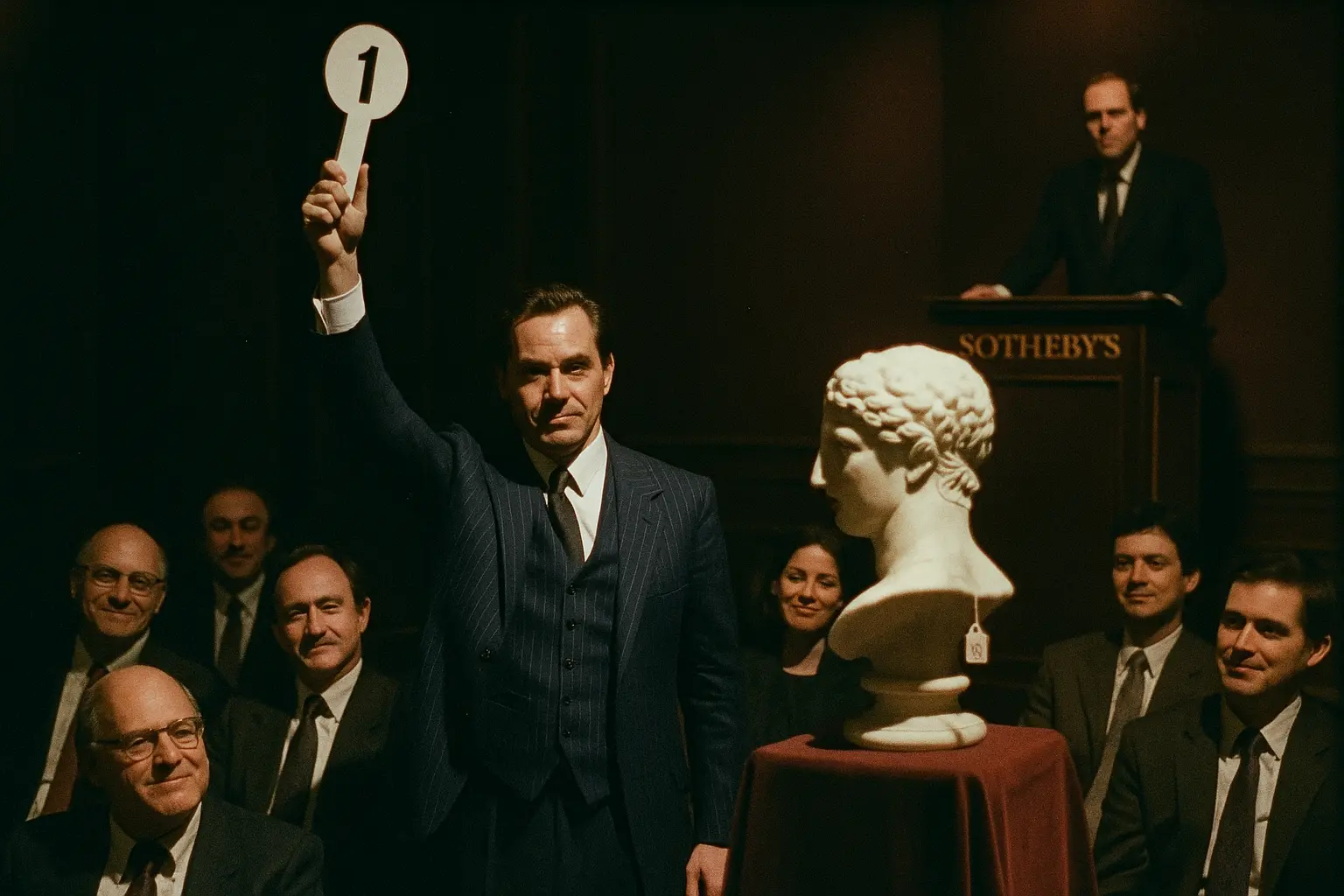
Ask anyone what nearly killed their business and you'll hear a respectable list: a crisis, a competitor, a bad year, "the market dipped," the pandemic, the war, a bad partner. Almost no one names the real suspect, because he doesn't look like a killer. He came with a cake. He brought a bottle. He gave the toast. The most common cause of a box-office flop is not defeat, but a victory that was celebrated too earnestly.
And this isn't an instructive parable from a business seminar. It shows up in the numbers, and from an unexpected angle at that — from mergers and acquisitions, that is, from the most ceremonial victories a company can possibly stage for itself. In 2024 KPMG broke down more than 3,000 public M&A deals worth over $100 million across a decade, 2012–2022. The result is brutally dry: 57.2% of acquirers ended up destroying value for their own shareholders. The sharpest detail is in the dynamics. In the months before the deal closed, these companies on average outran their sector by +13.2% in total shareholder return: the market applauded, the press wrote about visionaries, hands were shaken on stage. And two years after the ceremonial close, that same return fell on average to −7.4% below the sector. Between the applause and the collapse, no crisis occurred. A celebration occurred — and it turned out to be more expensive than any crisis.
So, statistically, the moment of the loudest triumph is also the moment from which the countdown to the flop begins. Not because victory is bad. But because someone walks in the door with it — someone who wasn't invited separately, but who always arrives along with the applause. Meet him in advance — from here on we'll call him by name.
I know this pattern not only from KPMG. I know it from the inside: a sum in the account that wasn't there before is almost automatically translated not into a "safety margin" but into a "new level" — a better office, a better sign, a better look for the business in other people's eyes. A first big victory rarely fortifies the rear; more often it finances the façade. This is our elephant under the rug: a win silently switches on spending on image that strangles exactly what won. A pricing page, a new brand, "we're a different league now" — it sounds like growth. It often works like slow self-strangulation.
II. The winner's curse: you won precisely because you overpaid
Let's start with the coldest lens — the economic one, because it's the one holding up the whole skeleton. There is a phenomenon with a name that sends a chill down your spine: the winner's curse. It was described in 1971 by three petroleum engineers — Capen, Clapp, and Campbell — in the Journal of Petroleum Technology, while observing auctions for offshore oil tracts. The picture repeated itself "year after year": the companies that won the tenders earned unexpectedly low returns. Not because they were unlucky. Because the very fact of winning was a diagnosis.
The mechanics are merciless in their simplicity. Picture an auction where everyone is bidding on the same thing — a tract where there is exactly as much oil as there is, the same for everyone. Each bidder estimates the reserve in their own way, some higher, some lower. The winner is the one who bid the most — that is, almost always the one who estimated the reserve highest, who erred in the most optimistic direction. Winning an auction is not a prize. It's a message: "congratulations, of all the participants it was you who overvalued the asset the most." You won not because you were the smartest. You won because you were the most enthralled.
Now substitute, in place of an oil tract, any large victory. A won tender. A purchased company. A funding round at a valuation that makes you dizzy. A big client for whom you promised a little more than you can deliver. In all these cases you receive a prize — and along with it an invisible bill for your own optimism. KPMG, in essence, measured the winner's curse across three thousand deals: those +13.2% before closing are the sound of overvaluation, applause for one's own optimism; those −7.4% afterward are the bill that arrives when reality checks the oil reserve against what you paid for it.
The same place is where the word Peter Lynch coined specifically for this disease fits: diworsification — worsening through expansion. In One Up on Wall Street (1989) he described the familiar trajectory of a company that suddenly has spare money: it buys businesses it doesn't understand, steps outside its circle of competence — and makes its shareholders poorer rather than safer. The classic plot: a firm wins, gets the cash, and instead of deepening what already works, it sprawls outward. Because outward looks like grandeur. And inward is boring and not photogenic.
That's why the first thesis of this text isn't moralizing but mathematical. A big win systematically shifts you toward overvaluation — of yourself, of the market, of future cash flow. And an overvalued winner almost always loads spending onto his victory that is calibrated for a world that doesn't exist yet. And when the world doesn't show up exactly on schedule — the cash drowns not from defeat. It drowns from the weight of its own toast.
III. The peacock's handicap: why we pay for what harms us
Fine, the skeptic will say, let's grant that overvaluation is the mathematics of an auction. But why, then, do winners so unanimously carry their money precisely toward display — toward the office, the sign, the suit, the car, the "now we can afford it"? Why does a win so reliably convert not into a safety cushion but into a peacock's tail? Here we need a second lens — the evolutionary one.
In 1975 the Israeli biologist Amotz Zahavi proposed an idea that at first seemed absurd: the handicap principle. Why does the peacock have such a ridiculous tail — heavy, conspicuous to predators, inconvenient? According to Zahavi, precisely because it is expensive and harmful. A weak male won't survive with such a burden; only a truly strong one can survive carrying it. The tail is an honest signal precisely because it can't be faked cheaply: it costs its bearer as much as a weak one is unable to pay. The signal is true exactly to the degree that it is painful.
An honest footnote, because we don't deal in folk-science: Zahavi's mechanism itself was later sharply criticized — the mathematical models long failed to add up, and some biologists consider the "handicap principle" in its original form refuted or heavily narrowed. But the basic intuition of costly signalling — that a reliable signal must be expensive, otherwise anyone could fake it — has remained one of the load-bearing ideas of signalling theory. And for our elephant it's precisely that intuition that matters.
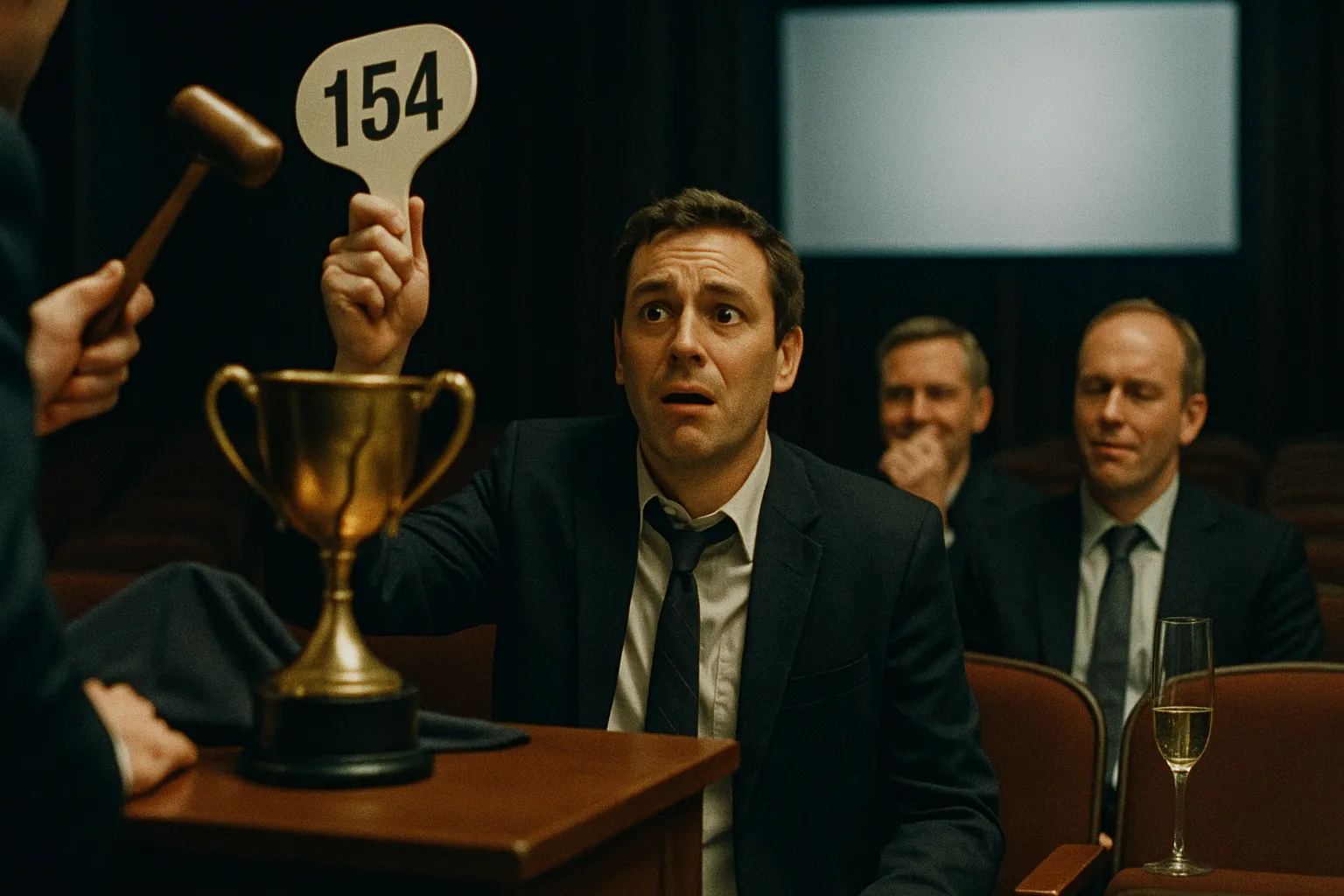
Because now look at a fresh winner through the eyes of this theory. A new office with a glass façade, a six-figure rebrand, a flagship car, a watch, first class — this is not consumption. This is the peacock's tail: an expensive, inconvenient, partly harmful signal that says "we're real, we're strong, we're here for the long haul." It works — precisely because it's expensive. Nobody reads a cheap signal; anything free can be faked. That's why the market, partners, brides, and clients subconsciously believe precisely the visibly costly gesture. And that's exactly why a winner instinctively reaches to make it: to show his new rank in the one way the animal world believes — by burning a resource for show.
The problem is that the peacock wears its tail all its life and doesn't take out a loan for it. A person and a company do. The biological signal is honest because it's paid for out of existing strength. Image expansion is dishonest exactly when it's paid for out of future, not-yet-existing strength — out of expected but not-yet-received cash flow. Then the tail turns from an honest signal into a bluff on credit. And the predator that eventually comes is not a lion. It's a cash-flow gap.
IV. Conglomerate fever: when "synergy" was a fashionable word for a box-office flop
The third lens is the historical one, because today's founder who, after his first million, buys a second business unrelated to the first is reinventing a wheel that was built in the 1960s on a full industrial scale. Back then this disease had a proud name: the conglomerate.
The hero of the era is James Ling, a Dallas entrepreneur. His Ling-Temco-Vought (LTV) swallowed company after company: electronics, packaged beef, even aircraft for Vietnam. The logic went by the magic word synergy — supposedly the whole is worth more than the sum of its parts. The growth figures were mesmerizing: LTV's sales were $36 million in 1965 and swelled more than a hundredfold — to $3.8 billion in 1969. On the chart, a rocket. Beneath the chart, emptiness: investors eventually noticed that the companies gathered together were not growing faster than they had grown individually before being acquired. There was no synergy. There was a toast dressed up in accounting. In 1970 the board was forced to remove Ling himself; in 1986 LTV went into bankruptcy with $6.14 billion in assets and $4.59 billion in debt — at the time the largest corporate bankruptcy in U.S. history.
Standing beside him was an even more monumental example — Harold Geneen of ITT, who in the second half of the '60s was called "the world's greatest businessman." ITT simultaneously made telephone equipment, ran hotels, baked bread, rented out cars, sold insurance, and grew lawn seed — a corporation with a herbarium instead of a strategy. Over nearly twenty years Geneen bought more than 350 firms; no sober accountant could have held in his head what he even owned. The empire looked invincible exactly until rates rose and the market cooled — and then it turned out that under "synergy" there had lain, all this time, one big toast made on borrowed money.
But why go to the '60s when there's a textbook modern case. In January 2000 AOL announced its merger with Time Warner — a deal of roughly $165 billion, a marriage of the "new economy" to the "old," meant to create the media giant of the future. The toast was on a planetary scale. And already by 2002 the company wrote off about $99 billion in "goodwill" — that is, that's what the victory that never actually happened was worth on paper — and posted an annual loss of almost $100 billion, the largest single-year loss in the history of corporate America at the time. The marriage of the century turned into the divorce of the century in a record two years — even spectacular catastrophes rarely manage it that fast. And again: between the engagement and the ruin no external crisis occurred. An overvalued victory occurred — and the bill for it, written out in the billions of something that had never existed.
The sharpest example is not the one where a company sprawled outward, but the one where it flooded its own core while chasing scale. In February 2007 the founder of Starbucks, Howard Schultz, sent an internal letter to executives with a title that is itself a diagnosis: "The Commoditization of the Starbucks Experience." The company, he argued, in order to grow from fewer than a thousand cafés to thirteen thousand had made a series of decisions that "watered down" the very thing that made it special: automatic espresso machines instead of the ritual, packaged coffee instead of the aroma in the room, "cookie-cutter" design instead of a neighborly atmosphere. The growth was real. And it was the very thing quietly killing the reason people paid four dollars for a coffee in the first place. In early 2008 Schultz returned to the CEO's chair, closed about 600 unprofitable cafés in the U.S. (many of which had been opened hastily, "across the street from one another") — in the quarter ending March 30, 2008, profit had already fallen by 28%. The victory of scale nearly ate the victory of meaning.
V. Xanadu: the frame where the victory is already dead and the building is still going on
The fourth lens is cinema, because a single frame shows this mechanism faster than any table. And there is a film made about exactly this — Orson Welles's Citizen Kane (1941).
Charles Foster Kane won everything: a newspaper empire, a fortune, the power to shape a nation's opinion. And then he began building Xanadu — a palace on such a scale that in the frame it looks more like a warehouse of civilization. The camera shows endless halls crammed with crates: Kane buys up statues, paintings, "the very stones of other palaces" from all over the world — so many that it is physically impossible to unpack or even to catalog them. The narrator in the film calls it "the loot of the world." Except the loot already means nothing: by the end Kane sits in this palace alone, abandoned, unloved, among thousands of crates that were never opened. The victory has long been dead — and the building of a monument to it is still going on. In the finale the servants dismantle the spoils, and the child's sled — the one thing he ever truly loved — flies into the furnace along with the rest of the junk.
Here is the pure portrait of our elephant. Xanadu is image expansion taken to the limit: when it's no longer clear where the person ends and the façade of his success begins. Kane wasn't buying statues. He was buying proof that he had won. And it was precisely this proof that ultimately became an empty warehouse around a lonely man. Cinema here is more honest than business literature: it doesn't say "don't build." It shows a silent frame — a rich man alone among crates of "the loot of the world" — and lets you recognize for yourself whose office this really is.
And now from the palace — to the kitchen, because the same mechanism lives there too. A family finally moves "to a new level": a bigger house, a better car, a school "for our circle," a vacation you can tell people about. Incomes rose — and immediately the "obligatory" expenses rose, because a new standard of living instantly becomes a new norm, below which you're already ashamed to fall. Psychologists named this the hedonic treadmill: back in 1978 Brickman and colleagues compared lottery winners with people who had been paralyzed and found that the level of happiness in both, after a while, returns to baseline — a person gets used to both the win and the loss. A family that raised its standard to match a first success ends up on that same treadmill: running faster to stay in place, and the very first failing quarter catches it already without a cushion — because the cushion was long ago remade into a peacock's tail. A box-office flop at the level of a family looks just like one at the level of AOL, except instead of goodwill they write off a vacation, and instead of the board of directors it's the bank that removes you.
VI. The mirror: meet the press secretary of your success
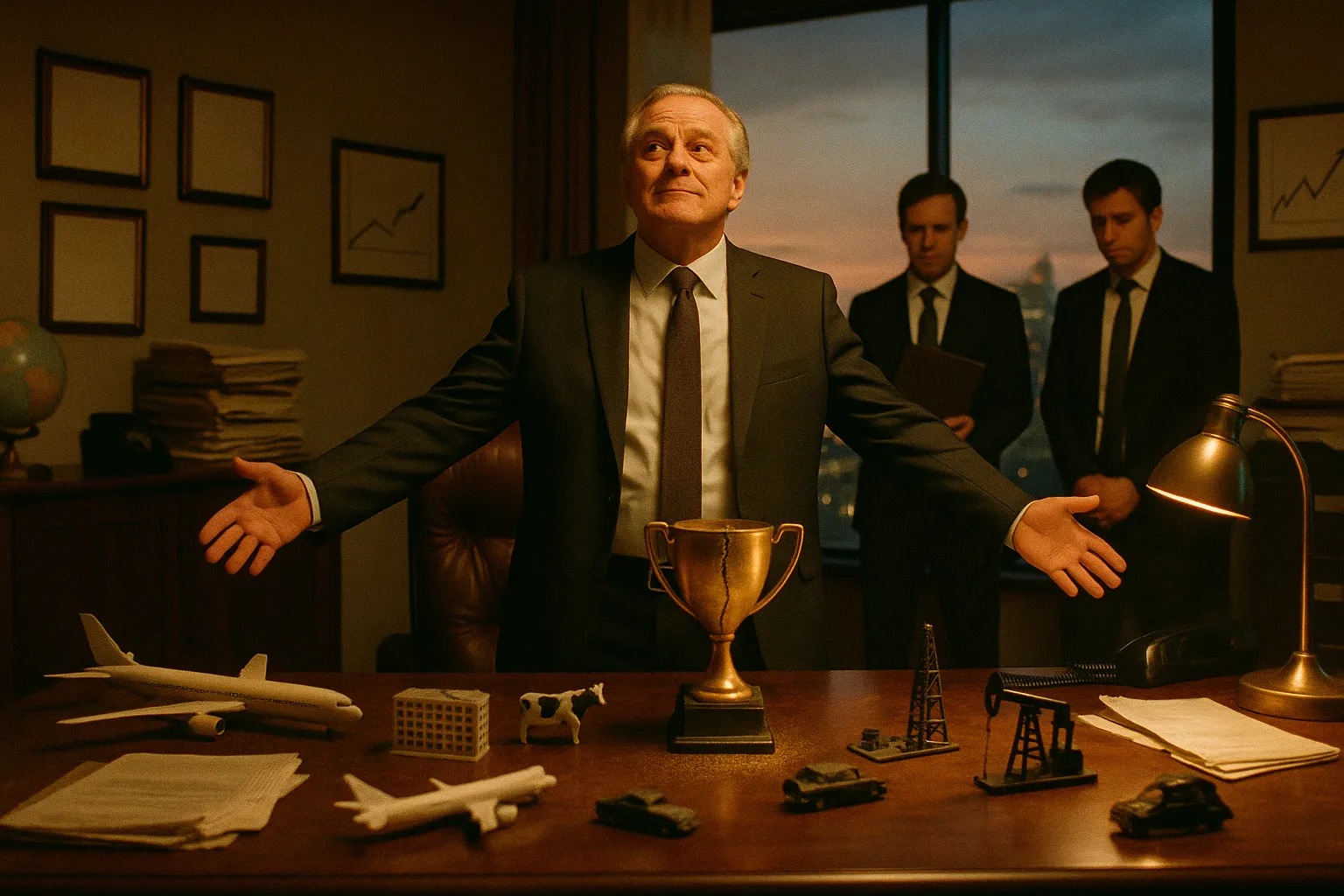
It's time to name the enemy, because an abstraction doesn't frighten, but a face does. Inside everyone who has won, a quiet, smiling, very persuasive functionary wakes up. Let's call him the internal press secretary of success. His job is not to count money (that's boring, that's for the accountant). His job is to make sure the look of the victory matches its size. He's the first to run into the office after good news and say: "this calls for a celebration," "this office is beneath us now," "you can't show up to a client like that in this car," "time to refresh the brand, we're a different league now."
The press secretary never lies outright. He does something subtler: he raises your baseline. What yesterday was a celebration becomes, at his prompting, today's minimum, below which you supposedly lose face. He feeds on your fear of looking smaller than you've just become. And the most insidious part — he issues bills for future success today, because "we're obviously growing, so we can afford it." He confuses cash with self-esteem and sincerely doesn't understand why those are different accounts. To him a new office isn't an expense but a declaration to the world about status; and the declaration you want to make louder than the applause that has just died down. He's the only employee you pay to spend your money — and the only one you'll never fire, because he is the part of you that enjoyed the victory most loudly.
The press secretary's problem is that the bill for his work can't be paid off with a new victory — because every new victory switches him on again, and he raises the baseline again. This is the winner's curse on a domestic scale: you won — you overvalued — you expanded the image — you raised the fixed costs — and now you have to win even more just to maintain the level you got yourself hooked on. A classic elephant: everyone sees the new office, no one sees that it ate the cushion that would have saved you in a bad quarter.
Here's what it looks like when you honestly add up a victory and what it silently drags behind it:
| The victory | What the press secretary whispers | What actually gets written off |
|---|---|---|
| A big tender / contract won | "This calls for a celebration and a show — we're a player now" | Margin: you overvalued (winner's curse) and promised a little more than you can deliver without a loss |
| The first serious profit | "This office / car / sign is beneath us now" | Safety cushion: fixed costs rise to match income that isn't yet stable |
| A funding round at a high valuation | "We're growing, we can hire and expand aggressively" | Burn rate: the valuation is overstated (like the +13.2% TSR before closing at KPMG), the costs are real already now |
| A loud acquisition / a second business | "Synergy! The whole is greater than the sum of the parts" | The core: diworsification — attention and cash sprawl outside the circle of competence (Lynch; LTV; AOL) |
| Scaling up what people loved | "More locations, more people, more of everything" | Meaning: "commoditization of the experience" — scale dilutes the reason you were chosen (Starbucks) |
| The family moved "to a new level" | "We earned it — this is how we should live now" | Reserve: the hedonic treadmill makes the new standard the norm; the first bad quarter — already without a cushion |
The most ironic thing in this table is that the right-hand column is almost never said out loud. The press secretary is loud, the accountant is quiet. That's why at the funeral of a business everyone remembers the crisis and the bad year — and no one remembers the banquet from which it all began to sink.
VII. The advantage isn't in not celebrating, but in keeping the cash and the image apart
It's easy to collapse here into cheap asceticism: "don't spend, live modestly, success is a trap." That's the same lie as uncontrolled expansion, only poorer. The signals are real: the market really does read a costly gesture, the client really does look at the office, the peacock really won't survive without a tail. To pretend you don't care about the look is also a costume, just a cheaper one, and sometimes more expensive in its consequences: under-signal — and you won't be taken for one of their own. The question isn't whether to have a tail.
The question is what it's paid for with — with existing strength or with future strength that isn't there yet. The adult version of this pattern doesn't kill the drive to expand; it puts one wall and one interval of time between the victory and the spending. The wall is separation: the cash apart, the image apart, and the image is never financed out of money not yet earned. The interval is the pause between the toast and the check — the very one that neither Kane, nor AOL, nor the person who changes his car after the first good month could withstand.
And there's one precise test for catching the press secretary with his hand in your cash. Before any "now we can afford it" expense, ask yourself: am I doing this to work better — or to look better as someone who has already won? If the expense would survive the absence of an audience — it's yours, it's a tool. If it dims the moment you remove the audience — you've just caught the press secretary signing a bill for a future that hasn't yet arrived. What makes sense only in front of witnesses doesn't pay for the business. It pays for the tail.
A mature victory looks boring, and that's why it happens so rarely: first the cushion, then the tail; first the depth of what won, then the breadth; first survive the first bad quarter at this new altitude, and only then — the sign. The peacock that first grew its muscles and only then its tail will survive the winter. The one who took the tail on credit against a spring that came late — feeds itself to the crisis it will later name as the cause.

Kane died among crates he never opened. AOL wrote off almost a hundred billion dollars of a look behind which there was no reality. Ling built a rocket out of companies that couldn't fly together. They all won for real — and all of them were killed not by the next defeat but by the way they celebrated the previous victory. The elephant nobody wants to see is simple: success is the most expensive thing that can happen to you, if you let it write its own bills.
Defeat kills honestly and at once — you can see it, you fear it, you prepare for it. Success kills slowly and to applause: first it treats you to a drink, then it raises your baseline, then it presents the bill for a future that hasn't yet arrived — and you pay it with the cushion that was supposed to save you. So next time, when after a victory you feel the pull of "now we can afford it," stop for a second and ask one thing: am I building the rear — or is the press secretary of my success ordering a peacock's tail again, on credit, against a spring that may never come?
Frequently asked
What is the winner's curse and where does the term come from?
The winner's curse was described in 1971 by three petroleum engineers studying offshore oil lease auctions: companies that won bids consistently earned lower returns than expected. The mechanism is blunt -- in a common-value auction, the winner is almost always whoever estimated the asset highest, meaning whoever was most optimistically wrong. Winning is not a prize; it is a diagnosis that you overvalued.
If success triggers overspending, should you avoid pursuing big wins at all?
The problem is not the win but what funds the peacock tail: existing strength or future cash flow that has not arrived yet. A mature victory first builds the cash buffer and deepens the core, then -- and only then -- updates the signboard. The reflex to spend on image precisely when applause is loudest is the mechanism that converts triumph into a cash crisis.
But could a costly rebrand or premium office genuinely attract better clients and pay for itself?
Costly signalling is real -- markets do read an expensive gesture, and a cheap signal is ignored. The question is not whether you need a tail, but whether it is paid from money already earned. A peacock carries its tail on existing strength and takes no credit for it; image expansion funded by anticipated but not yet received cash flow turns an honest signal into a leveraged bluff.
KPMG found 57% of acquirers destroyed shareholder value -- does that mean most business winners actually lose?
The statistic targets a specific trigger: a company at peak market valuation makes its most ceremonial move. In the month before deal close these companies outperformed their sector by 13.2%; two years after they trailed by 7.4% -- with no external crisis in between. The act of winning followed by celebration is itself the value-destruction mechanism, independent of base-rate business survival statistics.
How do you practically tell a useful post-success expense from a status expense?
One test: ask whether the expense survives the removal of an audience. If it dims the moment there is no one watching, it is a tail, not a tool. The working rule: first build a cash buffer large enough to survive one bad quarter at the new altitude, then -- and only then -- expand the image, funded exclusively from money already earned, not money projected.
Comments
Signed-in readers only — to keep it human, not a bot swamp.