publications

All publications

84 essays · new posts daily · Full archive in Ukrainian →

1 min

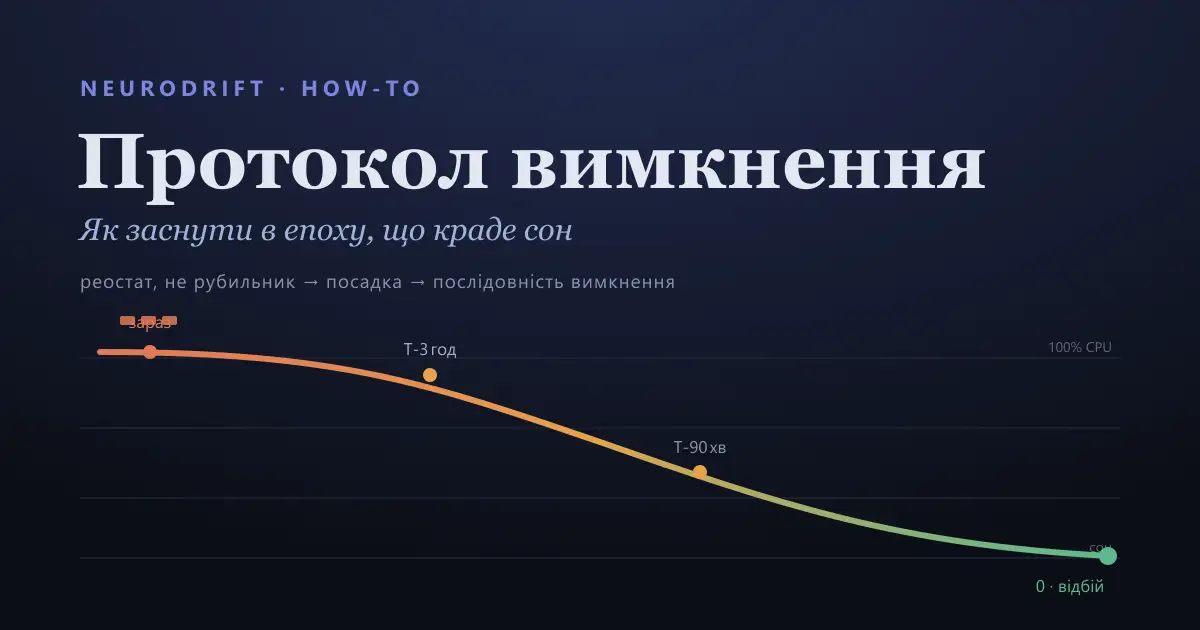
The Shutdown Protocol: how to fall asleep in an age that steals sleep

An evidence-based 2026 protocol for falling asleep and sleeping well: sleep is a dimmer, not a switch. A step-by-step descent corridor, an honest comparison of techniques by strength of evidence (CBT-I, breathing, light, temperature), caffeine and sleep-window calculators, a bedroom audit, 12 myths on the table, and separate routes for sleep under hard conditions — war, young kids, ADHD, shift work, menopause.

  • sleep
  • health
  • focus

23 min

A Brand Without Wikipedia Is a Company Without a Passport in the Age of LLMs

AI search no longer just finds companies — it explains them before the buyer ever opens your site. If a brand has no externally verified entity-identity (Wikipedia, Wikidata, Schema.org, LinkedIn, independent sources), the model does not stay silent — it writes your biography in your place. An anatomy of brand statelessness, with verified numbers, a named antagonist and a 60-minute audit you can run today.

  • ai-search
  • entity-first
  • brand-visibility

32 min

Capital Hired You a Guard — and Forgot to Let You Into Your Own Life

Capital automatically converts not into quality of experience but into options — and options without direction become a wealthy version of scatter. On the internal Status Butler who buys life markers without knowing how to live, the Presence Accountant who counts recurring living touches, and Return on Presence — the metric that starts working exactly where 'how much does it cost' ends.

  • life
  • money
  • presence

19 min

AI Visibility as Passport Control: Why 87% of Pages Don't Exist in the Knowledge Graph

A living guide to AI visibility for ChatGPT, Perplexity, and Gemini: how entity works in the knowledge graph, why Wikidata matters, what the first peer-reviewed GEO study (Princeton, KDD 2024) actually found, and why black-hat for LLMs is now classified as a security incident under OWASP LLM01. With verified numbers from Pew, Semrush, Kalicube, and a self-audit matrix you can use today.

  • ai-visibility
  • knowledge-graph
  • seo

47 min

Intellectual Addiction: How Your Mind's Distillery Chases Its Own Tail and Evaporates the Product Itself

Stuart Oskamp, 1965: the more data, the more confident the psychologists became — 33→53% — while accuracy stayed frozen at 28%. A longread about the mind's distillery with its coil looped back into the cube: books, tabs, AI responses are distilled for years, while the action flask stays empty. The neuroscience of seeking, AI as turbocharger, founder traps, an honest devil's advocate — and the valve you open without closing the tab.

  • thinking
  • attention
  • AI

16 min

How Ukraine Accidentally Became NATO's R&D Lab While NATO Was Still Writing Tenders

Operation Spiderweb wrote off a third of Russia's strategic air fleet with $2,000 drones, while the F-35 at $2 trillion waits five more years for an upgrade. This isn't a story about weapons — it's a story about two speeds of thought. A breakdown through cost-exchange, Boyd's OODA loop, 'Pentagon Wars,' and the honest nuance that the lab runs in both directions. With a decision-loop audit tool for your own cycle.

  • war
  • Ukraine
  • defense industry

33 min

Knowledge Graph or Death Without a Scandal: How to Vanish from a Market in a Quarter Without Doing Anything Wrong

In one week in June 2025, Google quietly deleted more than 3 billion entities from its Knowledge Graph — no announcement, no email, no warning. Brands in 2026 don't die in a blast; they die in JSON-silence. One morning AI Overviews describes you in someone else's words, ChatGPT says of your founder, 'I don't have reliable information,' and a quarter ago everything was fine. This isn't a post about SEO. It's an audit of whether you exist for the machine.

  • ai-search
  • knowledge-graph
  • wikidata

32 min

The Teflon life: when nothing sticks to memory anymore

The metro, the turnstile, two hryvnias you don't have. Sour dumplings from the train, fried over with ketchup until the smell of sour becomes just the smell of frying. Back then everything hurt — and everything was alive; it was one and the same fact. Then money arrives and spins a cocoon: delivery instead of the market, a taxi instead of the minibus, a curated circle instead of the random one. Across two samples of N=118 026, higher income doesn't switch off sociality — it privatizes it: fewer neighbors, more of your own people. Killingsworth: ~¾ of the income→happiness link runs through a sense of control, and control is the very material the cocoon is woven from; the $75k ceiling was overturned in 2023 — so the flatness of a rich life is not a ceiling of money but a design choice. A text about the Teflon life that nothing sticks to — and about engineered permeability: calibrated friction instead of maximal.

  • життя
  • гроші
  • увага

17 min

A Conductor at Double the Rate: Claude Fable 5 and the New Economics of AI Intelligence

Dnister breaks down the launch of Claude Fable 5 — Anthropic's first generally available Mythos-class model at $10/$50 per million tokens. Why 'should we switch' is the wrong question, the new economics of AI (cost-per-task versus cost-per-token), how to route tasks across Haiku, Sonnet, Opus and Fable, a fact-checked effort-level grid, the counter-thesis about definition of done, why 1M context is not memory, and the anti-patterns that burn budgets. With pricing and routing tables as of June 2026.

  • claude
  • fable-5
  • anthropic

22 min

Saylor and MicroStrategy's Perpetual-Motion Machine: How MSTR Fell from 3.89x to Parity

For six years the machine turned $1 of stock into $3.89 of Bitcoin and called it strategy. It worked right up until someone walked over with a flashlight and read the gauge. A breakdown of what happens to any flywheel when reflexivity reverses — and why a perpetual-motion machine spins only as long as the crowd sincerely doesn't want to approach the meter.

  • markets
  • Bitcoin
  • MicroStrategy

35 min

The CRM polygraph: the software knows you're lying before you finish your coffee

We hate the customer-tracking software not because it's complicated. We hate it because it's the one place in the company where what we said sits right next to what we actually did — and the gap shows up as a number. Most 'CRM failures' are really a failure of patience with your own reflection. Four simple checks catch the self-deception with about a week's margin of error.

  • crm
  • sales
  • self-deception

7 min

The market is a crowd pretending to be a calculator

Over 20 years, missing just the 10 best days in the market roughly halves your final return. And most of those best days happen within two weeks of the worst ones, in the very heart of the panic. The market's greatest generosity hides inside its greatest fear. It's not a calculator. It's a crowd holding a calculator with trembling hands. An anchor dissection of the 'Markets' rubric: why price is a consensus of emotion in the costume of math, and where the crowd finally stops lying.

  • markets
  • capital
  • psychology

21 min

Marathon and Ultramarathon Without Illusions, Romance, or Vanilla

Not how to run 42.195, but why. Roughly half of all finishers cross the line with elevated troponin — the same blood test that diagnoses a heart attack in the ER. The fittest hearts carry the most coronary plaque. The average person's first marathon comes at around 38, not 18. A dissection of the physiology without anesthesia, of proving yourself through the body, and of a $5.2-billion suffering industry — plus the honest line past which running adds years to your life instead of trading them away.

  • marathon
  • endurance
  • psychology

11 min

A mortgage to swat a mosquito: the math in which the rich just lose more slowly

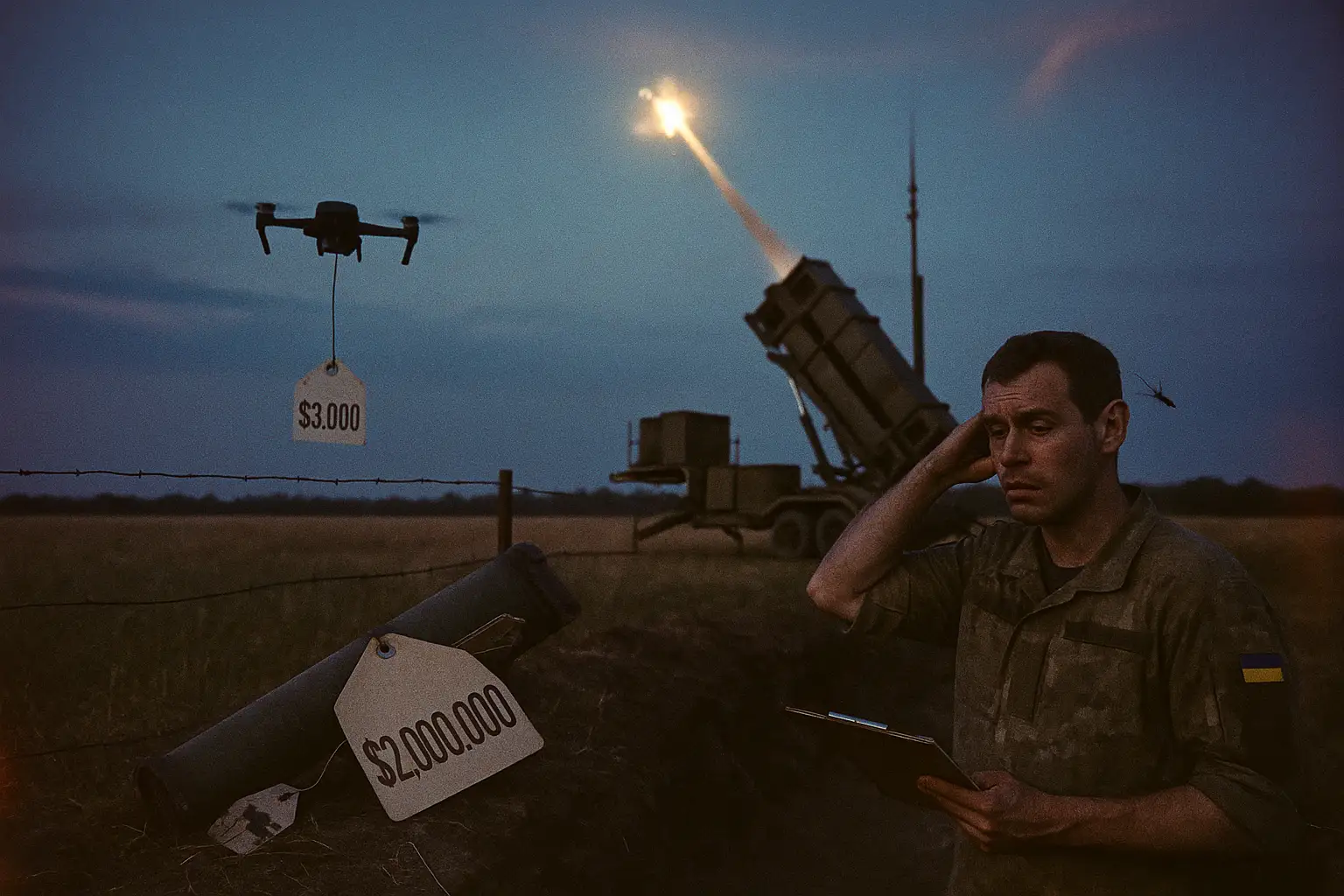
All nine previous texts were about how the way we fight is changing: drones, surveillance, asymmetry, the algorithm, open source. This one is about the older, duller truth beneath all of it. Big wars are won not by a commander's genius or by better weapons, but by whoever's economy, demographics, and political will hold out longer. War is three clocks: combat losses, economic attrition, and the patience of society. The loser is the one whose clock stops first. The synthesis of the series.

  • war
  • economics
  • attrition

10 min

War Went Open-Source

Weapons are no longer built solely by closed corporations from secret blueprints. They are now developed like open code: drawings are posted online, enthusiasts print them on 3D printers, the community forks and improves them, shares them in chats. The hobby of makers and RC modellers has become a military supply base. War has migrated from the closed defence industry's 'cathedral' to the 'bazaar' of distributed development — in Eric Raymond's terms. And the bazaar's chief rule is merciless: a published file can never be recalled.

  • war
  • technology
  • open-source

10 min

A Million Drones — a Test of the State's Ability to Learn

When a state announces 'we'll build a million drones,' everyone hears a production figure. In truth it's a stress test: are the institutions able to learn, coordinate, scale, and absorb what they've made. The factory is the easy part. The hard part is training operators, delivering, writing it into doctrine, closing the feedback loop — and not turning the number into theatre. On the state as a system that learns, on the learning rate — and on Goodhart's law, which turns the goal into a performance.

  • war
  • technology
  • state

13 min

The Algorithm as Officer

In 1983 a Soviet officer, Stanislav Petrov, saw 'missiles incoming' on his screen — and refused to believe the machine. He may have saved the world. Today the machine does not warn; it proposes targets: it ranks, recommends, compiles lists. The human stays in the loop — but increasingly only as a signature beneath the algorithm's decision. On the delegation of killing, automation bias, the accountability gap, and the defining question of the era: is anyone left who can still say 'no'?

  • war
  • technology
  • artificial-intelligence

12 min

Electronic Warfare as the New Artillery

Stalin called artillery the god of war. In the 21st century a new god has appeared — an invisible one. Electronic warfare doesn't destroy the drone; it severs its nervous system: it jams the control channel, spoofs the navigation, makes the machine blind in a second. The drone falls without a scratch. This is the war for the electromagnetic spectrum — invisible terrain fought over as fiercely as heights once were. And, as in *Dune*, it brings back to the field the oldest solution of all — the wire.

  • war
  • technology
  • electronic-warfare

12 min

The Shahed Is the Kalashnikov of the 21st Century

The most successful product of the 20th century was neither the car nor the phone, but the Kalashnikov rifle: over a hundred million units, cheap, indestructible, indifferent to ideology. It democratized the firepower of infantry. The cheap kamikaze drone does the same thing — but raises the democratization one floor higher: from the tactical shot to strategic range, the last monopoly of great powers. On the weapon that redistributes power downward — with figures and tables.


  • war
  • technology
  • drones

12 min

Ukraine as NATO's R&D Lab

Western weapons are born on a ten-to-twenty-year cycle: requirement, tender, prototype, trials, production run. Ukrainian drones reflash their firmware overnight and ship to the front by morning. This is a collision of two development models — the slow procurement 'waterfall' and continuous combat integration. And the most uncomfortable question: what kind of lab is it where the test subjects die and the reports are read by someone else?

  • war
  • technology
  • defense-industry

13 min

Kill Chain in Minutes

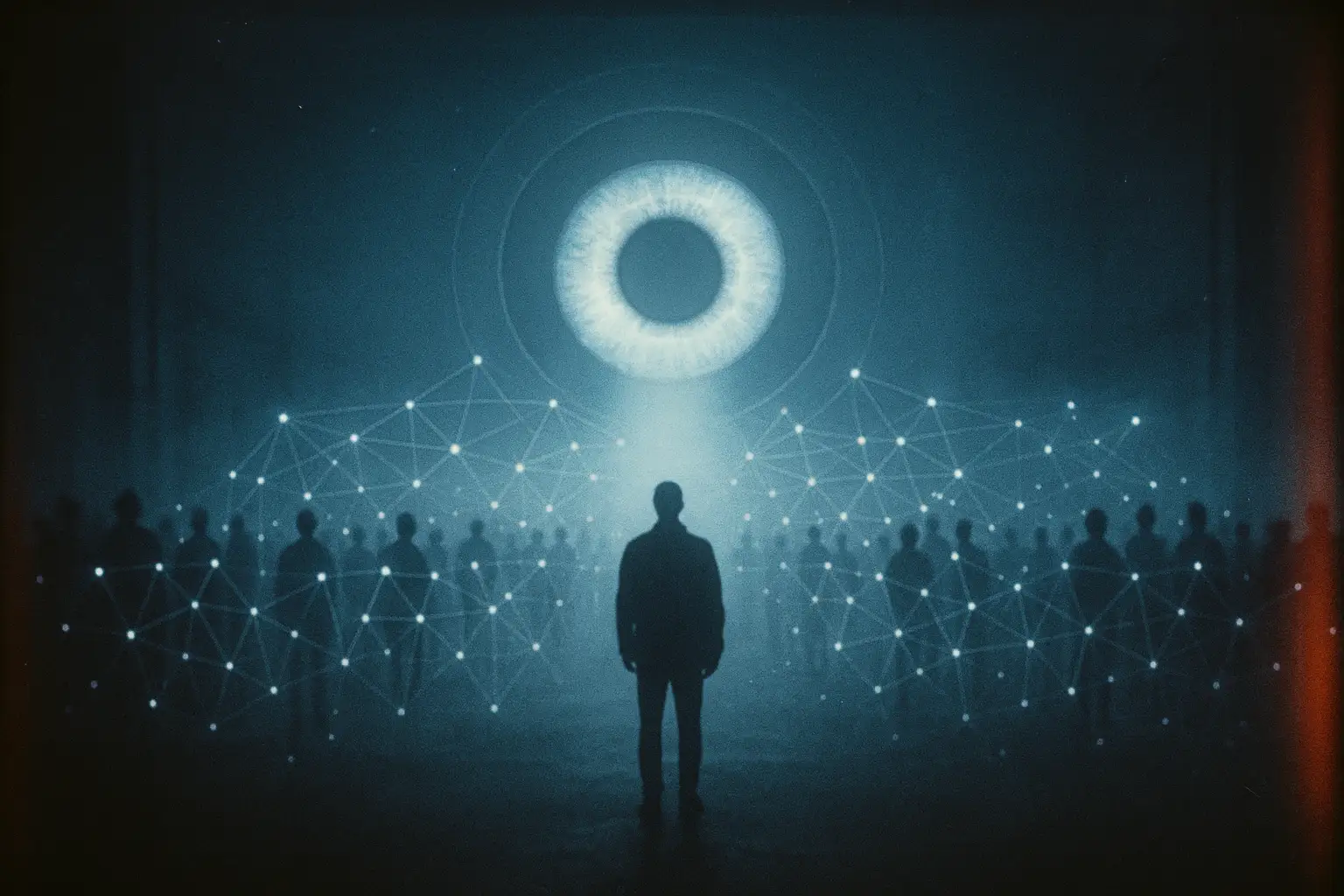
For two hundred years we were promised that technology would dissolve the fog of war. We compressed the sensor-to-shot chain from days to minutes and made the earth transparent. And then it turned out: the fog didn't vanish. It simply relocated — from the sensor into the head of whoever has to decide. On the kill chain in numbers, the general drowning in data, a map the size of an empire — and why clarity became a new form of blindness.
  • war
  • technology
  • surveillance

13 min

The Form Drifts. The Core Doesn't.

I took four of my own texts spanning eighteen years and laid them side by side. A stranger would swear four different authors wrote them: a six-thousand-word academic article, a surrealist manifesto at five a.m., a lecture outline, and three lines of code. Yet the core of all four is one sentence, carried over almost verbatim. On the vessel, the compression curve, the end-of-history illusion — and why form has a shelf life while an idea doesn't.

  • creativity
  • identity
  • method

20 min

Palantir as the Eye of Sauron

In Tolkien, the palantír is a stone that shows any point in the world in real time. Tolkien made it not a weapon of victory but a trap: the stone never lies — and that is precisely why it drives men mad. The company named after that artifact has become the nervous system of modern wars — and reproduces exactly the same trap. On Gotham, AIP, Maven, the Karp doctrine, the oracle at Delphi, the Ring of Gyges, and the question software does not solve: who holds the other stone.

  • war
  • technology
  • surveillance