NEURODRIFT Optics

Optics

Optics, not advice: lenses for decisions about life, relationships, identity and time. How to see the systems behind behavior — and yourself inside them.

28 publications

14 min

Unfinished Projects Across 15 Years: Fewer than One in Ten Reached the Finish — Five Conditions That Set Closed Ones Apart

I asked an AI to line up everything I'd ever announced as a 'series,' a 'book,' a 'project in N parts.' Of everything I called a book or a series, fewer than a tenth ever reached a final state. This isn't a text about failure — it's about the difference between unfinished, unclosed, seed, and dead; about the single exception that proves the rule; and about why an unclosed file is sometimes not a debt but a seed bank — but only if you actually harvest, instead of romanticising a graveyard of drafts.

  • creativity
  • archive
  • unfinished

16 min

Self-Awareness in Numbers: 95% Are Sure They Know Themselves, 10–15% Actually Do — Eight Levels of the Skill (Eurich's Data)

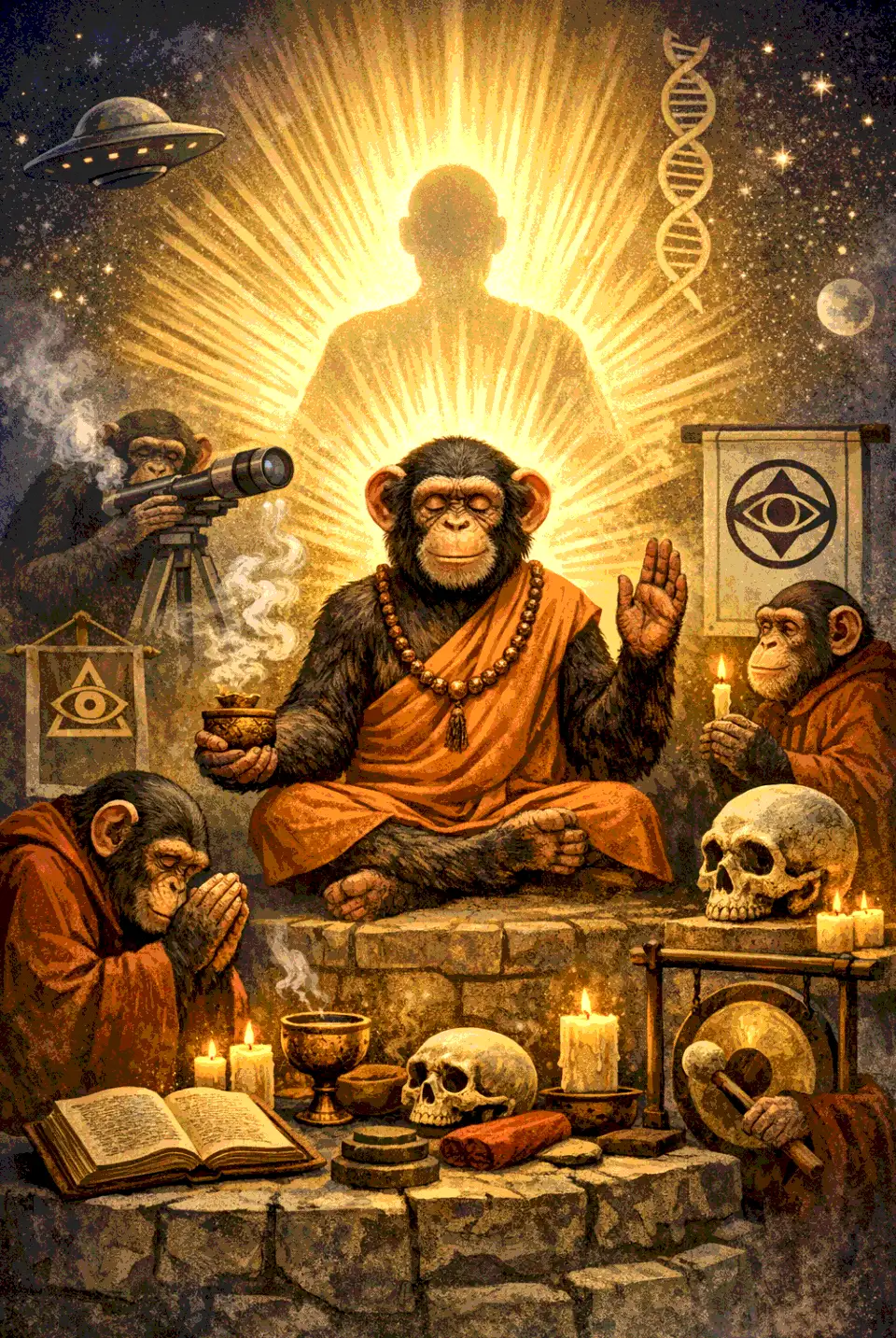
A child passes the mirror test at 18 months. The harder one it still fails: 95% of adults are sure they know themselves; about 10–15% actually do. Between those two numbers isn't a question of 'enough or not' but a staircase of eight floors, each governed by one law: the moment you climb, you see there are more floors than you thought. Call it the Mirror-Recession Rule. And while you spend eighty years studying your own face, the mirror has quietly moved into someone else's server, learned you better than your spouse in 300 likes, and turned the lens on you.
  • self-awareness
  • psychology
  • metacognition

10 min

Self-Measurement That Backfires: Rewards Reduce Intrinsic Motivation (d≈−0.34), Orthosomnia Ruins Sleep — the Limits of Tracking

Rewards erode intrinsic motivation by d≈−0.34 (a meta-analysis of 128 studies): pay yourself for what you loved, and it becomes a job. Orthosomnia (3–14%) is when you chase the 'perfect' sleep score until you sleep worse. The market for gadgets that measure you is $84–93bn. This text is about the over-engineered self vs. the unmeasured: the science, an honest counter-argument (where measurement saves lives), and a detailed 'measure → learn → switch off' stack. Because the most expensive device measures not your body but your anxiety — and sells you the cure for an anxiety it manufactures.

  • optimization
  • health
  • metrics

16 min

Biography as Competitive Advantage: 55% of American Unicorns Were Founded by Immigrants — What Money Can't Copy

October 2007: two designers who couldn't make rent put three air mattresses on the floor and charged guests $80 a night. Today it's a company worth ~$80bn. The advantage wasn't a genius idea — it was a lived problem. 55% of American unicorns were founded by immigrants, because an outsider sees the defect a local stopped noticing in childhood. This text is about scar arbitrage: why in business, startups, careers, everyday life and politics the one who lived it beats the one who read it; why it's a compass, not a ticket; and why the same moat also protects those born inside the castle.

  • wisdom
  • founders
  • startups

10 min

Structure as a Condition for Spontaneity: If-Then Plans (d≈0.65), Context-Dependent Memory, and Scheduled Action Against Depression

Words learned underwater are best recalled underwater: place is the key to a state. An if–then plan adds d≈0.65 to reaching a goal on top of the goal itself. And depression — the purest case of 'the state won't come on its own' — is treated by scheduled action no worse than by therapy or medication: first you act, then the feeling arrives. This text is about how structure can be not control but an interface for re-entering a state. About three kinds of protocols and how each one fails. About the honest counter-argument (form can indeed ossify into a cage) and the single test that tells a door from a cage.

  • spontaneity
  • discipline
  • rituals

21 min

Winner's Curse in Business: How Victory Triggers Status Spending and Ends in a Cash Gap

First came the success. Then — a new sign, a new office, a new standard of living 'to match the status.' And then, quietly, came the box-office flop — and what killed it wasn't the fall, it was that very victory. A technical dissection of the most expensive asset in the economy and in life: a win silently switches on spending on image that strangles exactly what won. The winner's curse, diworsification, the peacock's handicap, and Orson Welles's Xanadu — on why the cash drowns more often after the toast than after the crisis.

  • success
  • business
  • winners-curse

18 min

An Electrician Makes £39,000, a Graduate £27,500: Physical Work in Britain as a Cure for Decorative Intellect

At 22 I dropped out a step before my degree and went to build other people's walls in London — undocumented, no status, no plan B. This isn't a story about courage. It's a story about grounding: how physical labour, a foreign language and lost status cured me of the most comfortable disease of clever people — intellectual decorativeness.

  • personal
  • environment
  • identity

33 min

David Rockefeller's Card Index: 200,000 Cards on 100,000 People as an Operating System of Connections and Power

The last grandson of Standard Oil's founder lived 101 years, ran Chase, founded the Trilateral Commission, and kept a personal card file on a hundred thousand people. But his Memoirs (Random House, 2002) aren't about the Rolodex. They're a self-portrait of 'the indexed life': a style in which money, people, beetles, paintings, cities and dictators all become entries in an accounting system that runs back to his grandfather's 'Ledger A.' A 31-chapter book distilled in half an hour: 12 behavioral techniques, juicy cases, verified numbers, and debunked myths.

  • Rockefeller
  • power
  • networks

13 min

The alpha baboon has higher cortisol. Proof-of-Existence: why the one always proving himself right loses to the one who is simply stable

A 21-year personal archive was run through 11 therapeutic and philosophical frameworks. Eight of them independently found the same structure — Proof-of-Existence mode: a state in which the right to be present is a hypothesis under daily review, not a settled fact. The mechanism, the therapy trap, and the one point of exit.

  • psychology
  • identity
  • self-worth

17 min

Every manifesto is written from below: Marinetti in the ditch of 1909, you at 5 a.m. at 22

A manifesto is the form in which a person declares firmness before actually having it. Not proof of strength, but a crutch that has learned to look like a sword. Why categorical declarations get written mostly by the young, the exhausted, the not-yet-institutionalized at five in the morning — and why, in adulthood, the same genre returns as a Notion doc, a pricing page, and 'three principles of delivery.' A dissection of the author's own archive of six manifestos, plus the anatomy of their grown-up mutant — the manifesto that got a payroll, a lawyer, and a brand book.

  • manifesto
  • immaturity
  • identity

9 min

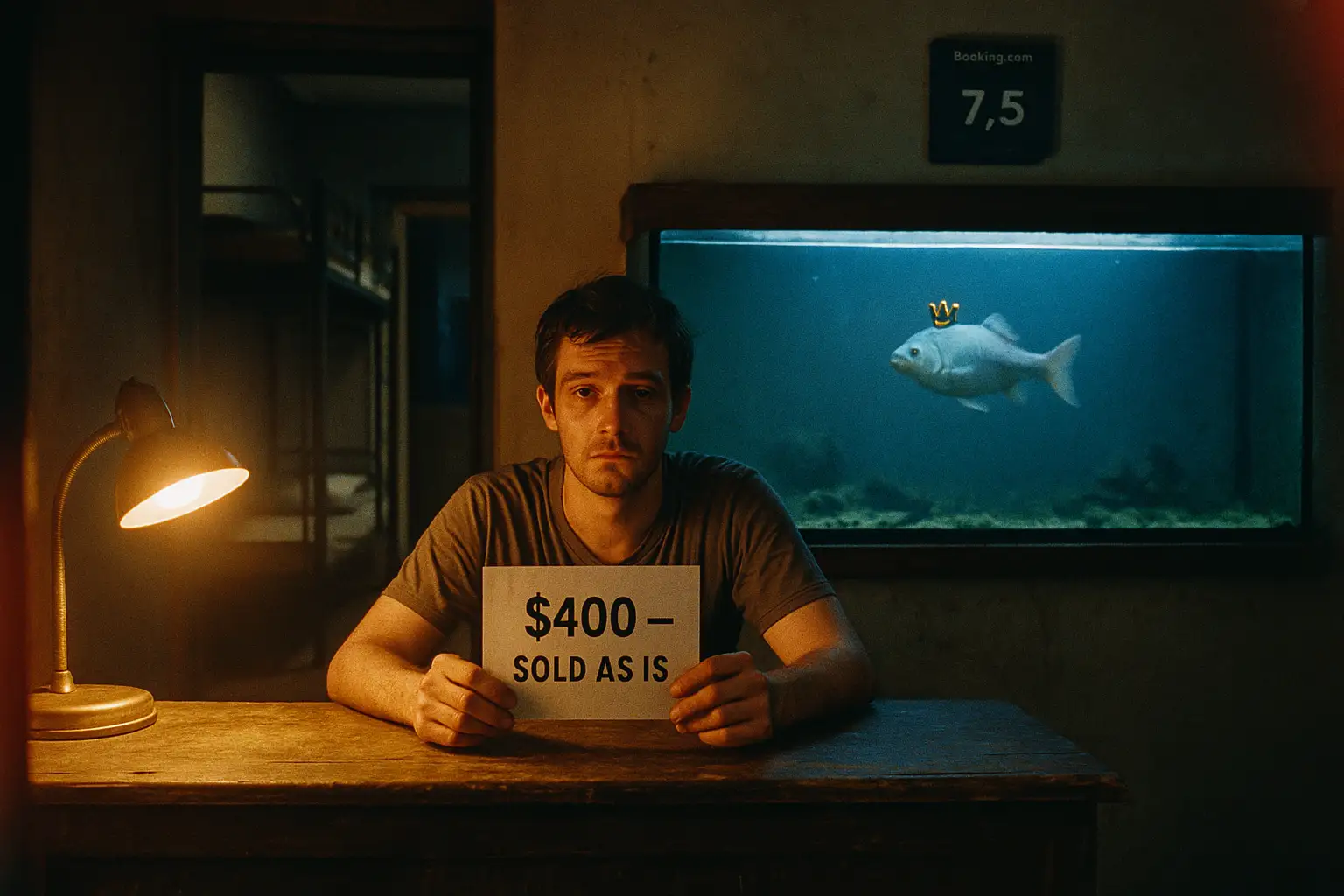
Hostel making 5k UAH/mo, 7.5 rating, 3,300 followers — and no one offered $400: why the aquarium costs less than the fish

Buffett called a durable business advantage a moat around an economic castle. I'd been building moats from day one — except my moat wasn't around the business, it was inside me. From bike rental to reputation products I sold not a product but a container for a way of being; why a business with the founder welded in doesn't sell but migrates; and a simple test for whether your business sells — or only together with your nervous system.

  • business
  • founder
  • identity

31 min

Berserker as technical debt: why a 25-year-old's bravado becomes a cage at 35

In 2018, a week after being fired, in a Thai wintering I wrote myself an identity not as 'I'm a leader' but as a set of behavioral criteria with frequencies. Six years on, part of it is still active; along the way a six-figure financial goal turned out to be overshot. But this isn't a 'how I won' piece. It's a manual for designing an identity that works without becoming a cage: acceptance criteria, audit, kill-switch, identity debt, and the migration from Berserk to Architect.

  • identity
  • discipline
  • psychology

10 min

A meta-analysis of 24,489 people: there is NO significant difference in satisfaction — so hit the input, not the output

This isn't about monogamy being morally better — the data doesn't show that. It's about something else: open and poly are a more complex architecture with a higher operating cost. A marriage that went microservices: in the demo it looks modern; in production one service stops responding after a date, a second is jealous of a third, and the lead engineer is crying in the shower and calling it 'working on myself.' Not freedom lite — freedom enterprise edition.

  • relationships
  • non-monogamy
  • culture

16 min

Between 35 and 40 it isn't life that breaks — it's the currency: 310 artists, Whitehall, and your inner accountant

Thirty-five is sold as the summit. In fact it's a quiet repricing: everything you earned by proof stops buying peace, and you have to learn a new currency or carry the obsolete one around. A dissection: what actually changes in the body and in the sense of time, why the inner prover is no longer fed by a paycheck, what Watanabe in Kurosawa's Ikiru actually did, and why in Ukraine in 2026 this bill has a denominator no one before us had.

  • midlife
  • identity
  • status

16 min

Whitehall, Sapolsky's baboons, the $75k plateau: why money sells as freedom but works as armor against humiliation

We say we want 'financial freedom' and 'peace of mind for the family.' But the body hears a different sentence — 'I don't want to be at the bottom anymore.' Money is sold as freedom and works as armor against humiliation. A technical dissection of the most expensive item in the window — a straight spine: the economics of display, the biology of rank, the fear of the parvenu, and three film scenes where you can read a person's place in the hierarchy before they open their mouth.

  • money
  • status
  • humiliation

47 min

Intellectual Addiction: How Your Mind's Distillery Chases Its Own Tail and Evaporates the Product Itself

Stuart Oskamp, 1965: the more data, the more confident the psychologists became — 33→53% — while accuracy stayed frozen at 28%. A longread about the mind's distillery with its coil looped back into the cube: books, tabs, AI responses are distilled for years, while the action flask stays empty. The neuroscience of seeking, AI as turbocharger, founder traps, an honest devil's advocate — and the valve you open without closing the tab.

  • thinking
  • attention
  • AI

35 min

The CRM polygraph: the software knows you're lying before you finish your coffee

We hate the customer-tracking software not because it's complicated. We hate it because it's the one place in the company where what we said sits right next to what we actually did — and the gap shows up as a number. Most 'CRM failures' are really a failure of patience with your own reflection. Four simple checks catch the self-deception with about a week's margin of error.

  • crm
  • sales
  • self-deception

13 min

The Form Drifts. The Core Doesn't.

I took four of my own texts spanning eighteen years and laid them side by side. A stranger would swear four different authors wrote them: a six-thousand-word academic article, a surrealist manifesto at five a.m., a lecture outline, and three lines of code. Yet the core of all four is one sentence, carried over almost verbatim. On the vessel, the compression curve, the end-of-history illusion — and why form has a shelf life while an idea doesn't.

  • creativity
  • identity
  • method