How to Choose an AI Model for the Task: a 5-Axis Capability Matrix Instead of a Ranking of Names
Choose a model by five capability axes, not by the name in the release headline — a framework you won''t have to rewrite after every update.
NEURODRIFT AI
Longreads on artificial intelligence without the hype or the apocalypse: how LLMs, agents and automation rewrite work, attention and power — and who actually wins. Model breakdowns, tools and consequences the press releases skip.
Choose a model by five capability axes, not by the name in the release headline — a framework you won''t have to rewrite after every update.
An AI agent does not read between the lines — every ambiguity in your spec becomes a fork in the road where it silently picks the worst option. Here is the template that fixes that, six failures hiding in every second brief, and one technique that catches the gap before the concrete is mixed.
Efficiency never reduces consumption — it multiplies it. When anything can be generated, the scarce resource is no longer text but judgment: where to look.
Canaries were pulled from British coal mines back in 1986 — instruments had learned to detect the gas instead. In 2026, the canaries are back: employment for 22-to-25-year-olds in AI-exposed professions has dropped 16%, while US unemployment sits at a historic low. This is an autopsy of the central mistake in the whole AI-and-jobs debate: everyone's bracing for mass layoffs, while the real crisis arrives as a quiet non-invitation. Meet the infinite intern, find out why your salary is really rent on scarcity, learn who's already collecting the automation dividend (hint: the top 10% of Americans hold 87% of the stock market) — and walk through five scenarios for how this plays out by 2040.
AI doesn't replace professions — it takes bites out of tasks. Survival belongs not to whoever has a "safe" job, but to whoever decomposes their work into tasks faster than their manager does.
The bottleneck in software development has shifted from writing code to context engineering — creating a profession that doesn't exist in any diploma yet but already shows up on payslips.
A breakdown of the real $/token economics from production: why an investigation report costs $3.47, how a stateless API turns a naive loop into O(N²), why output is 5x more expensive than input, and how a named antagonist from a market-research pipeline racked up $47,000 in 11 days. Every number verified, with sources. An audit checklist tool for your own books inside.
Dnister dissects the reflexive RAG architecture: six peer-reviewed benchmarks (Databricks, Stanford, SIGIR, Chroma, Adobe) show that adding random noise raises accuracy by up to +35%, while a perfect retriever often hurts most. A contrarian hot-take on why the problem is almost never in retrieval — with a decision matrix for the reader.
In Bengaluru, a person is paid $230 a month to fold towels with a camera on their forehead — training the robot that will replace them. AI is leaving the screen and turning reality into data: where this leads.
Your Claude or ChatGPT is patient H.M.: brilliant every second, with no bridge across the night. Kyle Redelinghuys ran 10 billion tokens in 8 months — $15,000 of compute for $800, because the same context kept being reused. 9 loops that turn a one-shot genius into an exocortex — and where €1,000 actually goes.
On June 12, a single US government letter switched off two Anthropic frontier models for every foreign national on the planet. Why AI became an instrument of the state, how the 'compute curtain' works, and who holds the switch to your access.
My infrastructure is 11 containers, 6 products, €27/month, a stack that looks like 2014. And it's not shameful — it's an edge. An anti-hype autopsy: Brooks, WhatsApp, Amazon, 37signals and 74% of dead startups against the 'architecture astronaut' who builds not your product but his own résumé, on your runway.
Dnister breaks down the launch of Claude Fable 5 — Anthropic's first generally available Mythos-class model at $10/$50 per million tokens. Why 'should we switch' is the wrong question, the new economics of AI (cost-per-task versus cost-per-token), how to route tasks across Haiku, Sonnet, Opus and Fable, a fact-checked effort-level grid, the counter-thesis about definition of done, why 1M context is not memory, and the anti-patterns that burn budgets. With pricing and routing tables as of June 2026.
The prompt is no longer the main weapon for working with AI. The loop becomes the main one: context, agent, tools, artifact, verification, memory, repetition. The same architecture as in Madyar's drones — only in code.
A detailed comparison of the main 2025 AI models — GPT-4o, o1, Claude 3.7 and Gemini 2.5 Pro. Find out which model fits your task — from programming to creative writing and business analytics.
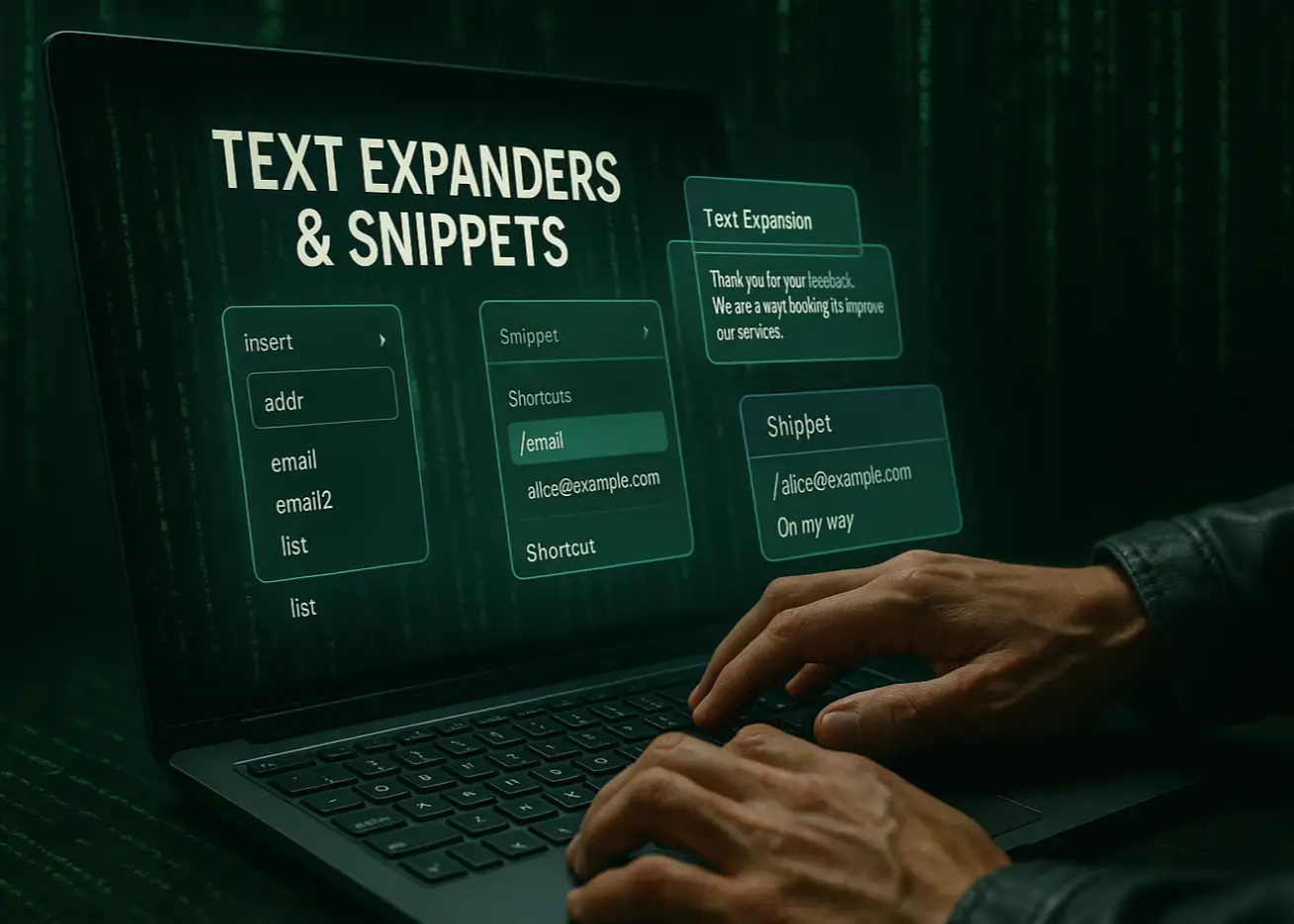
From email to AI commands — how text snippets save hours every week. A look at the best tools, templates and use cases for freelancers, teams and offices.
Learn how to use ChatGPT over 30 days for daily life, work and learning. Real examples, tools and a step-by-step plan for beginners.