NEURODRIFT Markets

Markets

Money without euphemisms: markets, crypto, taxes, capital relocation and assets — how incentives really work, who pays, and why a beautiful story costs more than the deal itself.

27 publications

25 min

The VR Headset Market in 2026: Shipments Fell 37% in Two Years, and 70% of the ‘XR Market’ Is Glasses Without a Screen

A factual breakdown of the VR headset market as of November 2026: what analysts count under the word XR, how many headsets are shipped, how much Meta loses in Reality Labs, who buys games, which devices sell and at what price in the US, Europe and Ukraine, why the niche is not becoming mass-market, and three scenarios to 2036. 21 charts, a game payback calculator, an applications map, a navigator by role.

  • markets
  • VR
  • virtual reality

1 min

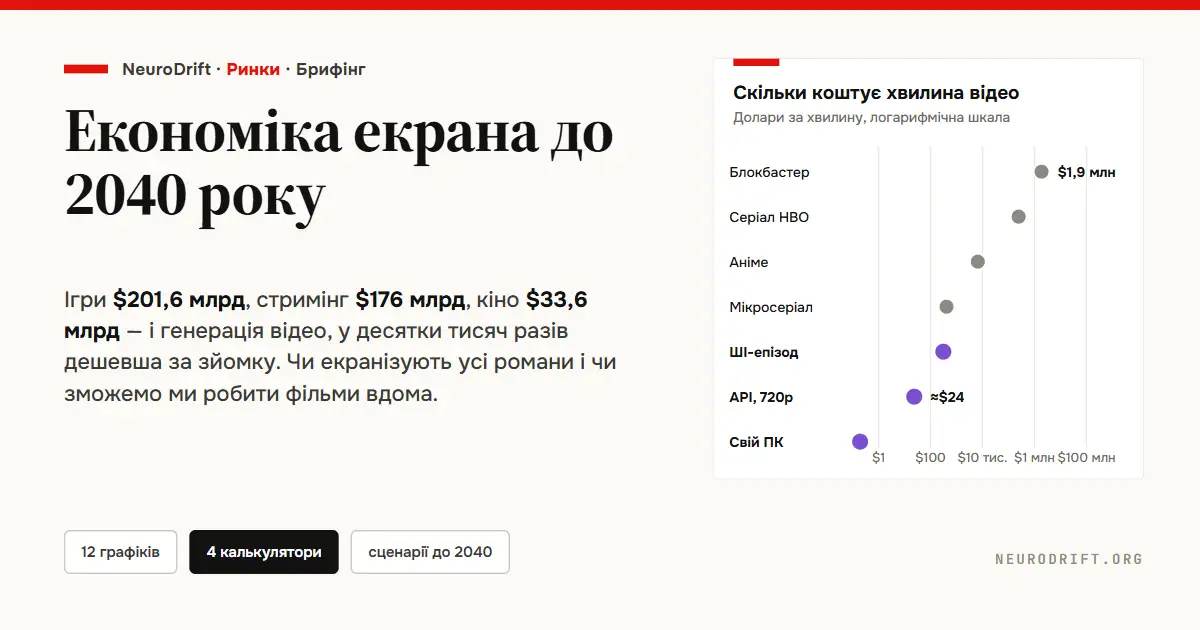
The screen economy to 2040: how cheap video generation will reshape the $411bn games, film and streaming market

A NeuroDrift briefing: what games ($201.6bn), streaming ($176bn) and the box office ($33.6bn) earn, 20 years of growth, the cost of a finished minute from $1.9m for a blockbuster to ~$6 for a generator, China's 430,000 AI micro-dramas, whether every novel will be adapted and whether you can generate a film at home. 12 charts, 4 calculators, scenarios to 2040.

  • markets
  • games
  • film

19 min

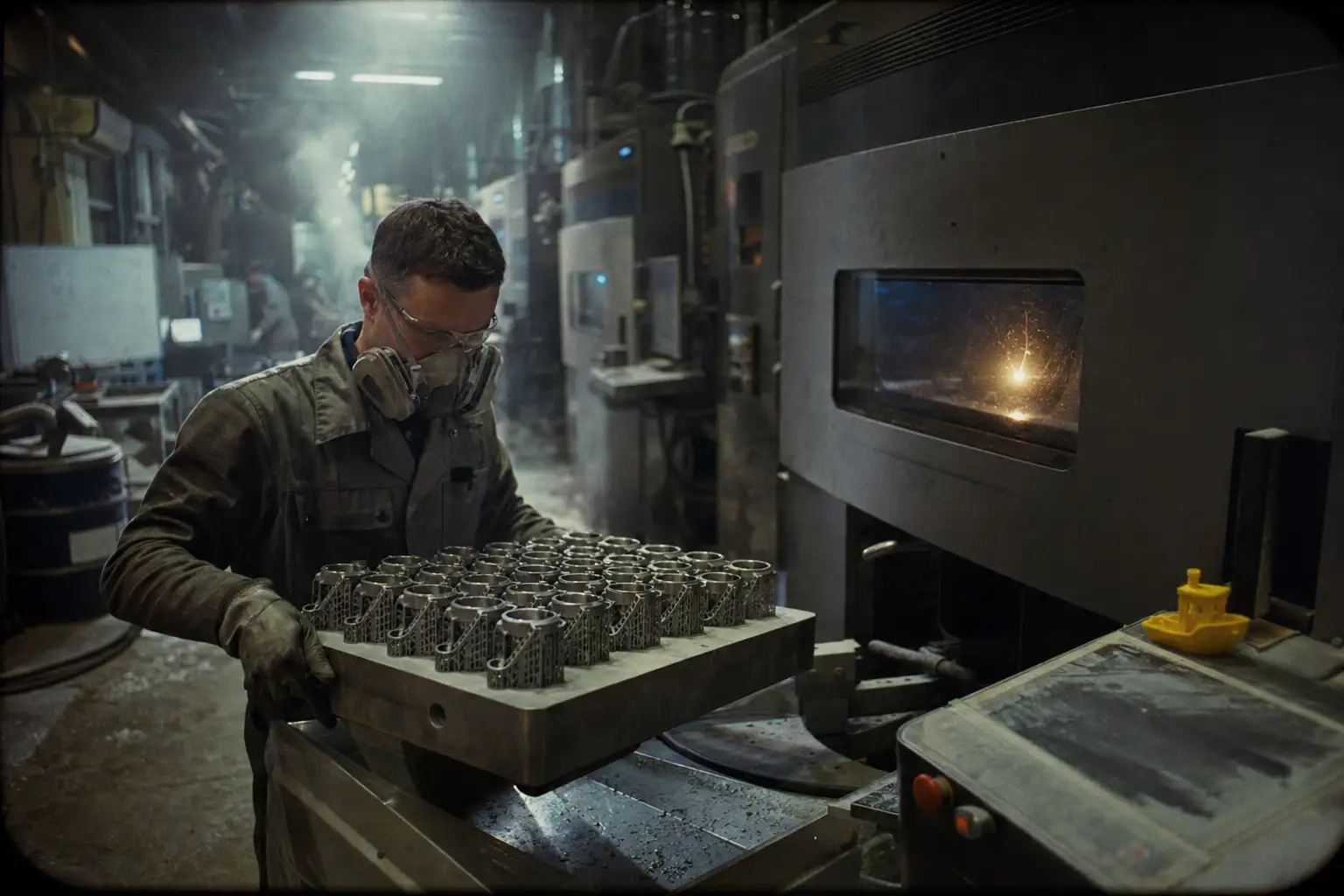
Industrial 3D Printing: The Market Grew 18-Fold While Printer Makers Lost Up to 97% of Their Value

A fact-based analysis: how additive manufacturing grew from $1.3bn to $24.2bn in 15 years, why forecasts erred in both directions, why the technology won while Western printer makers and SPAC-listed companies lost, how metal, defense and electronics launched a new cycle, and why China leads in units but not in money. 16 charts, cases of Apple, GE, Deutsche Bahn, Rocket Lab.

  • 3D printing
  • additive manufacturing
  • industry

26 min

Bitcoin and the Limits of Exit: KYC at Every Off-Ramp, Self-Custody Risks, BlackRock's Share — Where It's a Door and Where It's a Prop

Bitcoin is sold as an 'exit from the state' and monetary sovereignty. The reality: to get out, you still need a fiat off-ramp with KYC/CARF, a passport, a jurisdiction, and a live buyer. Self-custody is freedom AND the single point of human failure: a lost seed, a $5 wrench, an inheritance your own death encrypts forever. Named framework: Exit Liquidity — four cold questions for any 'escape.' Analysis, not investment advice.

  • bitcoin
  • crypto
  • sovereignty

26 min

Geographic Arbitrage: the 3–4× Cost-of-Living Spread Is Real — and So Is the Second Account Charging Belonging, Friendship, and Career

Digital nomads sold themselves a beautiful formula: earn in a strong currency, spend in a cheap one, and pocket the spread. On the spreadsheet it's true. But the cost-of-living spread debits more than your bank account — it quietly withdraws from belonging, friendship, your career time zone and your sense of who you are. Not an 'all nomads are running away' rant. An honest itemization: one arbitrage compounds for you, the other against you. Named framework: The Arbitrage Tax.

  • money
  • digital nomads
  • remote work

24 min

The Five Flags Theory Audited: Who Jurisdictional Diversification Really Works For — and Who Buys a $150k Passport with No Safety Net

Flag theory (Harry Schultz, 1960s; W. G. Hill, 1980s) promises: spread your life across five jurisdictions and you become free and a nobody to the taxman. For the genuinely mobile millionaire some of the benefits are real. For everyone else it's cosplay: you diversify flags and centralize loneliness. A passport for $90k–$250k buys no socialized medicine, no pension, no vote; 'resident nowhere' turns into being deemed a resident anyway; and the CRS (100+ jurisdictions, automatic exchange since 2017) killed the banking secrecy the whole structure rested on. This isn't tax advice — it's an analysis of what happens to a bluff when the dealer turns the cards over.

  • markets
  • residency
  • citizenship

21 min

The Emigration Arbitrage: a Western Salary and Third-World Costs Double Your Capital — the Full Balance Including Social Write-Offs

Emigrant arbitrage looks flawless: a West salary, third-world costs, capital growing twice as fast. It's an honest win — and at the same time a long debit no one writes into the spreadsheet: erosion of identity, children with no homeland, old age in a place that never became home, funerals you fly in for, and friendships thinned to a like under a birthday post. Written from Ukraine 2026, with weight, not with a moral on display.

  • markets
  • emigration
  • arbitrage

16 min

Truffles: Why a €5,000-a-Kilo Mushroom Still Refuses to Be Domesticated

Humanity has already turned the black truffle into agriculture: 90% of the French harvest comes from plantations and Spain pulls 120 tonnes a year. The white one is still wild — exactly one confirmed productive plantation in the world. Where the line runs between 'the fungus survived' and 'the farm works' — and what a handful of unsolved biological variables actually cost.

  • truffles
  • agritech
  • scarcity economics

18 min

The 'Buy the Dip' Reflex: How 12 Years of Zero Rates Conditioned Investors — and Why the Reflex Loses Money After 2022

From 2009 to 2021 every dip was bought back. The Fed held rates near zero, printed money — and the market quietly trained a reflex: see red, buy more, get a seed. It wasn't a strategy. It was Pavlovian conditioning on a variable reinforcement schedule — the most extinction-resistant form of habit science knows. Then 2022 raised rates the fastest since the 1980s, the lab changed the schedule — and the reflex started misfiring. A text about the difference between a reflex and a strategy, about the survivorship bias hiding every dip that never came back, and about the pigeon that pecks faster the longer the seed fails to drop.

  • markets
  • investing
  • psychology

14 min

Inertia Rent: The US Lost $8.5bn in Visitor Spending — the Only Economy of 184 to Fall in a Record Year

In 2025 the world spent a record $1.9 trillion on international travel. The US collected $176 billion — down 4.6%. The only country of 184 to decline in a year of global growth. This isn't about tourism. It's about inertia rent: money a business earns not for value, but because the customer never checks the alternative. And what happens when checking becomes free.

  • tourism
  • markets
  • inertia

25 min

'0% Tax' in Dubai, Cyprus, and Georgia: Economic Substance, CFC, CRS, and Exit Tax — the Full Price of a Zero Rate

The '0% tax' fantasy (Dubai, territorial jurisdictions) versus the real bill: economic substance requirements, CFC rules that drag your company back home, the CRS that killed banking secrecy, exit taxes, a lawyer-and-accountant retainer — and the deepest cost: you stop being a tax home anywhere, and so you're a guest everywhere. This isn't tax advice or an optimization scheme — it's an analysis of the fantasy itself. Honestly: where a low-tax setup is legitimate and smart, and where it's a fragile bluff one audit topples. Consult a tax advisor in the relevant jurisdiction.

  • markets
  • taxes
  • residency

17 min

Legal High: How Loopholes in the Law Create a New Market for Psychoactive Products in Ukraine, the EU, and the US

Sales of hemp-THC drinks in the US grew from 692,000 to 1.6 million cases in a single year, 2025, with retail points reaching about 305,000. Europe banned HHC in 23 countries over three years — and got 40 new substitute molecules in return. Ukraine got U420 — 105 «cafe shops» selling a banned synthetic cannabinoid. A breakdown of the mechanism by which chemistry always stays one step ahead of the law, and three different endings to the same game.

  • THC drinks
  • hemp
  • HHC

20 min

Trading Journal vs P&L: ~3% of Polymarket's 1.72M Accounts Move Prices — the Gap Between Plan and Execution as the Only Edge

An LBS and Yale study of 1.72M Polymarket accounts found that about 3% move the price. The other 97% are the liquidity those 3% live on. This is a text about why most traders are in the bottom 97% — and the one tool that moves you from there to the top. Not a model. Not speed. A journal that behaves like a psychiatrist you never hired, whose bill is paid in losing trades.

  • markets
  • trading
  • psychology

27 min

Five Capital Accounts — Money, Debt, Assets, Time, Reputation: Separate Portfolios Instead of One Envelope

Your business runs like a production stack, and your money runs like a ninth-grader's pocket change: all in one envelope and always 'roughly fine.' Stop keeping the business, the family, savings, and the ego in one mental wallet — and run capital like a codebase: modules (buckets), backups (the cushion), concentration limits (anti-god-object), versioning, no single point of failure. This isn't financial advice. It's a breakdown of one engineering habit carried from the repo to the bank account.

  • markets
  • capital
  • risk

16 min

The Great Tax Divergence: 26 US States Race Toward Zero Income Tax, Europe Builds Exit Walls — Who Actually Moves

Republican states have written a path to zero income tax into law, Democratic states are hunting millionaires, and Europe is playing the same game between countries. Official data shows something unexpected — there is no mass flight of the rich, but a narrow mobile tail really does move, and it is the one that hurts budgets most.

  • taxes
  • capital migration
  • USA

21 min

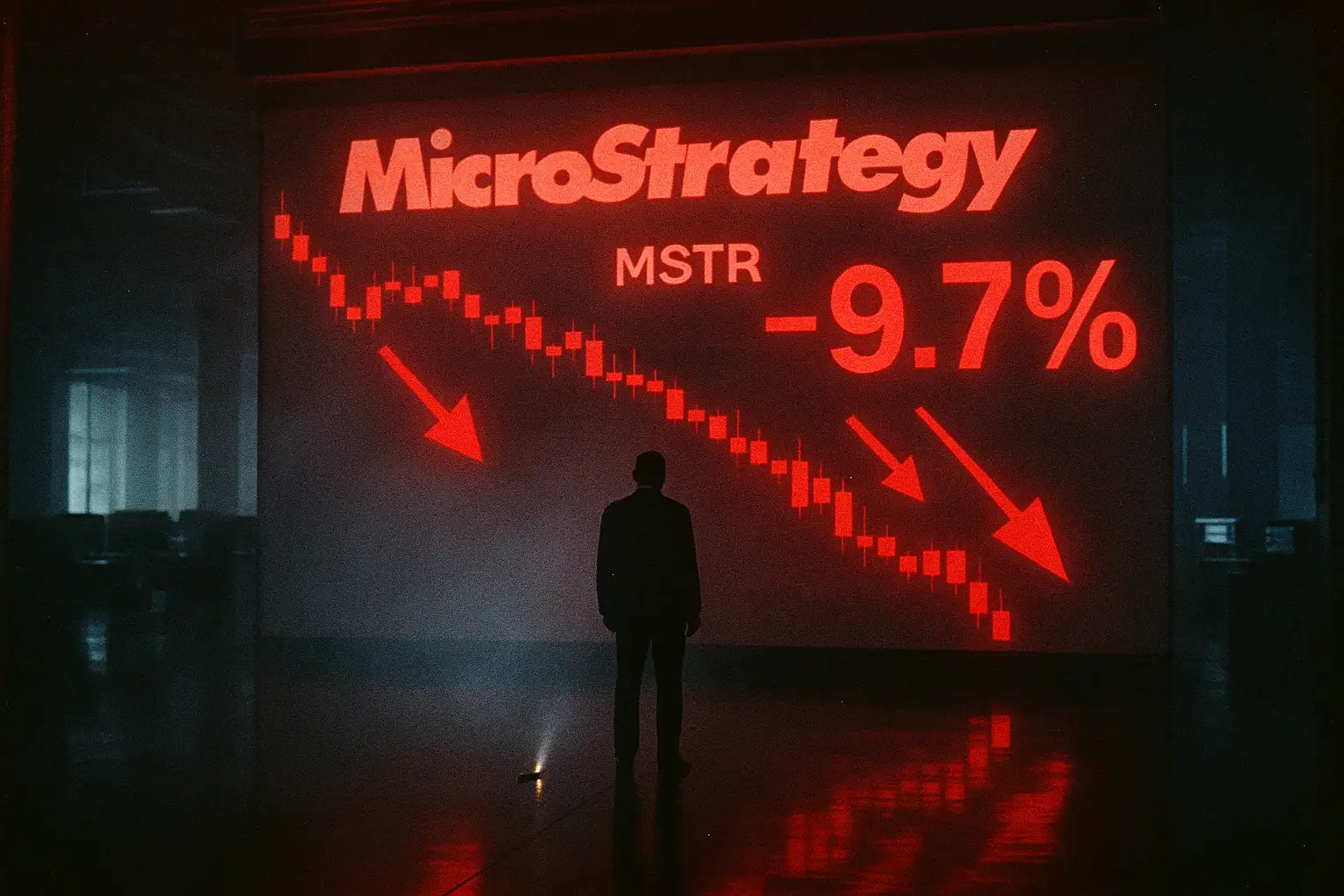
Saylor and MicroStrategy's Perpetual-Motion Machine: How MSTR Fell from 3.89x to Parity

For six years the machine turned $1 of stock into $3.89 of Bitcoin and called it strategy. It worked right up until someone walked over with a flashlight and read the gauge. A breakdown of what happens to any flywheel when reflexivity reverses — and why a perpetual-motion machine spins only as long as the crowd sincerely doesn't want to approach the meter.

  • markets
  • Bitcoin
  • MicroStrategy

6 min

The market is a crowd pretending to be a calculator

Over 20 years, missing just the 10 best days in the market roughly halves your final return. And most of those best days happen within two weeks of the worst ones, in the very heart of the panic. The market's greatest generosity hides inside its greatest fear. It's not a calculator. It's a crowd holding a calculator with trembling hands. An anchor dissection of the 'Markets' rubric: why price is a consensus of emotion in the costume of math, and where the crowd finally stops lying.

  • markets
  • capital
  • psychology