€1,000 for 8 Hours of Work: the Economics of a Standardized Report — Pricing the Artifact Instead of the Hour
Anatomy of the €1,000 investigation report price: why hourly billing is serfdom on your own calendar, how McKinsey hides its hourly rate behind 'bundles,' and why a standardized artifact beats brilliant improvisation. From Pronovost's checklist (−66% infections) to the McDonald brothers' chalk. A scalpel with no anesthesia for the Master Clockmaker within.
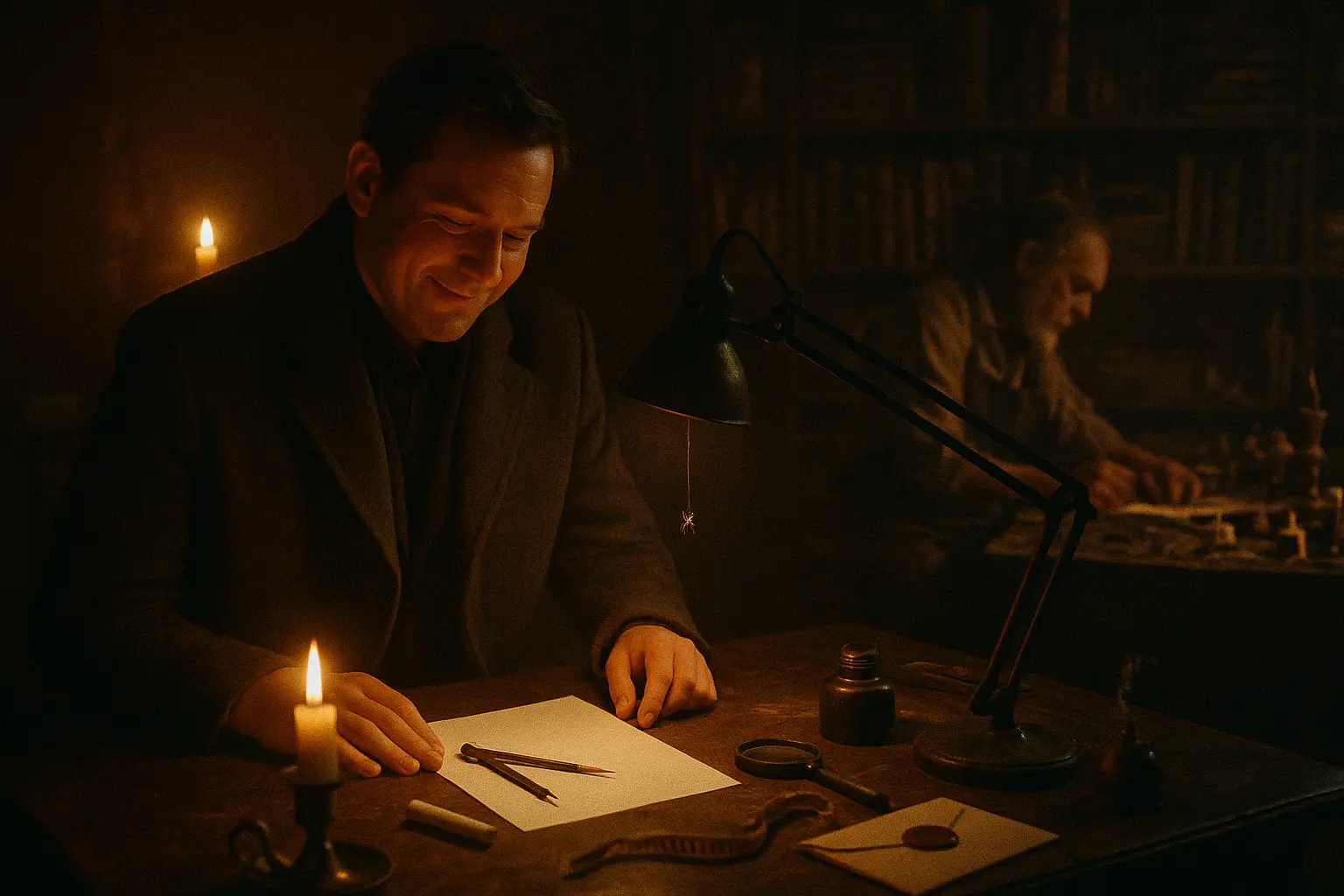
1923. Ford's River Rouge plant in Detroit. The giant generator has stopped and no one on the factory floor knows why. They call in engineer Charles Steinmetz — a hunchbacked little man with a cigar, whom GE called the "master of lightning." He shows up, disassembles nothing. For two days he simply listens to the machine's hum and writes in his notebook. Then he asks for a ladder, a tape measure, and a piece of chalk. He climbs up, presses his ear to the housing, and makes one mark: "Remove sixteen turns of windings here." They do it. The generator comes back to life.
A few days later Ford receives a bill from General Electric: $10,000. In 1923 that's the price of ten automobiles. Ford is outraged and demands an itemization — what exactly justifies such a sum for two minutes of work with a piece of chalk? Steinmetz sends a new invoice with two lines:
Making the chalk mark — $1.
Knowing where to put it — $9,999.
Ford paid. (The story was published in the letters section of Life magazine on March 14, 1965; an even older prototype appeared in the Huddersfield Daily Examiner on June 27, 1907, where a craftsman "taps with a hammer for 10 shillings, but knows where to tap for £10.")
I keep that invoice in front of me every time I send my own. Because the entire economics of my €1,000 investigation report fits in those two lines. The client looks at the invoice and sees "8 hours of work." He's pricing me hourly — €125 an hour, wow, expensive, my plumber charges less. The trouble is his plumber also charges not for the minutes with a wrench but for hearing from the doorway where the pipe is leaking — the plumber just isn't embarrassed by that, while I once was. The client thinks he's buying the chalk mark for a dollar. He's actually buying nine thousand nine hundred and ninety-nine — years compressed into the moment when I already know where to put it. The client isn't paying for time beside the generator. He's paying for the fact that I don't need to listen to the hum for two days — I hear the fault from the doorway.
There's a social archetype that understood this invoice before Steinmetz, because it never sold hours in the first place — old aristocracy. The aristocrat doesn't hurry: hurrying is what happens when you have no one to hurry on your behalf. He doesn't ask the price and doesn't show a timesheet, because the price doesn't live in hours at the desk but in invisible rules and decades of taste compressed into the gesture with which he picks up a fork. Behind that gesture — not two minutes, but three generations learning where to put it. Steinmetz's chalk is the aristocratic fork for engineers: the value of the mark equals the inherited knowledge of where it goes, not a stopwatch pressed to the housing. The Master Clockmaker, by contrast, behaves like a freshly minted serf who takes pride in his calluses and brings his lord a receipt for every hour worked — not noticing that the lord he's delivering it to is himself.
The Master Clockmaker and his pride as a ceiling
There is a person living inside me whom I hate and respect in equal measure. Let's call him the Master Clockmaker. He's an old-school craftsman, and he genuinely believes that "every project is unique." He's proud of having spent eight hours on a report, because only then does he feel honest: I really did work, I earned the money with sweat, not with a chalk trick. He considers productization a con — if I have a template, he argues, I'm deceiving the client, taking full price for what is half-automated. This is the logic by which a surgeon should refund part of his fee for not learning anatomy fresh before each incision.
The Master Clockmaker is neither lazy nor greedy. He's hardworking to the point of sainthood. That's exactly why he's my main antagonist: a lazy man I'd simply fire, but this one I feed every day. His pride is his ceiling. He confuses "I worked hard" with "I created value," and through that confusion is bound to his own calendar for life, like a serf to the soil. Every earned dollar demands his physical presence at the desk. He can't fall ill, travel, or sleep in — because the moment he stands up from his chair, revenue zeroes out.
Consultant Alan Weiss described this character with surgical precision: he's the person who "has undervalued himself for so long, left so much money on the table, that he's now in denial and refuses to change." Weiss also quotes one such Clockmaker who argued he'd earn more hourly: "Sure — if he works 3,000 hours a week, which may be feasible on Pluto." There are 168 hours in a week. The Master Clockmaker knows this. But he'd sooner sign a contract to colonize Pluto than admit that his most valuable asset isn't the hands that tire, but the head he just depreciated to the level of a stopwatch.
The arithmetic of the cage
Let's count the bars of the cage the Master Clockmaker sits in. This isn't metaphor, it's multiplication. On average, consulting worldwide bills at 67.7% utilization — about 1,400 billable hours per year (Statista, 2023). But that's a large firm with a sales team feeding consultants leads. A solo consultant who is his own sales team, accounting department, and IT support stays around 50–60% utilization — realistically 1,000–1,200 billable hours a year. The rest goes to emails, revisions, and everything no one pays for. Multiply those hours by a realistic rate of $80–$100, and you get a ceiling somewhere around $80,000–$120,000 a year. Concrete. Immovable. No matter how brilliant you are — the ceiling doesn't know you're a genius; it only knows there are 24 hours in a day and you sleep through half of them.
The aristocrat looks at that ceiling with the quiet horror of someone shown what it means to work for money at all. Because the hourly worker's ceiling is an inventory of his own life, shelved with price tags per minute. Old elites built status precisely on making hours priceless: the estate doesn't trade the lord's time, it trades the fact that the lord doesn't need to be in the room for the rent to flow. The Master Clockmaker invented the opposite — serfdom in which lord and serf fused into one person who every morning sends himself to the field and never grants himself a day off.
Beyond this ceiling there are exactly three doors, two of them false. The first: "raise the rate" — works until the client gets used to the idea that an hour of human life can't be sold for $400, because an hour doesn't contain $400, it contains sixty minutes. The second: "work more" — leads to Pluto, via the hospital. The third, the real one: stop selling hours altogether.
An economist would explain this in one sentence: information is expensive to produce and cheap to reproduce. High fixed cost for the first copy, near-zero marginal cost for every subsequent one. My investigation report is an information good. All its value sits in the "first copy" — in the method I spent years producing, burning through money, nerves, and evenings along the way. Each subsequent report reproduces that method at almost no cost. The margin of the second "copy" approaches 100%, because the method has already been paid for — by me, once, permanently.
And here the naked arithmetic punches the Master Clockmaker in the stomach: if the value sits in the method and not in the hours, then billing "8 hours × rate" is conceptually wrong. It's like charging for a pill based on how many seconds it takes to dissolve in the stomach. Developing the first drug costs approximately $2.6 billion (Tufts CSDD estimate across 106 compounds first tested in humans from 1995 to 2007). The next tablet in the same line: pennies. My €1,000 report is the tablet. And the $2.6 billion is my life up to the day I learned to write that report in 8 hours instead of three weeks. The Master Clockmaker wants to be paid for the fermentation, not the molecule.
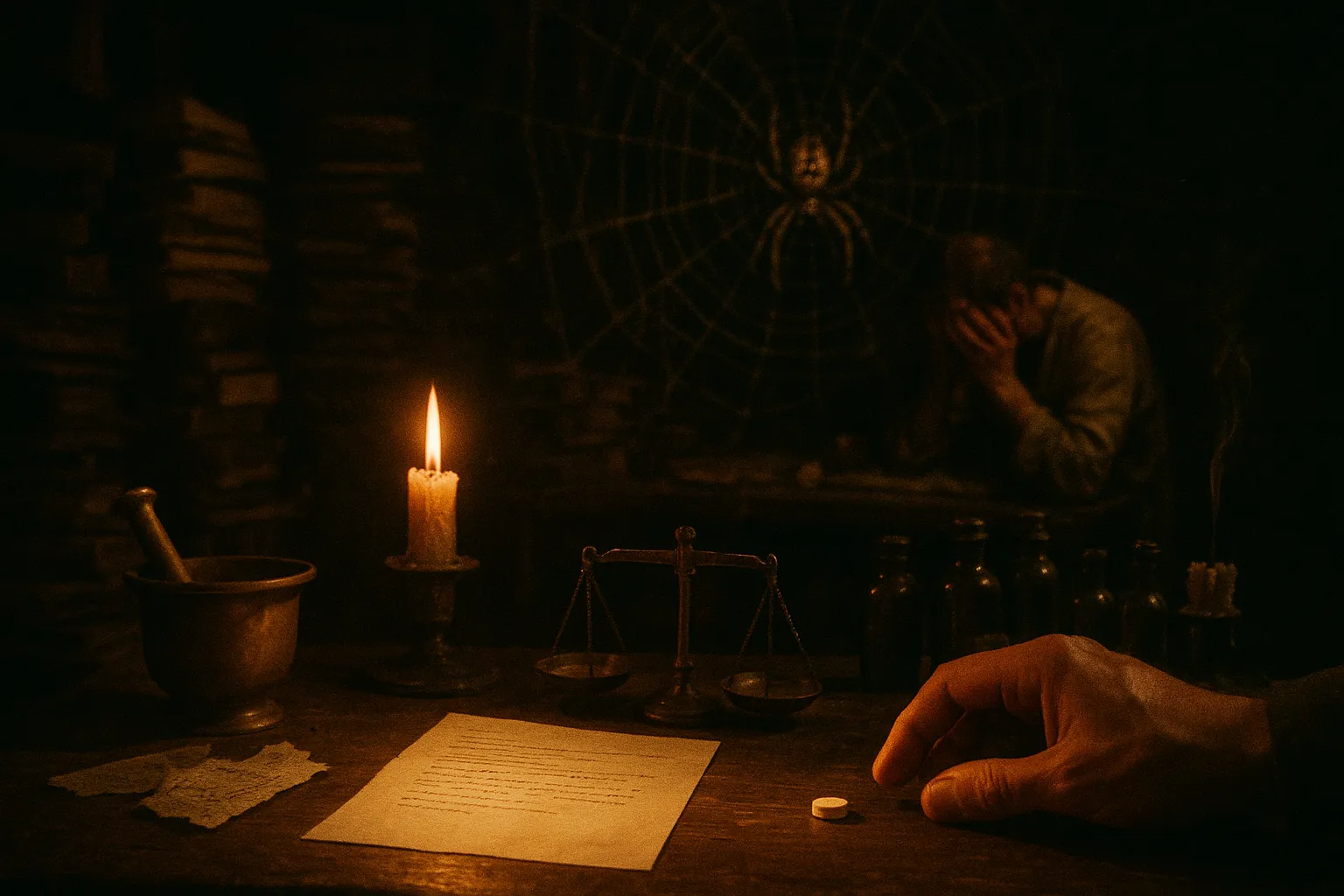
The client’s hand picks up the tablet carelessly, as if it cost nothing. Behind it — $2.6 billion of “first copy”: an entire web of burned years, in which the one who spun it is suspended. The spider grew from a single thread into a full network — and this is what he was working on.
Why now: the machine came for the hours
The hourly cage was always open — but before 2023 there was nowhere to escape to, because outside wasn't any better. Now it's being struck from three sides, and all three are targeting the hour as a unit of price.
The first blow: the machine. What the hourly worker used to spend twenty hours on — search, compilation, initial classification — a model does in forty minutes. An analyst who never packaged his method woke up one morning to discover he's competing not with a colleague across the street but with tokens at cents-per-token that don't sleep, don't get offended, and don't charge for "just take one more look." The second: the platform. Upwork and Fiverr flooded the market with post-pandemic freelancers from every time zone, and the rate in the "research and reports" category slid down by a third over three years: when there's a queue at your window willing to take less, your timesheet is no longer an argument but a bid in an auction. The third: the buyer who learned to buy time in bulk. Large companies now have entire departments whose sole job is to look you in the eye and say "lower the rate." An hour is easy to squeeze in negotiation, because it's easy to compare. The aristocrat knew this instinctively, and not out of arrogance but out of cold calculation: he never hung an hourly tariff on himself, because anything priced by the hour can always be compressed in a bargain — while something with only hereditary value has no one to trade it with.
Until recently, productization was advice for people who like to optimize in their spare time. In 2025–2026 it became armor. Anyone still selling hours is selling exactly what all three attackers are aiming at first.
Even McKinsey hides its hourly rate
The funniest discovery I made was when I went to see how the most expensive consulting firm on the planet prices itself. It turned out McKinsey's hourly rate is no secret — it's in the public domain, because the firm works with the US government through the federal GSA price schedule. And it's there in black and white: senior partner — $1,193.57 per hour, engagement manager — $834.40, analysts and associates — $327–$498.
Now the main thing. McKinsey itself says it "does not invoice individual people by the hourly rate." It sells "team bundles" at a fixed price. Meaning the firm that knows its hourly rate to the cent ($1,193.57 — not "about a thousand," right down to the last penny) deliberately hides it behind a product. Not because it's ashamed. But because it knows the secret the Master Clockmaker refuses to acknowledge: the gap between what the client thinks he's buying (time) and what he's actually buying (packaged result) is the margin space.
The Master Clockmaker devoutly shows the client a timesheet, afraid of being exposed otherwise. McKinsey hides the timesheet, knowing that showing it means surrendering the margin. The difference between them isn't talent — it's who fears whom: the craftsman fears the client, McKinsey arranged things so the client fears McKinsey. The global management consulting market in 2025 is estimated at anywhere from ~$358 billion (narrow core) to ~$1.0 trillion (IBISWorld's broadest definition), with growth slowing to 1.1% amid trade disruptions. The money in the field is an ocean. The question isn't demand. There's one question: are you selling hours or an artifact. McKinsey answered it before you were born — and that's why it invoices your government while you invoice your plumber.
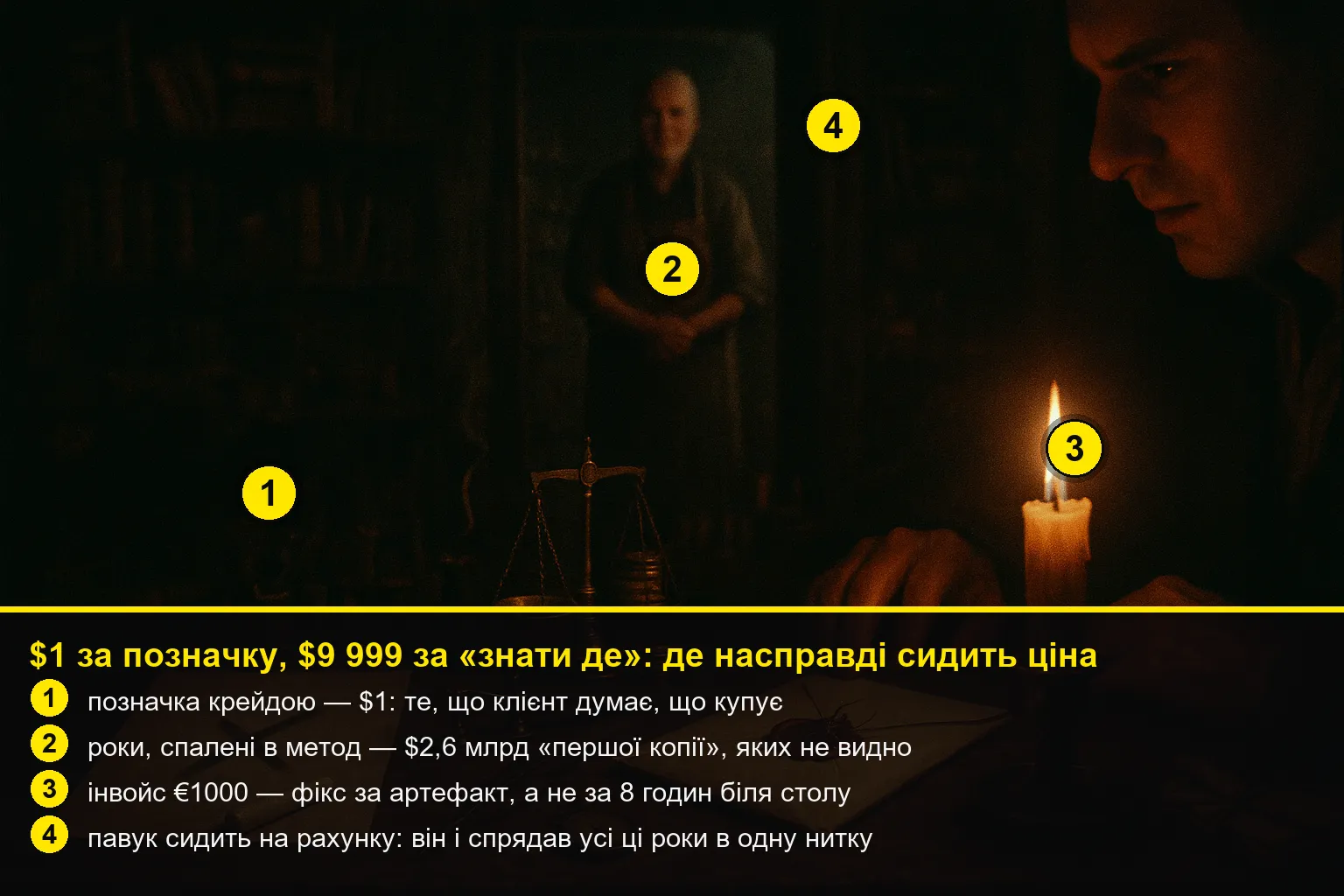
Chalk — $1. “Know where” — $9,999. The client’s hand freezes over the invoice the moment he understands: he isn’t paying for a two-minute mark but for the years compressed into it. The spider settled in the center of the invoice — it wove the whole network into one clean thread.
And it's worth naming who benefits from keeping the consultant on hourly billing. Clients who expand scope win directly: every new question, every "just take one more look" rolls into paid time without renegotiating the contract. Platforms — Upwork, Fiverr, Toptal — take a commission on hourly turnover: the more hours that pass through their meter, the bigger their cut. Large corporate buyers know that "an hour can be traded down" — they have whole procurement departments trained to press on the rate, not on the fixed price of an artifact, which is much harder to compare and reduce. The hourly system rewards scope creep, monetizes each person's clock separately, and has no built-in incentive for the consultant to finish faster. This isn't a conspiracy — it's simply structural logic that serves everyone except the person selling time.
| Parameter | Service (hours) | Product (artifact) |
|---|---|---|
| What the client buys | Your presence | Packaged result |
| Unit of price | $/hour | $/report (fixed) |
| Income ceiling | ~1,100 hrs × rate → ~$100k | Number of reports × margin |
| Marginal cost of the next copy | = full (new hours) | ≈ 0 (method already paid for) |
| Income when you're not at the desk | $0 | Doesn't depend on the desk |
| Conflict of interest | Profitable to drag it out | Profitable to speed up |
| What scales | Only you, until burnout | The artifact, without you in the room |
Hourly billing rewards slowness
Let's linger on that last row of the table, because it's poisonous. Alan Weiss in "The Folly of Hourly Billing" argues that hourly payment structurally conflicts with client value: it pays for duration, not results. It rewards dragging work out and picking at peripheral details.
Think about the perversity. On hourly billing, the ideal client is the one for whom the consultant works slowly. The more time spent fumbling today, the bigger the invoice. The hourly system places the competent practitioner before a temptation that would make a saint sweat: spread two found hours into eight, because otherwise "it feels wrong to charge the full amount." Hourly billing penalizes speed and rewards dragging — and does so quietly, every day, until the practitioner unconsciously starts working worse in order to earn more. It's the only business model I know where mastery is a liability, not an asset.
Product flips the vector. When I take €1,000 per report regardless of hours, my interest finally aligns with the client's for the first time: I want to do this fast and well. Every hour I saved through method is my margin, not his loss. The client still isn't paying for time beside the generator — and now I've finally stopped dragging him there for the sake of the meter. Speed stops being a betrayal of the cash register and becomes its engine. For the first time in all this time, honest and profitable are the same person.
What the client sees from the other side of the chalk
Until now I've been speaking from the side of the person sending the invoice. But chalk has two sides, and a fixed price provokes two opposite reactions in clients — depending on who they are at the table. The same €1,000 reads as relief to one person and as suspicion to another. And this isn't a quirk of character; it's a class reflex.
Old money meets a fixed price with relief. The aristocrat by definition doesn't ask the price — asking the price is already a confession that funds are limited. A fixed price tag frees him from the one thing he genuinely can't stand: haggling, a meter, the feeling that someone is counting his time alongside him. He pays upfront and walks away, because the most expensive thing he has is not money but the right not to sit over a subcontractor's timesheet checking whether that person really fumbled for eight hours. For him, hourly billing is a degrading intimacy: it drags him into the kitchen where his order is being prepared, and he wants to receive the plate without knowing how many times the sauce was dropped.
New money meets the same price with suspicion. The client who was himself selling hours yesterday looks at a fixed €1,000 and hears a meter in his own head: "so how many hours is that really? what if it's two and he's billing as eight? I'm being taken for a ride." The fixed price doesn't give him relief — it takes away the only control instrument he understands. He can read a timesheet; he can't read a result. So he demands itemization, just as Ford demanded it from Steinmetz — not out of greed but out of fear of overpaying for magic he doesn't fully believe in, because he doesn't feel that magic in himself.
Hence — the practical move for someone transitioning existing clients from the meter to fixed price. You can't just rewrite the invoice one morning from "hours" to "report": for the newly minted money person, that reads as an attempt to hide the timesheet, i.e., exactly what he fears most. The transition happens through the artifact. First you give the client a chance to see the finished product — the same report with its fixed skeleton, the same structure, the same look every time. Once he's received the same plate twice or three times and it was good every time, the question "how many hours was that" dies on its own: nobody asks a restaurant how many minutes the chef spent on a dish from the menu. You don't convince the client to stop counting hours — you give him something it would be absurd to count in hours. You don't make a client into an aristocrat by birth. You make him one by showing him he can receive the plate without entering the kitchen.
The checklist beats brilliant improvisation
Now the craftsman's most painful objection: "But my method is me. My intuition can't be stuffed into a template, every case is unique, you need a master here, not a form." It sounds noble. And it's the most expensive lie the Master Clockmaker tells himself — because it flatters him just enough that he doesn't notice it locking him in.
But wait. This objection has real force — and it would be dishonest to wave it away. Not every investigation is a clone of the last one. Sometimes a client's target lives in three jurisdictions, has a lost corporate branch and a nickname on a long-forgotten forum. Sometimes the task yields only a null row in the standard template and requires three days of non-standard digging. That uniqueness is real. It doesn't need to be denied. But here's what it doesn't explain: a standardized artifact doesn't replace judgment — it frees judgment from routine. Pronovost's checklist didn't forbid the ICU doctors from thinking; it freed their heads from the cognitive load of "did I definitely clean the skin?" at the exact moment when they needed to think about the patient. My template frees me from "did I check the Cyprus company register?" — so I can think about the non-standard angle no template knows about. Unique complexity and reproducible artifact aren't antagonists. The template handles the routine, judgment handles the rest. When a consultant says "my work can't be templated," they most often aren't describing the complexity of the task — they're describing their unwillingness to make the first painful iteration of codifying their own method.
2003, the ICUs of Michigan. Physician Peter Pronovost from Johns Hopkins does something that offends every surgeon: he gives them a five-point checklist against infections from venous catheters. Wash hands. Clean skin with chlorhexidine. Drape the patient with full sterile covers. Don't insert the catheter in the groin. Remove unnecessary catheters. That's it. Not a word any ICU doctor didn't know in their sleep. The doctors are outraged: do you think we're idiots with a form?
Within three months, infections dropped by 66%. Over eighteen months the average rate shifted from 7.7 to 1.4 per 1,000 catheter-days. The Keystone Initiative tally in Michigan: approximately 1,500 lives saved in the first 18 months (NEJM, 2006) and, per Atul Gawande's reporting, approximately $100 million in costs conserved. The sole fact that each catheter infection costs the system $36,000–$70,000 (published CLABSI estimates) turns five lines on paper into the most cost-effective paragraph in the history of intensive care. Not because the doctors grew smarter over those months. But because judgment was converted into a reproducible artifact that doesn't depend on whether the practitioner slept well the night before. Five lines on paper killed the infection more reliably than the sum of all the diplomas in that ICU.
That's where the scalpel goes in. A standardized artifact beats brilliant improvisation "when the mood strikes" — not occasionally, but systemically, across the statistics of thousands of cases. Genius on a bad day forgets to clean the skin. The checklist never forgets — it doesn't have bad days, divorces, or hangovers. My investigation report is the same move: a fixed template that catches what I'd miss on a tired evening if I were relying on "feel." Productizing a method isn't a betrayal of mastery. It's an acknowledgment that even a master is human, and the artifact is not.
Ray Dalio did the same thing, only with his own head: after his overconfident intuition nearly wiped out his fund in 1982, he sat down and codified his way of thinking into hundreds of documented principles — algorithms you could "program into a computer." That's productization of judgment in its pure form: catch once how you think, and pull it out of your own head into the world. The question that makes the Master Clockmaker uncomfortable: where does "I" end and "my method" begin? The correct answer is cold as a scalpel: the method has to survive your absence. Otherwise it's not a method — it's vanity in the lab coat of uniqueness, which put on that coat precisely to justify the hourly rate.
Chalk on the tennis court
If you want to see the physical moment when craft becomes a product, watch the scene from The Founder (2016). The McDonald brothers clear all staff out onto an empty tennis court. They take chalk and draw the kitchen at full scale on the asphalt — every station, every step. Then they put workers in their places and say: run through filling the orders. First run — disaster: people collide, bump each other, the grill is in the wrong place. The brothers erase the chalk. Draw again. Chaos again — erase, draw a third time. And suddenly everything clicks: a burger comes out in 30 seconds instead of 30 minutes.
There it is, the transition, caught on camera. Before the chalk, each burger was improvisation — craft living in the hands and head of a specific cook. After the chalk, the burger became a reproducible process-artifact yielding the same result regardless of who is standing at the station. The master is no longer required in the room — the room is designed so the result emerges on its own. The same chalk that cost $9,999 in Steinmetz's case here made the genius cook — redundant. That's the double edge: it frees you from the desk with the exact same motion that makes you replaceable.
Now — the other side of the coin, because I'm not selling you a utopia. In Margin Call (2011), at two in the morning, CEO John Tuld asks a junior analyst to explain the crisis "as you would to a small child or a golden retriever," adding: "I didn't get to where I am by being smart." That's productization too — the painful kind. What one analyst held in his head as a complex model must become a document on which the whole firm can act. Value is born not when you're the smartest in the room, but when you've made your understanding transmissible. An investigation report is "explain it to the retriever," packaged in a document for €1,000. And yes, there's a humiliation for the genius in this: brilliance is worth exactly as much as can be extracted from it and put on paper. The rest, what can't be extracted, isn't genius — it's just an unwillingness to write things down.
Tool: the chalk test
Before naming a fixed price for any of your services, run it through five questions. One warning: by the time you finish reading this sentence, the Master Clockmaker inside has already prepared answers to all five — honest-looking, convincing-sounding, and wrong in substance from the start. He has twenty years of practice convincing precisely you, and he's never lost, because the opponent and the judge are the same person.
He'll object to the very existence of the checklist — arguing that you can't reduce mastery to five lines. Picture an advertisement for such a checklist where each point glows with expert reviews: "1 star. I studied twenty years and you give me a form." "1 star. Offensively simple." At the bottom — a dry footnote in small print: 1,500 lives saved. The offense is absorbed. The aristocrat is the only one calm in the room: he knows that true class never feared rules — rules are precisely what distinguishes inherited taste from the parvenu who just learned which fork to use for fish and now fears a template will rob him of his magic.
| Question about your service | Yes → it's a product | No → still hours |
|---|---|---|
| Do I do this repeatedly, with the same skeleton every time? | Package it into a template | Do it 10 times first |
| Does the value sit in the method, not in the hours? | Price the result | Maybe it really is craft |
| Can the client describe the scope without me? | Fix the scope and price | Still catering, not a menu |
| Does the invoice grow when the consultant drags it out? | Urgently switch to fixed | Already on fixed — good |
| Would the method survive the author's absence for a week? | That's an asset | That's vanity in the lab coat of uniqueness |
If most answers are "yes" but the hourly model remains — the hourly system is holding the consultant through fear, not logic. Catering versus a menu: a restaurant with no menu asks every time "what do you feel like?" and negotiates the price — that's a service where the chef is a hostage to every table. A menu with fixed dishes and price tags is a product. An investigation report is a dish on the menu. Not personal catering to the client's mood at two in the morning — because at two in the morning there's always one hostage, and it isn't the client.
And before the Master Clockmaker whispers "€1,000 is outrageous," it's worth seeing where that figure sits on the shelf. Basic business verification runs $150–$300. In-depth due diligence for investors and compliance: $600–$1,200. Corporate intelligence firms charge $1,500–$5,000 per day, and a full DD budget on a mid-size company runs to tens of thousands (BusinessScreen, 2025). My €1,000 sits squarely in the "enhanced DD" band — not on the floor, not at the ceiling, right in the middle of the shelf. The aristocrat would call that a decent price, stated without apology: neither "cheap, because I'm worth nothing" nor "expensive, because I need a week to tinker." Just what the chalk mark costs, with nine thousand in arrears behind it. The Master Clockmaker still hears audacity in this — because for him any price not derived from a timesheet sounds like theft. He confuses modesty with honesty: half his life he left on someone else's table precisely because he was afraid to name a figure he couldn't divide by 60 minutes.
Finale: the invoice you send yourself
The Master Clockmaker in me is still alive. Right now he's whispering: "But you really did sit for eight hours — aren't you ashamed?" And every time I give him the same answer, like a refrain that ran through this entire text: the client isn't paying for time beside the generator. He's paying for the chalk mark — and for the years compressed into the second when I know where to put it.
Steinmetz wasn't lying to Ford when he charged $9,999 for "knowing where." That was the most honest number of his life: the price of decades compressed into two minutes. The lie would have been an itemization reading "120 minutes × electrician's rate." Pronovost didn't insult the ICU doctors with a form — he saved 1,500 people who would have been killed by someone's brilliant improvisation on a bad night. The McDonald brothers didn't betray cooking with chalk — they freed it from the slavery of a single cook. All three did what old elites always knew how to do: refused to sell hours and started selling what no hour can contain. The aristocrat here is not the one born with a coat of arms, but the one who first stopped handing the lord a receipt for the day worked — especially since that lord, as it turns out, had been staring back from the mirror the whole time.
So the invoice you're really sending isn't to the client. It's to yourself. It also has two lines. First: "live life hourly, an honest serf on my own calendar, as long as the hands hold." Second: "package my method into an artifact once — and stop selling hours of which I have a finite supply." The price of the second line is the craftsman's pride, and you pay it only once. The price of the first you pay every morning, until your last breath. Because one day, on your deathbed, you won't count how many hours you sat at the desk. You'll count how many times fear invoiced you by the hour — and no one will reissue that bill.
Frequently asked
What is the 'Master Clockmaker' and why does the author call him his main antagonist?
The Master Clockmaker is the inner archetype of the craftsman who confuses 'I worked hard' with 'I created value' — and as a result is chained to his own calendar like a serf to the soil: every earned dollar demands his physical presence at the desk. He's not lazy — he's hardworking to the point of sainthood, and that's exactly what makes him dangerous: his pride in hours logged is simultaneously his income ceiling. The practical consequence: a solo consultant at 50–60% utilization has a concrete ceiling of roughly $80,000–$120,000 a year that cannot be broken without changing the logic of the sale itself.
Why does the hourly model structurally reward slowness rather than results?
Hourly billing pays for duration, not value: the longer a consultant takes, the bigger the invoice — and that bakes in a hidden incentive to spread work thin. Alan Weiss describes this as the only business model where mastery is a liability: a competent practitioner earns less than a slow one if both bill by the hour. Switching to a fixed price per artifact aligns interests for the first time — the consultant wants to finish fast and well, because every hour saved by method becomes his margin, not the client's loss.
How does McKinsey use hourly rates while hiding them — and what does that mean for an ordinary consultant?
The GSA Federal Supply Schedule exposes McKinsey's rates to the cent: senior partner — $1,193.57/hr, analysts — $327–$498/hr. But the firm itself doesn't invoice individual people by the hour — it sells 'team bundles' at a fixed price, deliberately hiding the timesheet behind the product. The gap between what the client thinks he's buying (time) and what he's actually buying (packaged result) is the margin space; McKinsey answered that question before most consultants alive today were born, while those consultants still hand clients detailed timesheets.
How does the Pronovost checklist prove the advantage of a standardized artifact over 'brilliant improvisation'?
In 2003, physician Peter Pronovost gave Michigan ICU doctors a five-point checklist against catheter infections — nothing they didn't already know by heart. Over 18 months the Keystone Initiative cut the rate from 7.7 to 1.4 infections per 1,000 catheter-days (−66%), saved approximately 1,500 lives, and conserved around $100 million (NEJM, 2006). The mechanism is simple: a standardized artifact doesn't depend on whether the practitioner slept well — it doesn't have bad days, divorces, or hangovers. For an investigation report this means the template absorbs routine cognitive load, freeing judgment for the non-standard angles — not replacing that judgment.
How do you answer the client objection that '€1,000 for 8 hours is outrageous'?
First, €1,000 sits squarely in the 'enhanced due diligence' band by market benchmarks: basic business verification costs $150–$300, in-depth DD for investors runs $600–$1,200, corporate intelligence firms charge $1,500–$5,000 per day (BusinessScreen, 2025). Second, the price isn't in the hours — it's in the method built over years: like Steinmetz's invoice ('make the mark — $1, know where — $9,999'), the client is paying not for 8 hours beside a generator but for the compressed years that make those 8 hours possible at all.
Comments
Signed-in readers only — to keep it human, not a bot swamp.