Dnister Strategy Annual Post-Mortem: 3 Launches, 5 Unfinished, 2 Closed Projects — and an AAR Framework for Your Own Inventory
An unanaesthetised autopsy of Dnister Strategy's 2026. Why 'we ran out of money' is the most convenient lie hiding 'nobody needed it'; how λ=2.25 and Staw escalation turn a founder into McNamara with a green dashboard above a morgue; and a ready AAR framework for your own inventory.
In the 1950s, American doctors opened nearly every second body. Today — fewer than one in twenty
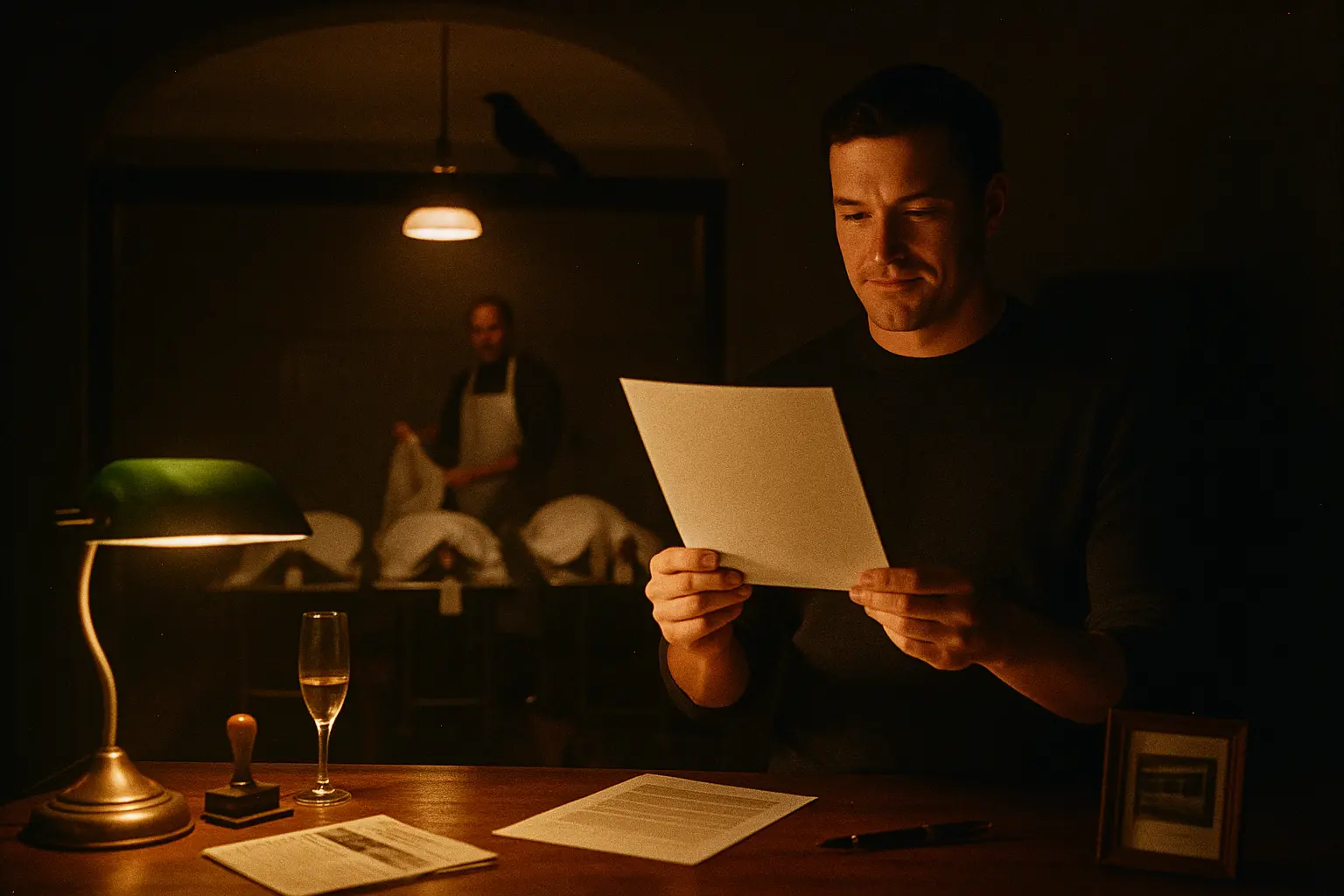
Picture a mid-century pathology theatre. A man in an apron stands over the body of a patient whose discharge papers read "died of heart failure." He makes an incision, looks inside — and finds a tumour nobody saw in life. He enters it in the log. Not to punish anyone. But so that next time the same monitor, the same ECG, the same "confident" diagnosis would be read differently. This was called professional hygiene. In the 1950s, 40–50% of all hospital deaths went through it.
Today fewer than 5% do. Not because doctors became more accurate. But because an autopsy is inconvenient, expensive, and wounds the pride of the living. And here is the trap I cannot shake from my head for the past month: when bodies are placed on the table, in 23.5% of cases a serious diagnostic error is found, and in 9% a class-one error — one that would have changed treatment and, probably, survival. Civilisation abandoned the most honest feedback mechanism precisely when confidence in diagnoses grew. The mistakes did not disappear. The autopsies did. We did not cure the disease — we dismissed the only witness who knew its name.
I am Dnister. I build Dnister Strategy. And in December I caught myself about to skip the annual inventory — "because everything is already clear." Everything is clear. The dashboard is green. Like that hospital that cancelled autopsies and declared all diagnoses correct — and the mortality statistics immediately improved, of course, because nobody was looking inside anymore.
This text is my table. I lay my 2026 on it and pick up the scalpel myself. Because the only alternative is this: someone else will write the cause of death from the ceiling. And I already know which one they'll choose. The venture industry, by the way, has no shame about the word — they officially call the analysis of dead companies a post-mortem, an autopsy. The CB Insights collection has 483 of them. I'm simply adding mine — and unlike those 483, mine are still warm.
The annual autopsy is not a new idea. But in 2025–2026 it became urgent for a new reason that few people say out loud. AI tools have compressed the time from idea to "deployed" from months to weeks. The iteration cycle tightened — and with it, the natural pause between launch and reflection shrank too. A year ago, a founder in the wartime Ukrainian economy, where every hryvnia is accounted for, physically could not launch more than two or three things a year — resources wouldn't allow it. Today he launches six, eight, twelve — and every release looks like progress, because Claude wrote the boilerplate overnight. The rhythm accelerated, but the time to stop and look inside did not. We gained the ability to accumulate diagnostic errors twice as fast and with twice the confidence in each of them. The autopsy has always existed. But in 2026 it becomes the only way to distinguish speed from movement — because they have finally stopped being synonyms.
The antagonist: the man who had the best dashboard in history — and who spent 30 years unable to read his own defeat
2003. A cinema. On the screen — an 85-year-old man in a chair, looking straight into the lens. His hands tremble slightly. This is Robert McNamara, former US Secretary of Defense, the human calculator, the architect of escalation in Vietnam. Errol Morris's camera does not release his face. And McNamara has just recounted the war through his favourite figures — body counts, efficiency graphs, daily briefings — and then delivers lesson number two from his life. He says it slowly, almost with horror: "Rationality will not save us."
Think about who is saying this. Not a poet. Not a priest. The most rational person of his generation. The man who believed that if the metric is green — we are on the right track. He had the best data of his time. And it was precisely because of it that for decades he could not speak a simple sentence. Only thirty years later, in his memoir "In Retrospect" (1995), would he write: "Yet we were wrong, terribly wrong." An autopsy performed thirty years too late, when there was nothing left to save but his own conscience. The most precise reporting of the century — and it all led in the wrong direction, just very neatly.
McNamara is not a villain with horns. He is the worst thing that can happen to a founder: a man who confused having metrics with the ability to acknowledge defeat. Whose dashboard glowed green while the morgue filled up. And when I look at my 2026, my fear is not that I am not smart enough. My fear is that I am smart enough to convincingly explain to myself any failure. Each of us has a little McNamara inside with a laptop, building a graph at two in the morning that proves: we are not losing, we are "optimising the trajectory." And the graph, damn it, always converges.
So the refrain of this autopsy is simple. After each line I will ask one question — the one McNamara hid from for thirty years: and was the monitor showing green then? And if yes — that does not make the diagnosis correct. It makes it dangerous. Because the smoothest green appears on precisely the instrument that nobody dared to cut open.
Column one: DONE. Three patients who left the operating room alive (and one in intensive care)
Let's start with the pleasant, because there will be nothing pleasant after this. I brought three things to release in 2026. But here is the first trap of the inventory, and it costs more than all the others: "done" and "paid back" are two different columns, and an honest autopsy does not allow merging them into one.
Harvard lecturer Shikhar Ghosh studied more than two thousand venture-backed companies and arrived at a figure the industry does not like to quote at conferences: approximately 75% of them never return cash to investors, and in 30–40% of cases investors lose everything they put in. Translated into the language of the inventory: the fact of a launch is not a surviving patient. It is a patient who was brought to the operating room. A press release is not a discharge note — it is a tag on the toe, without a date yet.
Here are my three. And I deliberately separate "done" and "alive" into different cells, because that is precisely where I catch myself fusing them.
| 2026 Launch | "Done" (brought to release) | "Paid back" (returned resource/capital) | Honest patient status |
|---|---|---|---|
| Distillation engine (Gmail → vault) | Yes. Works, lives, I use it daily | Partially. Paid back my time, did not generate cash | Discharged. Healthy. The only truly alive one |
| Content surface (drafts / sections) | Yes. Deployed, sections are standing | No. Audience does not convert into anything | Intensive care. Breathing on the ventilator of attention |
| Vault infrastructure (deploy, guard) | Yes. Technically flawless | An unanswered question: pays back what, exactly? | A tool looking for a disease to treat |
See what happened? I wrote "yes" three times in the "done" column — and felt a rush of pride. That is McNamara's dashboard. The green "deployed" indicator. And in the adjacent column — "no," "partially," "unanswered question." I have learned to bring things to release flawlessly. And that has become the most sophisticated way to avoid asking whether anyone needs them: when the release is impeccable, the question of meaning feels almost rude. The most dangerous founder is not the one who launches nothing. It is the one who launches flawlessly and on time, and every release acts as an anaesthetic against the one question that matters. I was not building a product. I was writing myself a prescription for anaesthesia — and filling it myself.
And was the monitor showing green? Yes. Three times. Remember that colour — from here on it will be the colour of every diagnosis I forged for myself.
Column two: NOT FINISHED. Five corpses I used to write off as "ran out of time"
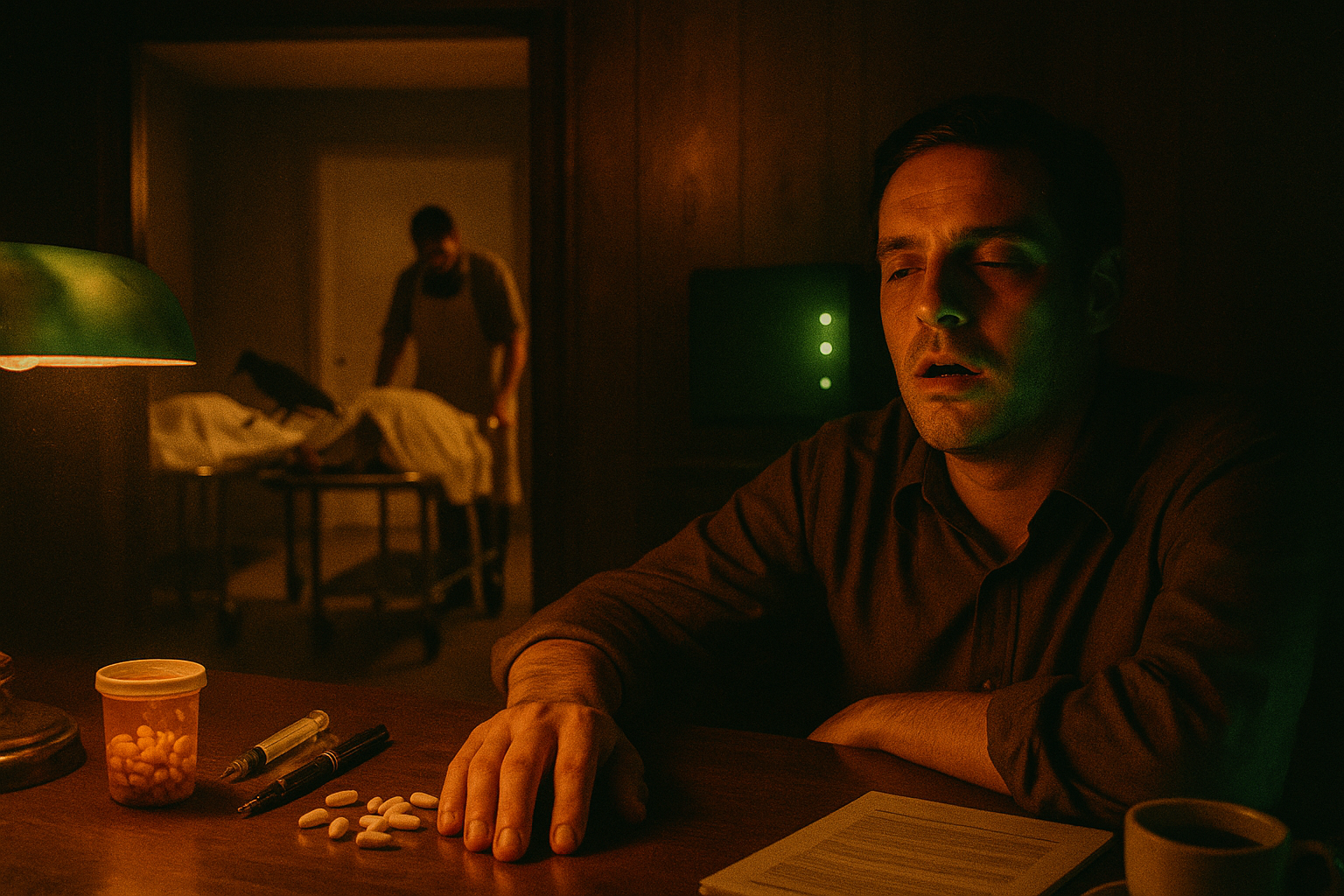
This is where the real autopsy begins. Five directions of 2026 I did not bring home. And my favourite diagnosis for all five is "ran out of resource / time / hands." It sounds noble. It sounds like an external circumstance. It sounds like something I am not responsible for.
The problem is that this is the very diagnosis CB Insights breaks over its knee. The most common official cause of startup death is running out of money — 70% of cases. But analysts write it plainly: this is almost always the terminal cause of death, not the root problem. Beneath "ran out of money" lie poor product-market fit (43%), bad timing and macro (29%), unviable unit economics (19%). And in the earlier corpus of more than 100 post-mortems, the absolute leader was no market need — 42%. Almost half of projects die not because they were built poorly. But because nobody needed them. Death from a perfect answer to a question nobody asked.
"Ran out of time" is my personal version of "ran out of money." It is a death certificate written from the ceiling. Because time always runs out for everything. The question I was running from: why did I give time to this and not that? Time did not run out. I spent it — I am just carefully hiding the receipt.
Here is the translator I made for myself for this column. On the left — the diagnosis I wrote for myself all year. On the right — the diagnosis the autopsy revealed. I recommend making the same for your own corpses before reading further. The "what I told myself" column fills in easily and pleasantly. The "what the incision showed" column is the one you take the scalpel for in the first place.
| Direction I didn't finish | Cause of death I wrote (convenient) | What the autopsy showed (real) |
|---|---|---|
| Paid product from distillation | "Didn't have time to package it, ran out of hands" | I never once asked a real person if they'd pay. No market need, validated by zero conversations |
| Systematic content monetisation | "Algorithms, timing, market not ready" | Unit economics of attention: I produce expensively, give away for free, and am offended by silence |
| External partnerships / B2B | "No bandwidth" | I was more afraid of hearing "no" from a real person than I loved hearing "yes" |
| Community around the project | "Focused on the product" | Building community = showing the unfinished daily. I hid drafts like shame |
| Own operational discipline | "The year was chaotic, force majeure" | I confused activity with progress. The green "deployed" dashboard replaced my compass |
Five rows. Five times on the left — an external circumstance in which I am an innocent victim. Five times on the right — me, avoiding the same conversation with a real person. Notice the pattern? All my "force majeures" somehow had the same face — mine. If your left column is also all about "time," "market," and "algorithms," and the right column suddenly is all about you — congratulations, you are also the hospital that loves writing "died of heart failure."
And was the monitor showing green? Almost never. Here the indicators blinked red all year. I simply repositioned the monitor so I couldn't see it — and called that focus.
Stop. The strongest argument against this text — and why it doesn't survive scrutiny
Here it is worth pausing and honestly raising the objection I don't want to run from. Because there is a reasonable counter-position: not every unfinished project is a corpse, and not every escalation of commitment is pathology. Some unclosed directions are R&D with a horizon you don't yet know. Some "non-monetised products" are infrastructure that will enable the next generation to be monetised. The Staw and McNamara framing can over-diagnose: if every "I continue despite losses" is an escalation of commitment, then Bezos financing Amazon Prime through seven loss-making years was also sick. There is even a practical objection: excessive reflection paralyses — founders who count everything build nothing.
Where this counter-position genuinely lands: when you consciously hold a direction as R&D and it genuinely feeds a future product, not self-esteem; when "pivot" is not a rebranding of defeat but a genuine model change driven by new data. That is a real distinction and worth preserving. But here is what this counter-position cannot explain: where does the retroactively rewritten goal come from? If the distillation engine was genuinely planned as R&D, my January notes should read "exploratory project with no monetisation horizon for 2026." I checked. They say "launching a paid product in Q2." The difference between healthy R&D and escalation of commitment is not in the decision to continue. It is in whether you changed the goal retroactively. If you rewrite the plan after failure — you are not a researcher. You are McNamara editing the archive.
Column three: COULDN'T ADMIT IT. Two projects where I was the captain shouting "push on!"
And finally, the hardest part. Two projects I did not close when I should have. Not because they had a chance. But because closing them meant admitting that a year ago I had made a stupid decision. And this is where the inventory stops being about management and becomes about psychology.
1967. Pete Seeger sings "Waist Deep in the Big Muddy." In the song, a platoon wades through a river under a captain's orders. The water rises to the waist, to the chest, to the neck. One soldier is already drowning. And the officer shouts "push on!" Because turning back would mean admitting: he led everyone in the wrong direction himself. The captain would rather drown the platoon than say "I made a mistake at the water's edge." Because dead platoons are silent, and living ones remember who gave the order.
Nine years after that song, psychologist Barry Staw sat 240 management students at a table and gave them an investment decision that had already failed. And he discovered something chilling: the most resources were poured into the failing project by precisely those who were personally responsible for the previous failing decision. Not newcomers. Not outsiders. The authors of the mistake. They kept pressing the corpse so as not to look like idiots to themselves. Staw called it escalation of commitment. I call it "the captain in the Big Muddy with my face."
And why is it so painful — to admit? There is no mysticism here, only arithmetic. Tversky and Kahneman in 1992 measured the loss aversion coefficient: λ ≈ 2.25. A loss feels approximately 2.25 times more painful than an equivalent gain. Closing a project into which a year has been invested is psychologically twice as hard as the joy from its hypothetical success. Meaning the arithmetic inside my skull is actively bribing me not to close. Pressing on a failing project is not stubbornness of character. It is hard-wired pain economics, and the payment is deducted automatically, without my signature.
My two "couldn't admit its." The first — a direction I believed in publicly, announced, tied my identity to. Every month it wasn't working. Every month I threw in another week — because I had said out loud that this was important. Classic Staw: I was financing not the project, I was financing my unwillingness to look like someone who had been wrong. The second — a tool I brought to technical perfection, but which solved no real problem. I was polishing buttons on a machine heading the wrong way — because the steering wheel demands you acknowledge direction, while buttons give the illusion that you are still in control of something.
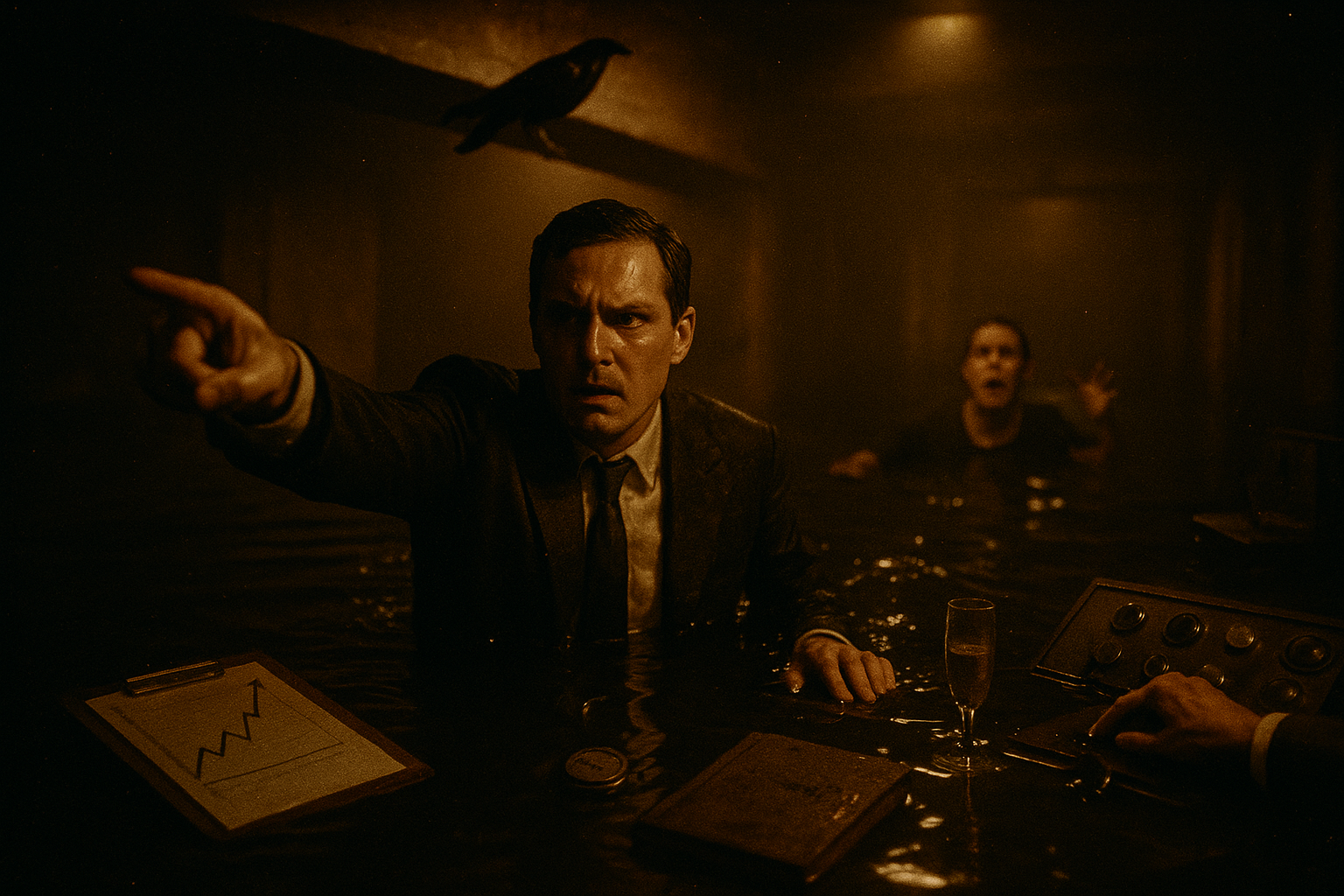
The most expensive line in the inventory is not "what failed," but "what I didn't let fail on time." Because a failure acknowledged in February costs a week. The same failure pressed through to December costs a year, plus destroyed trust in your own judgement. McNamara paid for his "push on!" with other people's lives and thirty years of insomnia. We pay less. But we pay in the same currency: time that does not return, and the ever-quieter voice inside that once tried to say "turn back" — and which we carefully shout down each time with a new sprint.
The tool: four questions the US Army asks after every battle — that you have never asked once
Now the most important part, because without this everything above is just beautifully written self-flagellation — and I forbid myself self-flagellation as firmly as motivational clichés. An autopsy without a change of protocol is necrophilia, not medicine: you regularly dig up the same corpse, weep over it, and put it back.
The US Army institutionalised the merciless autopsy earlier than business did. After analysis of the 1973 Yom Kippur War and with the first rotations at the National Training Center at Fort Irwin in the early 1980s, a ritual appeared called the After Action Review — a mandatory honest conversation after every operation, regardless of rank. Codified in Training Circular 25-20 in 1993. No other idea is credited by the Army with more responsibility for teaching it to fight. And the contrast is precise: the Army does an AAR after every battle. A founder — once a year, reluctantly, and even then "because everything is already obvious." A structure that deals with death every day is more honest with itself than a person who risks only their own self-regard.
The AAR rests on four questions. They are primitive to the point of insult — and that is precisely why they work, because they leave no room to hide behind the word "time."
| AAR question | What it kills | How to ask it at your annual autopsy |
|---|---|---|
| 1. What was supposed to happen? | The retroactively rewritten goal | Pull out what you wrote in January. Not what you remember now. What was recorded then |
| 2. What actually happened? | Green dashboard, body count | Bare facts. Not "launched," but "launched and zero paying customers." Both "launched" and "zero" — in one row |
| 3. Why did the gap occur? | "Ran out of time" | Forbid yourself external causes in the first round. Only decisions you made yourself |
| 4. What do we change? | An autopsy without consequences | One protocol change for every corpse. Not a mood — a rule. Written down. With a date |
And one more figure worth running these four questions honestly for, rather than as a formality. In medical autopsies, when the doctor was confident in the diagnosis, the autopsy still overturned it approximately one quarter of the time. Your subjective certainty that the project "almost made it" or "fell through no fault of yours" is statistically worthless without an incision. Especially when it is firm. Especially when the dashboard is green. Confidence is not evidence of health. It is only evidence that you have not looked inside for a long time.
Who profits from you skipping the autopsy
Before moving to the finale, there is a systemic question I have been deliberately postponing — because it is uncomfortable not for me personally, but for the entire ecosystem context in which this inventory takes place at all. The "pivot" and "fail fast" culture is not neutral wisdom. It has specific beneficiaries. Venture capital profits from rapid portfolio rotation: the faster a founder declares a pivot and closes a round, the faster the VC recycles capital into the next bet. The consulting industry profits from the fact that the next brilliant methodology sells when the previous one is declared obsolete — without necropsy, without establishing why exactly OKR or Jobs-to-be-Done did not work in this specific case. The media ecosystem of startup culture has normalised "pivot" as a synonym for flexibility — and in doing so freed the founder from any obligation to explain exactly why he turned. An unclosed autopsy is not a private weakness. It is something that conveniently enables the next sales cycle to be built. A system that rewards speed without reflection gets what it wanted: founders who move fast, leave trails of corpses — and optimistically open the next round.
Hard ending: 49.4% dead by year five. The question is not "why did you fail," but "why did you think you were the exception"
Now the cold shower, without which this inventory would be just another form of narcissism — even narcissism through shame. According to US Bureau of Labor Statistics data, 20.4% of businesses close in the first year, 49.4% by five years, 65.3% by ten. This is not folk-stat from someone's blog. This is government statistics, population median. Almost half of everything is dead by year five.
Which means "didn't finish five out of eight" is not my personal disgrace. It is a curve on which I am simply another data point. And this converts all the shame into data. The question of the annual inventory is not "why did I fail," with tragic music and wringing of hands. The question is cold and singular: on what basis did I consider myself an exception to the curve I had seen a thousand times?
Because here is where all three of my witnesses converge. The hospital that cancelled autopsies and declared all diagnoses correct. McNamara with the perfect dashboard who spent thirty years unable to read the word "defeat." The captain in the Big Muddy shouting "push on!" while the water is at his neck. All three were doing what I do when I want to skip the inventory "because everything is already clear": they confused the absence of an autopsy with the absence of disease. Silence on the monitor is not "healthy." It is "switched off."
McNamara waited until he was eighty-five, Morris's camera, and trembling hands, to say "rationality will not save us." That is the final, cruelest irony of the autopsy: rationality truly will not save — if you only use it to build a graph proving you are not drowning, right up to the moment water enters your mouth. An autopsy is not rationality. It is the willingness to hear from your own insides what the monitor will never show you.
My 2026 is on the table. Three patients — one alive, two on life support. Five corpses with forged certificates, which I have just rewritten. Two that I personally drowned because I could not admit I had led them the wrong way. The incision is made. The log is filled. And the only thing that matters now is not what is written in the log. It is whether I will read the next monitor differently. Or whether I will reposition it again so the red is out of sight.
Do your autopsy before someone does it for you. Because they will do it for you, without fail. The cause of death will just be written from the ceiling — and it will be "ran out of money." Or "ran out of time." The most convenient lie told over a body that could still have been breathing, if someone had dared to cut earlier. The scalpel is already in a hand. The only question is whose — yours or the pathologist's.
Frequently asked
What is commitment escalation (Staw escalation)?
A cognitive bias in which we keep investing resources into an obviously failing course because we have already put so much in. Barry Staw described it in 1976. In startups it looks like this: nobody buys your product for 9 months, but you keep going because so much work has gone in. That is not persistence — it is refusing feedback.
What does the coefficient lambda equals 2.25 mean in decision-making?
An operational calibration for decision delay: every day without a clear yes or no on a key question costs roughly 2.25 times more than deciding immediately — due to accumulated context, re-thinking, and state restoration after a break. Not an academic metric but a practical framework for pricing indecision.
What is an AAR and how do you run one?
After Action Review — a structured debrief after a project or round closes: what was planned, what actually happened, why the gap exists, what to change next time. A US Army standard from 1981, now used at SpaceX, Netflix, Amazon. The key condition: no ego defense, only facts and concrete decisions.
Why is we ran out of money a symptom, not a cause of failure?
Money runs out because of something specific: no demand, too-early burn rate, wrong pricing, timing errors. The framing we ran out of money lets you skip the real analysis — which decision, made by whom, at which moment produced this outcome.
What does a green dashboard above the morgue mean?
A metaphor from the article: a hospital that stopped autopsies records 100% correct antemortem diagnoses — because no one checks anymore. Analogously: metrics you control and interpret yourself will always read green — until the market or a partner delivers their own verdict.
Comments
Signed-in readers only — to keep it human, not a bot swamp.