Dentistry Breakthroughs 2010–2026: Teeth Are Scanned and Printed but Not Regrown, and 45% of People Still Have Dental Disease
A factual review of fifteen years of dentistry: what is actually available in EU clinics in 2026 (scanners, clear aligners, ceramic crowns, tissue-sparing caries treatment, gum surgery, implants) and what is still in research (tooth regrowth in Japan, stem cells, enamel regrowth). An interactive diagram of the tooth and implant, a map of 44 technologies, a navigator by problem, 18 charts.
On this page
- 01 · What the Body Can Restore and What It Cannot
- 02 · Fifteen Years: The Industry Grew, the Diseases Did Not
- 03 · Caries: less drilling and the end of amalgam
- 04 · Pulp: a living tooth instead of a dead one
- 05 · Gums and bone: what surgery restores and what it does not
- 06 · Implants: 95% in place is not the same as 95% healthy
- 07 · The Digital Factory: Scanner, Printer, Aligner, Artificial Intelligence
- 08 · Growing a Tooth: What Is Actually Happening
- 09 · Technology Map: What Is Already Available and What Is Not
- 10 · Access: in Europe, people mostly pay for their teeth themselves
- 11 · Money: boom, hangover and the Chinese price
- 12 · What to do about a specific problem
- 13 · What next: to 2033
- Sources
In autumn 2024, Kyoto University Hospital registered the first human study of a drug that was reported as “Japan has learned to regrow teeth.” TRG035 is an antibody that blocks the protein USAG-1, which holds back the development of tooth buds. In mice and ferrets it did indeed produce extra teeth. But the first study, designed for 30 healthy men (some received a placebo), tested only safety; the registry lists it as completed, and no results have been published. The next stage is planned for 24 children with congenital absence of teeth, not for adults who have lost a tooth. The drug is not approved anywhere, and there are no clinics where it can be obtained.
The real changes of the past fifteen years are quieter. In 2010, Align Technology shipped about 261,000 courses of clear aligners; in 2025, 2.6 million (the definition of a course has since changed somewhat), and more than 95% of orders now arrive not from impression material but from a scanner. Since January 1, 2025, the EU has banned amalgam fillings except in cases of medical necessity. The 2026 European guideline recommends that in deep caries the affected tissue be removed selectively and the pulp kept alive. Implants have become a routine operation: in Germany, 1.3 million are sold a year. And yet the share of people with diseases of the teeth and gums worldwide has barely changed in three decades, at about 45%, and in the WHO European Region it is the highest: 53.6% in 2021, against a global average of 46.8%.
Over 15 years, dentistry has learned to preserve teeth better, make them more precisely and replace them more reliably, but not to regrow them: everything that is actually available in EU clinics in 2026 is digital manufacturing, tissue-sparing caries treatment, gum surgery and implants, while stem cells and tooth regrowth remain in research.
This is a review of research and the market as of October 25, 2026, not medical advice. Treatment is chosen by a dentist after an examination.
01 · What the Body Can Restore and What It Cannot
“Regrow a tooth” is an imprecise phrase. A tooth consists of several tissues, and each one is restored in its own way or not at all. Enamel is no longer produced after the tooth erupts: the cells that create it disappear. A living tooth can partly add dentin from the inside. The pulp can heal after minor inflammation, but not after deep inflammation. The ligament that holds the tooth in the bone, and the bone itself, recover only partly after periodontitis. Gums that have receded do not return on their own. And an implant has no ligament at all, which is why inflammation around it behaves differently from inflammation around a tooth.
The diagram below shows three things for each layer: what the body does by itself, what is already done in EU clinics, and what is so far only being researched.
Tooth and implant in cross-section: what can be restored
Click a layer or a button to see what the body repairs on its own, what is already done in EU clinics and what is still being researched.
Enamel: early decay can be stopped, new enamel cannot be grown
the body itselfThe cells that build enamel disappear after the tooth erupts, so the body does not restore it. Saliva and fluoride only return minerals to shallow lesions.
in EU clinicsFluoride varnish and fissure sealing stop early lesions. A deep cavity needs a filling.
specialist centersResin infiltration (Icon) for early lesions between teeth: progression 9% vs 45% over 7 years (small RCT).
lab / animalsA protein matrix (2025) grew a layer up to 10 µm thick on extracted teeth — 0.5–1% of the thickness of natural enamel. There are no animal or human studies.
Dentin: a living tooth partly protects itself
the body itselfBeneath deep decay the pulp lays down new, tertiary dentin — a natural defense, but not a replacement for lost tissue.
in EU clinicsCalcium silicate cements (MTA, Biodentine since 2010) stimulate the formation of a dentin bridge over the pulp. The 2026 EFCD-ESE-ORCA guideline recommends them instead of calcium hydroxide.
lab / animalsTideglusib (King’s College London, 2017) doubled the formation of new dentin in mice. There are no human studies.
Pulp: kept alive more often than before
in EU clinicsSelective caries removal and calcium silicate cement over the pulp — a recommendation of the 2026 guideline.
specialist centersPulpotomy — removal of only the inflamed upper part of the pulp — is an acceptable alternative to root canal treatment. Success at one year is the same as with root canal treatment, but there are more early complications.
specialist centersCell-free revitalization of immature teeth: bleeding into the canal allows the root to finish growing — this is repair, not a full-fledged pulp. Success 95.6% in 27 RCTs, but only one tooth in four responds to a sensitivity test.
human trialsTransplantation of pulp stem cells: 5 studies of 5–26 patients each (China, Japan, Chile). Such a product is not authorized in the EU.
Ligament and cementum of the root: partial repair after periodontitis
the body itselfThe ligament holds the tooth in its socket and cushions chewing. After severe periodontitis it does not grow back by itself.
in EU clinicsRegenerative surgery of deep pockets (membranes, Emdogain, bone materials) gives 1.1–1.3 mm more attachment than conventional cleaning with the gum flap opened.
approved outside EUThe growth factor FGF-2 (Regroth) has been approved and reimbursed only in Japan, since 2016.
human trialsInjections of pulp stem cells (China, 132 patients, 2025): the primary endpoint was not met, with an effect only in a subgroup.
Gum: recession is closed surgically, not with a cream
the body itselfGum that has receded and exposed the root does not come back by itself. Causes include periodontitis, thin gum, traumatic brushing and the bite.
in EU clinicsGrafting of the patient’s own tissue from the palate (CAF + CTG): complete root coverage in 57% of mild cases at one year and 48% at 20 years; if tissue between the teeth is lost, only 21%.
in EU clinicsCollagen matrices instead of own tissue: less pain, but complete coverage is less frequent in multiple recessions.
Jawbone: lost without a tooth, partly restorable
the body itselfAfter a tooth is lost, the bone that held it gradually shrinks.
in EU clinicsBone grafting, membranes, sinus lift; or short implants without augmentation — at 5–8 years no statistically significant difference in failures (data are scarce).
human trialsCell grafts for the bone around a tooth — phase 1 (Japan, 12 patients).
Crown: ceramic instead of metal
in EU clinicsMonolithic zirconia and lithium disilicate are displacing porcelain-fused-to-metal: at one of the largest US laboratories its share fell from 65% of crowns (2007) to 7% of orders (2022).
specialist centersSingle-visit crown (scan — design — chairside milling): 83.5% of crowns intact at 10 years in a German cohort of 41 crowns.
Abutment: the connector between implant and crown
in EU clinicsCustom abutments are milled from a digital model taken from a scanner; standard ones come from a factory set.
Implant: reliable, but not permanent
in EU clinicsAfter 10–25 years ≈95% of implants are still in place (34 studies, 20,445 implants); judged successful by various criteria, ≈85%. Germany sells ≈1.3m implants a year.
specialist centersNavigation: guides deviate ≈1.1 mm from the plan. Zirconia implants — only 2 RCTs in 46 patients.
approved outside EUImplant robots (Yomi — FDA 2017; Chinese systems): accuracy 0.6–0.8 mm, no long-term results, EU certification not confirmed.
Mucosa around the implant: the main risk
the body itselfThere is no periodontal ligament around an implant, so inflammation spreads to the bone differently than around a tooth.
in EU clinicsPeri-implantitis affects 21% of patients, mucositis 46%. The odds are higher with periodontitis (roughly fourfold), diabetes and smoking; regular check-ups and professional cleaning are needed.
Bone: the implant fuses with it directly
the body itselfTitanium fuses with bone without an intervening layer — this is osseointegration. It requires enough bone volume.
in EU clinicsIf there is little bone — augmentation or short implants; immediate loading: 97.7% of implants in place at 5 years, 96.9% at 10.
02 · Fifteen Years: The Industry Grew, the Diseases Did Not
Between 2010 and 2026, materials, instruments and rules changed. Calcium-silicate cements that keep the pulp alive became widespread (MTA since the 1990s, Biodentine since 2010). Root canal preparation with a single instrument appeared (2011). In 2020 the European Federation of Periodontology issued a guideline with 62 recommendations, and from 2021 Germany included periodontitis treatment in state insurance. The EU phased out amalgam step by step. The US regulator cleared the first implant robot for the market (2017) and the first artificial-intelligence program for dental images (2021). In parallel, laboratories grew a tooth from cells in a large animal (a dog, 2017) and obtained an antibody that awakens tooth buds.
Sales grew the most. Revenue at Align, maker of Invisalign clear aligners, rose from $387m in 2010 to $4.04bn in 2025, a factor of 10.4. Straumann, one of the largest implant makers, grew 3.5-fold (in 2010, implants only; in 2025, together with orthodontics and digital products). Spending on outpatient dentistry in 13 EU countries rose by 36% in nominal euros, but its share of total health-care spending fell from 6.3% to 5.3%.
Prevalence of disease, meanwhile, has barely changed. According to WHO estimates, the combined prevalence of caries, gum disease and tooth loss has held at about 45% for three decades. According to the Global Burden of Disease, 3.69bn people had oral diseases in 2021; from 2019 to 2023 the number of cases rose by 3%, while age-adjusted prevalence fell by only 1.5%. About 2bn people have untreated caries of permanent teeth, 510m children have caries of primary teeth, and more than 1bn have severe periodontitis.
Europe is the only WHO region where the share of people with untreated caries fell between 1990 and 2021: by 5.9% for permanent teeth and by 9.9% for primary teeth. But the credit goes to fluoride, prevention and school programs, and the decline began long before digital technology. At the same time, the European Region has the highest prevalence among all WHO regions of oral diseases overall (53.6%) and of complete tooth loss (12.4% of adults).
03 · Caries: less drilling and the end of amalgam
The main change in caries treatment is that teeth are drilled less. Early lesions without a cavity are arrested with fluoride, sealants and resin. According to a Cochrane review, fluoride varnish prevents 43% of new lesions in permanent teeth. For early lesions between teeth, German researchers developed resin infiltration: liquid resin fills the porous enamel, and the risk that the lesion will progress falls noticeably.
Silver diamine fluoride (SDF) is a liquid brushed onto active caries. In a pooled analysis of eight studies in children, without control groups, 81% of lesions were arrested; in 2018 the American Dental Association judged it the most effective of the compared agents for arresting large open lesions. The drawbacks are that arrested caries turns permanently black, and a 2024 Cochrane review rated the certainty of evidence as low: all 29 studies had a high risk of bias. In the EU the product is sold as a treatment for tooth sensitivity, so using it to treat caries is off-label. The Hall Technique, developed in the UK for children’s primary molars, does not drill the caries out but seals it under a metal crown. In a Scottish study (131 children), after three years 93% of such crowns were intact, versus 33% of fillings placed with the simplified ART method.
From January 1, 2025, the EU banned the use of amalgam, an alloy containing mercury, for fillings, except where the dentist considers it strictly necessary on medical grounds. Since 2018 it had already been barred for children under 15, pregnant women and breastfeeding women. Countries where amalgam was the only filling covered by public funds received a derogation until June 30, 2026; from July 1, 2026, its import and manufacture are also banned. The ban is environmental: in a meta-analysis of 13 studies of various types, no significant difference was found in the failure rate of composite and amalgam fillings. The regulation restricts new fillings and does not require old ones to be removed.
The loudest headlines concern growing enamel. In 2019 Chinese chemists grew a mineral layer 2–3 micrometers thick on the surface of an extracted tooth; in 2025 a British-Spanish group using a protein matrix reached up to 10 micrometers. Natural enamel on the chewing surface is 1–2 mm thick, that is, a hundred times thicker. Neither of these methods has yet been tested in animals, let alone in humans.
04 · Pulp: a living tooth instead of a dead one
Ten years ago, deep caries with pain almost automatically meant root canal treatment: removal of the pulp together with its nerves and blood vessels. Now the 2026 European EFCD-ESE-ORCA guideline advises removing affected tissue selectively in deep caries and placing calcium silicate cement over the pulp so that it stays alive. Even in irreversible pulpitis the guideline allows pulpotomy, the removal of only the inflamed upper part of the pulp. The authors rate the certainty of evidence for these recommendations from very low to moderate.
The data suggest that pulpotomy gives the same result at one year as root canal treatment, but at the cost of a harder first few weeks. In the international PROVE study (8 countries, 385 patients), 5.2% of patients needed a repeat intervention in the first four weeks after pulpotomy, versus 0.5% after root canal treatment, and painkillers on day seven were needed twice as often. In a cohort of 61 teeth, the pulp stayed alive in 90% of teeth after five years, but these were mostly teeth without severe pain.
For the immature teeth of children and teenagers in which the pulp has died after trauma, revitalization has emerged. The dentist cleans the canal and induces bleeding in it so that the root keeps growing. In a meta-analysis of 27 studies the success rate was 95.6%, but only one in four such teeth responds to a sensibility test, and the crown darkens in 62.5% of cases. In 2016 the European Society of Endodontology described a protocol for “appropriately trained” clinicians, that is, this is a method for specialized clinics.
The next step is stem cell transplantation. In 2018 Chinese doctors transplanted cells from baby teeth into 30 children with injured permanent incisors (26 teeth were analyzed); a year later, tissue with blood vessels and nerves had formed in the canal, and the root lengthened more than in the 10 children in the control group. In total, five such studies, with 5–26 patients each, were published in 2017–2025. In the EU, a cell product for teeth would have to go through the procedure of the European Medicines Agency as an advanced therapy medicinal product, and no such product has been registered.
05 · Gums and bone: what surgery restores and what it does not
About 1.07bn people have severe periodontitis. From 1990 to 2021 the number of patients nearly doubled, but two-thirds of the increase came from population growth and the rest from aging: the age-adjusted share of patients changed by only 0.3% over 30 years. In Western Europe it fell; in Central Europe it rose.
Treatment has become standardized. The 2020 European guideline (62 recommendations, 90 experts from 19 countries) describes four steps: hygiene and smoking cessation, cleaning under the gums, surgery for residual pockets, and lifelong follow-up. The guideline does not recommend systemic antibiotics “by default.” In people with diabetes, periodontitis treatment lowers glycated hemoglobin by 0.43 percentage points after 3–4 months (Cochrane, 35 studies).
For many people the most practical question is gums that recede and expose the root (gum recession). Surgery brings them back. A network meta-analysis of 38 studies calls a connective tissue graft from the palate placed under a coronally advanced flap (CAF + CTG) the “gold standard.” But even that does not promise a complete result.
The tissue between the teeth has the greatest effect on the outcome: if it is preserved, the chance of fully covering the root is high; if it is lost, the chance is about a fifth. Recession returns more often in smokers, with thin gums and with steps on the root. Collagen matrices (Mucograft, Fibro-Gide) spare the patient a wound on the palate, but with multiple recessions they fully cover the root less often than the patient’s own tissue. A comparative study of Fibro-Gide versus a graft, with roughly 160 participants in Italy and Spain, will not finish until 2029.
Regenerative surgery partly restores bone pockets around a tooth. According to the EFP guideline, membranes, bone materials and enamel matrix proteins (Emdogain) give 1.34 mm more attachment than conventional open flap surgery; a meta-analysis of 67 studies of Emdogain gives +1.14 mm. Long-term (5–20 years) data on the advantage of membranes over conventional surgery are conflicting. In 2016 Japan became the first country to approve the growth factor FGF-2 for the bone around a tooth: it filled the defect by 37% versus 22% on placebo, although gum attachment did not change. It is not available in the EU.
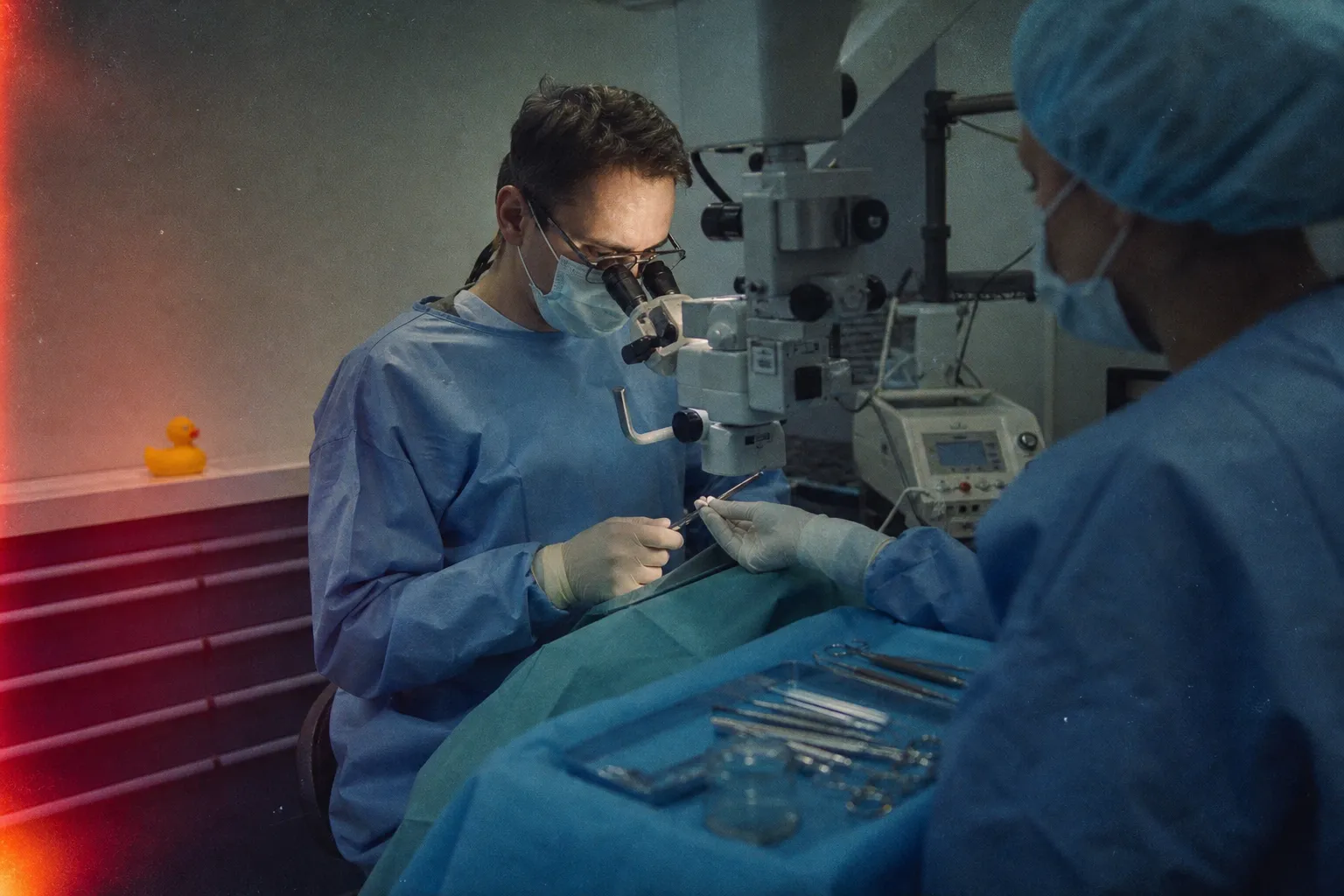
Gum grafting means sutures thinner than a hair, under a microscope. No gel that “grows gums” has appeared in fifteen years.
Stem cells for gums are also still at the research stage. In the largest study (China, 2025, 132 patients), injections of donor pulp cells did not improve the primary outcome, gum attachment at six months. An effect was found only in a subgroup with severe periodontitis on re-analysis: +0.64 mm compared with saline, and in the control group attachment also increased, by 1.03 mm.
06 · Implants: 95% in place is not the same as 95% healthy
The implant has become a mass-market procedure. In Germany fewer than 390,000 implants were sold in 2002; in 2022–2023 the figure was about 1.3 million a year.
A 2026 meta-analysis (34 studies, 20,445 implants, follow-up of 10 to 25 years) found that about 95% of implants remain in the mouth. But “in place” does not mean “healthy”: on average 85% are counted as successful by the authors’ criteria, which differ between studies. According to a review of 102 studies, 46% of patients have inflammation of the gum around the implant (mucositis) and 21% have peri-implantitis with bone loss. After 20 years, peri-implantitis develops in 22% of patients. The odds of peri-implantitis are roughly four times higher with active periodontitis and twice as high with diabetes and smoking.
The technique has become more precise. Surgical guides printed from a digital plan deviate by about 1.1 mm from the planned position; robots, by 0.6–0.8 mm. The first implant robot, Yomi, was cleared for the market by the US regulator in 2017; that same year in Xi’an, according to press reports, a Chinese robot placed an implant for the first time without a doctor’s involvement. But accuracy is not a treatment outcome: there are no data on whether “robotic” implants last longer, and EU certification for such robots has not been confirmed by independent sources. Simpler solutions are better studied: short implants instead of bone augmentation showed no statistically significant difference in failures after 5–8 years (few studies, mostly from a single Italian practice), while immediate loading leaves 97.7% of implants in place after 5 years and 96.9% after 10. Metal-free zirconia implants are poorly studied: only two comparative studies, in 46 patients.
Prices depend on the country more than on the technology. In Germany an implant with a crown costs roughly €1,700–3,400, and public insurance provides only a fixed subsidy toward a standard bridge or denture; Hungarian clinics quote €700–1,200 (these are advertised figures, not statistical data). China cut prices the most: in 2023 the state ran centralized procurement of implants for public hospitals.
07 · The Digital Factory: Scanner, Printer, Aligner, Artificial Intelligence
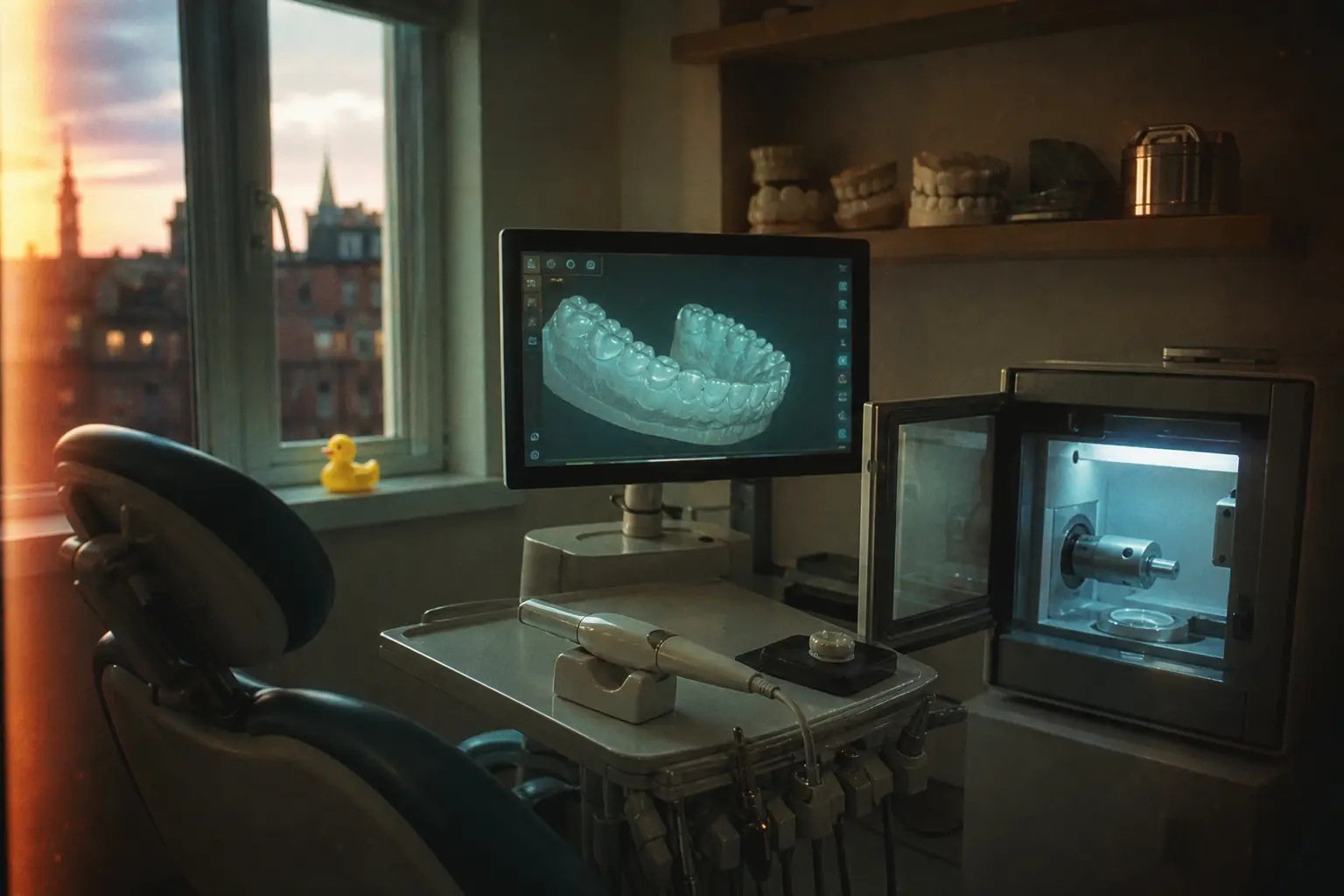
The most visible change in the dental office is that impression material is giving way to the scanner. More than 95% of Invisalign orders arrive in digital form, and there are more than 121,000 active iTero scanners. Among American dentists who responded to an ADA survey in 2021, 53% used a scanner. For single crowns and short bridges, a scanner is no less accurate than impression material and is faster, and patients prefer it; for a full arch and for several implants, the data are still contradictory. The scan becomes a model, and the model becomes a crown made of zirconia or lithium disilicate, which is milled or printed. According to one of the largest laboratories in the US, the share of porcelain-fused-to-metal fell from 65% of crowns in 2007 to 7% of orders in 2022. We wrote about how 3D printing in general moved from prototypes to serial parts in our piece Industrial 3D Printing: dentistry is one of the industries where printing has become mass production.
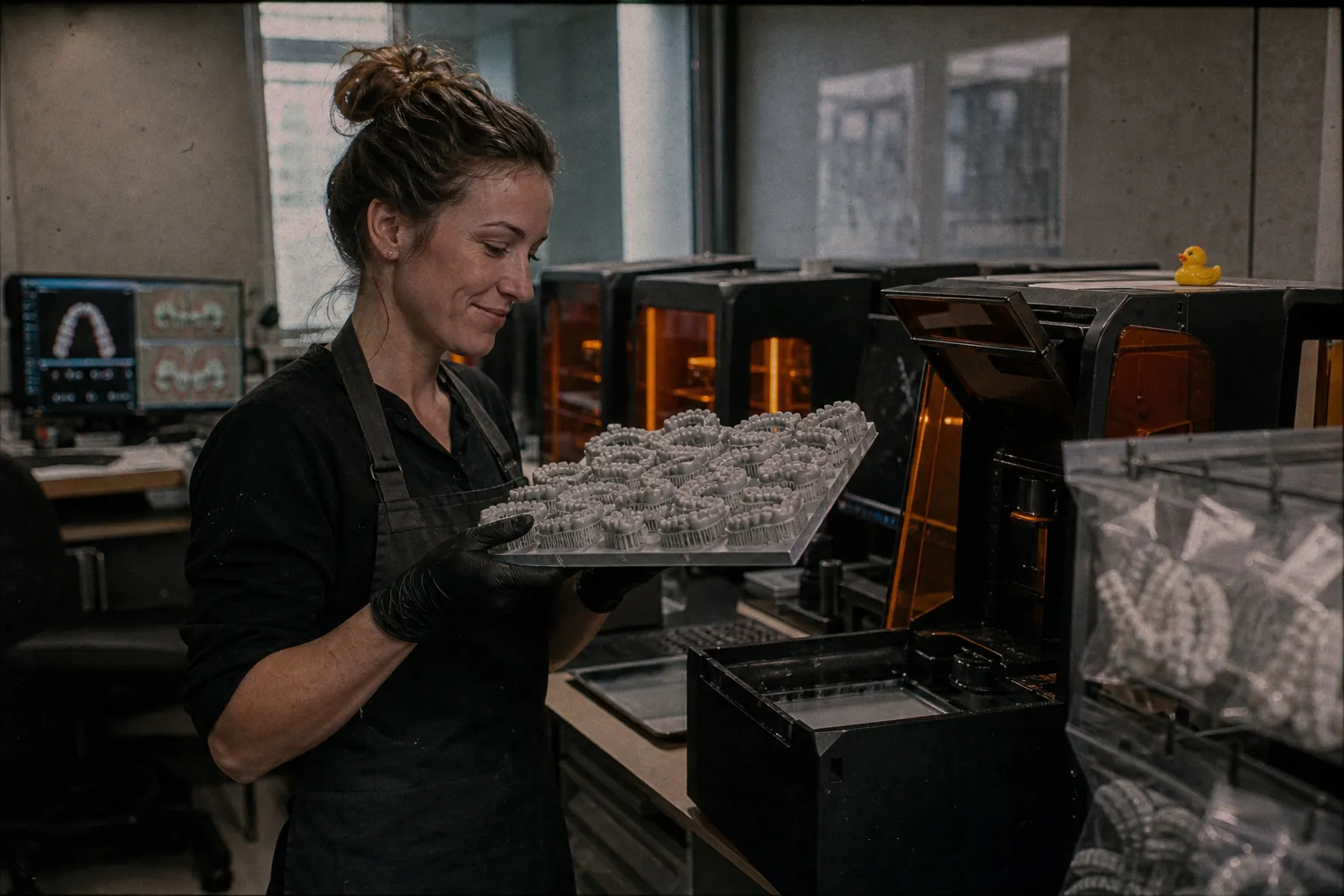
A dental laboratory in 2026 looks more like a print shop than a workshop: every model is a separate file, every aligner a separate patient.
Aligners are the main commercial success of digital dentistry. Align reports more than 22m patients and 2.4bn aligners produced; in 2025 the company shipped 2.61m treatment courses. Compared with braces, in simple cases the result is no worse, and the gums are healthier (a meta-analysis of 21 studies, low certainty of evidence). Aligners perform complex movements worse.
The “aligners by mail without a visit to the doctor” model did not survive. SmileDirectClub went public in September 2019 at a valuation of about $8.9bn, served more than 2m customers, and filed for bankruptcy in September 2023. Align itself, after the 2021 boom, is growing slowly: its 2025 revenue is only 2% higher than in 2021.
Artificial intelligence in dentistry is so far a “second opinion” on X-ray images. By June 2025 the FDA had cleared 29 AI programs for dental imaging from 13 companies; in the EU, according to the company, Pearl Second Opinion has held a class IIa certificate under the medical device regulation since 2023. Results of studies on archived images vary. In the UK’s ADEPT study, which is linked to the developer, AI raised the detection of early enamel lesions from 44% to 76%, but also the share of false alarms from 4% to 15%, and therefore the risk of unnecessary treatment. In a German study at Charité, sensitivity rose from 72% to 81% without loss of specificity; in a Dutch study in 2026, only students gained a noticeable benefit. There are no studies showing that patients do better with AI.
3D X-ray imaging, cone-beam CT (CBCT), is widely used for implant planning and complex root canal treatment, although no one has measured the share of EU clinics with such machines. But it is not a substitute for conventional X-ray images: the dose depends on the machine and the field of view and can be tens of times higher than that of a panoramic image.
08 · Growing a Tooth: What Is Actually Happening
All the methods that promise a “new tooth” or “new tissue” from cells are at early stages. The furthest along are procedures without cells and drugs approved outside the EU.
The candidate closest to reaching humans is TRG035 from the Japanese company Toregem BioPharma. It is based on a 2021 paper in Science Advances: antibodies against the protein USAG-1, given to pregnant mice with a genetic defect, restored the missing molars in the offspring, and in mice without the defect produced extra teeth. In ferrets, whose tooth structure is closer to the human one, a single extra incisor required a fivefold higher dose, three administrations and suppression of the immune system. Some of the antibodies reduced the birth rate and the survival of pups.
A first-in-human phase 1 study (jRCT2051240154) was registered in Kyoto in October 2024: 30 healthy men aged 30–65, each missing at least one molar, a single intravenous administration at doses from 0.4 to 24 mg/kg or placebo (30 is the planned number of participants). The aim is safety. The registry marks the study as completed, and the company states that safety has been confirmed, but the data have not been published. In August 2026 the Japanese regulator completed its review of the notification of a phase 2a study, an open-label study in 24 children with severe congenital absence of teeth; approval from an ethics committee is still needed, and no start date has been announced. The year 2030, often cited as the date when the drug will appear, is the hope of the research lead from a 2024 interview, not a company plan.
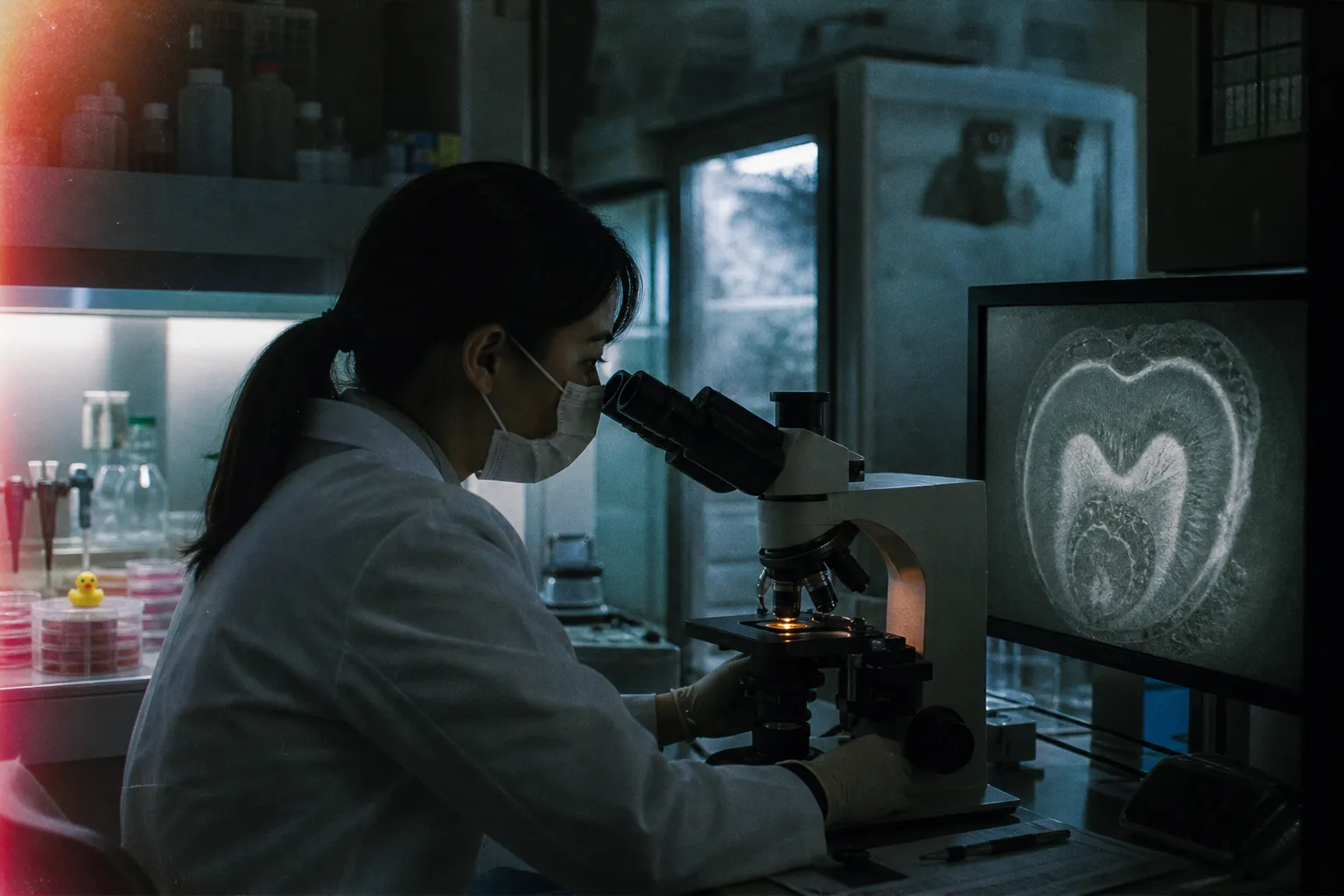
Between “a tooth grew in mice” and “a tooth grew in a patient”, medicine usually takes more than a decade, if it gets there at all.
Even if it succeeds, the first target is narrow. Congenital absence of at least one permanent tooth occurs in 4.6–6.3% of Europeans, but 83% of them are missing one or two teeth; the severe forms for which TRG035 is intended are rare. For an adult who has lost a tooth to caries or periodontitis, the drug promises nothing: there is nothing to awaken if no tooth germs remain.
The remaining approaches are in laboratories. In 2017 Japanese researchers grew a tooth germ from cells and transplanted it into dogs: the tooth erupted after ~180 days, but how it chews and whether it has nerves were not tested. In 2024 a King’s College London laboratory created a hydrogel in which germs made from mouse cells developed for about eight days. Enamel organoids from human cells (2023, 2026) so far form an “enamel-like material” only after transplantation into mice. Tideglusib, which was tested as a drug for Alzheimer’s disease and other diseases, doubled dentin formation in mice in 2017, but it has not been studied in humans in dentistry.
Of the 33 advanced therapy medicinal products (ATMPs), cell, tissue and gene, authorized in the EU as of June 2026, there is not one for teeth. Clinics in Europe that sell “restoration of teeth or gums with stem cells” operate outside authorized therapy.
09 · Technology Map: What Is Already Available and What Is Not
The map below groups 44 methods into six statuses. “In EU clinics” means the method is widely available and recommended by guidelines or has become the standard; for some of them, scanners among them, there are no adoption statistics for the EU. “Outside the EU” means approved in the US or Japan, but approval or sales in the EU have not been confirmed.
Technology map: what is already in clinics and what is still in research
Status as of October 2026. “In EU clinics” — widely available treatment; “specialist centers” — available in some clinics or for selected cases; “approved outside EU” — permitted in the US or Japan, not confirmed in the EU.
Fluoride varnish and 1,450–1,500 ppm toothpaste
Fluoride strengthens enamel and stops early lesions.
Cochrane: fluoride varnish prevents 43% of new lesions in permanent teeth (13 studies for this estimate).
Zirconia and lithium disilicate crowns
Metal-free ceramic, milled from a digital model.
Lithium disilicate: 95–100% of crowns intact in the short and medium term (28 reviews, ~35,000 crowns).
Intraoral scanner
An optical impression instead of impression material.
More than 95% of Invisalign orders come from a scanner; the share of EU clinics with a scanner has not been published.
Titanium implants
A screw in the bone in place of a root.
≈95% in place after 10+ years; success by various criteria ≈85%; peri-implantitis in 21% of patients.
Immediate loading and All-on-4
A fixed prosthesis on 4–6 implants on the day of surgery.
Immediate loading overall: 97.7% of implants in place at 5 years; with All-on-4, prostheses often break.
Short implants instead of bone augmentation
Implants of up to 10 mm, to avoid a bone graft.
14 RCTs: at 5–8 years, failures do not differ significantly from augmentation; high risk of bias.
Regenerative surgery of bony pockets
Membranes, Emdogain, bone materials in deep defects.
+1.34 mm attachment compared with open cleaning (22 RCTs).
Tissue grafting for gum recession
The patient’s own tissue from the palate covers the exposed root.
Complete coverage: 57% of mild recessions at one year, 48% at 20 years.
Collagen matrices for gums
A substitute for own tissue, without a wound on the palate.
With multiple recessions, complete coverage is less frequent than with own tissue (4 RCTs).
Selective caries removal + calcium silicate cements
In deep decay the affected tissue is removed only partly, so as not to expose and kill the pulp.
EFCD-ESE-ORCA 2026 guideline (certainty of evidence from very low to moderate).
Root canal treatment with a single NiTi file
Canal preparation with a single reciprocating instrument.
Faster; no difference in post-treatment pain (3 RCTs, 1,317 patients).
Whitening with up to 6% peroxide via a dentist
The first session is with a dentist or under their supervision.
Directive 2011/84/EU: above 0.1% only via a dentist, prohibited under age 18.
Stepwise periodontitis treatment (EFP)
Hygiene, cleaning under the gums, surgery if needed, lifelong follow-up.
62 recommendations; in Germany covered by public insurance since July 1, 2021.
Composite instead of amalgam
After the EU amalgam ban, the main filling material.
Filling failure: RR 0.96 amalgam vs composite — practically the same.
Clear aligners
A series of removable trays that move teeth gradually.
21 RCTs: in simple cases as good as braces; canine rotation reaches ≈48% of the plan.
Silver diamine fluoride (SDF)
A liquid stops active decay without drilling, but stains it black.
May stop decay, but Cochrane rates the certainty of evidence as low; in the EU it is sold as a treatment for sensitivity — for caries this use is off-label.
Peptide P11-4 (Curodont)
A scaffold for remineralization of early lesions.
Studies are small, with a high risk of bias; certainty of evidence is very low.
Hall Technique for baby teeth
Decay is sealed under a metal crown without drilling or anesthesia.
RCT, Scotland: 93% of crowns intact at 3 years vs 33% of ART fillings.
Pulpotomy instead of root canal treatment
Only the inflamed part of the pulp is removed in an adult tooth.
Success as with root canal treatment (RR 1.00), but early failures 5.2% vs 0.5% (PROVE).
Single-visit crown (chairside CAD/CAM)
Scan, design and milling in one visit.
83.5% of crowns intact at 10 years (cohort of 41 crowns).
In-office 3D printer
Printing of models, splints and surgical guides on site.
In the US: 17% of dentists on the ADA’s technologically active panel (2023); no EU data.
CBCT (3D X-ray)
A volumetric scan for implants, root canals, impacted teeth.
Dose 5–1,073 µSv vs 6–22 µSv for a panoramic X-ray.
Zirconia implants
Implants without metal.
Only 2 RCTs in 46 patients; no reliable 5-year data.
Guided implant surgery (guides, navigation)
The implant is placed precisely according to a digital plan.
Deviation ≈1.1 mm; benefit for treatment outcomes not proven.
Microscope in endodontics
Magnification for root canals and surgery on the root tip.
Success of apical microsurgery ≈94% vs 88% without a microscope.
Laser instead of a drill
An erbium laser removes decay.
Cochrane: less pain, but not enough data to replace the bur.
Computer-controlled anesthesia delivery
A slow injection under pressure control.
In children less pain on one scale (20 RCTs, heterogeneous results); no studies in adults.
Prescription toothpaste, 2,800–5,000 ppm
A high fluoride dose for people at high risk of decay.
In the EU, cosmetic toothpaste is limited to 1,500 ppm, higher only as a medicine; 5,000 ppm from age 16 and not for continuous use.
Resin infiltration (Icon)
Resin fills a porous enamel lesion between teeth without drilling.
Progression 9% vs 45% over 7 years (small RCT, Germany).
Cell-free pulp revitalization
An immature dead tooth continues to form its root.
Success 95.6% (27 RCTs); the crown darkens in 62.5% of cases.
AI for analyzing X-rays
Software marks suspicious areas as a “second opinion”.
Pearl — EU Class IIa certification (2023, according to the company); study results differ: in one, more findings, but also more false alarms.
rhPDGF-BB (GEM 21S)
A growth factor for bone defects.
FDA 2005; a valid EU certificate and sales in the EU not confirmed.
Nasal-spray anesthesia (Kovanaze)
Numbs the upper teeth from premolar to premolar without an injection.
FDA 2016: 88% of fillings without an additional injection vs 28% on placebo; no EU registration found.
FGF-2 (Regroth) for bone around the tooth
A growth factor applied during gum surgery.
Japan: bone fill 37% vs 22%, attachment — no difference.
Implant robot
A robot guides or performs the drilling according to the plan.
Yomi — FDA 2017; Chinese systems claim EU certification, no confirmation; no long-term data.
Stem cells for the pulp
Cells are transplanted into the canal of a traumatized tooth.
5 studies of 5–26 patients; not authorized in the EU.
Tooth regrowth (TRG035)
An antibody awakens dormant tooth buds; the target is children with congenital absence of teeth.
Phase 1 (planned for 30 healthy men) completed, no results; phase 2a in 24 children is in preparation.
Stem cells for gums and bone
Injections of donor pulp cells into the pockets.
132 patients (China): the primary endpoint was not met.
Tideglusib for dentin
The drug activates the tooth’s own stem cells.
Mice; not a single human study.
Bioengineered tooth
A tooth germ is grown from cells and transplanted.
Dogs: the tooth erupted after ≈180 days; no humans.
Enamel growth
A mineral layer on the tooth surface.
Up to 10 µm on extracted teeth; natural enamel is 1–2 mm.
Enamel organoids
Enamel-forming cells are grown from human cells.
Transplanted into mice; no clinical plans.
Mail-order aligners without a visit (SmileDirectClub)
Trays based on photos and remote supervision.
IPO in 2019 at a valuation of ≈$8.9bn, bankruptcy in September 2023.
Amalgam fillings
Fillings containing mercury.
The EU banned them from January 1, 2025 for environmental reasons (except where medically necessary); filling failures show no significant difference from composite; removal of old fillings is not required.
10 · Access: in Europe, people mostly pay for their teeth themselves
Not everyone can get these technologies, and the gap between EU countries is large. Government schemes and compulsory insurance cover on average only a third of dental spending — and the same was true in 2010 (33.3% versus 33.6% in 2022). By comparison, OECD governments cover 78% of outpatient medical care.
The share of Europeans who reported that they could not get the dental care they needed because of cost, distance or a waiting list fell over 15 years from 5.1% to 3.3% of the population. But the gap between poor and rich has not gone away: among the poorest 20% the figure is 6.1%, among the richest, 1.2%. In France the share rose from 2.7% in 2019 to 6.5% in 2025; in Romania, among those who needed care, from 6.3% in 2021 to 17.3% in 2025. In England only 40% of adults used the services of an NHS dentist over two years; before the pandemic, about 52% did.
Eastern Europe also lags in the condition of its teeth. According to the Global Burden of Disease, complete tooth loss became less common in Western and Central Europe from 1990 to 2021, while in Eastern Europe it became more common.
Ukraine is worse than the regional average on tooth loss and periodontitis. According to the WHO profile (GBD 2019 modeled estimates), untreated caries in permanent teeth affects 32.4% of Ukrainians over the age of 5, severe periodontitis 18.9% of adults, and complete tooth loss 14.0% of people aged 20 and over, more than the average for the European Region (12.4%). According to WHO data for 2021, Ukraine has no national oral health strategy. Through the Program of Medical Guarantees, the state pays for only emergency dental care for adults — relief of acute pain and dangerous conditions; for children under 18 it also pays for routine care; prosthetics, orthodontics and implantation are not included. Separately, a program for military personnel and veterans has been in place since 2025: in its first half-year, 59,274 people used it, Ukraine’s National Health Service (NSZU) paid UAH 273m, of which UAH 123m was for prosthetics. In Poltava, among displaced children aged 6–7 who attended one clinic, 77.8% had caries, versus 66.0% among local children.
11 · Money: boom, hangover and the Chinese price
The dental industry has gone through the same cycle as many technology sectors. In 2021 Align’s revenue grew 60%, after which growth almost stopped. Dentsply Sirona, formed by a merger in 2016, has since written off $5.7bn of goodwill, and its 2025 revenue ($3.68bn) is lower than in the first year after the merger.
China’s centralized procurement in 2023 showed how much the price of an implant depends on the market rather than on cost. According to press reports, the average tender price fell 55%, and for Swiss premium brands 63%. In the first quarter of 2023 Straumann received 40–45% less per implant in China, but sold 25% more units. For the patient, implant treatment in public hospitals was meant to become roughly half as expensive. In other words, the price of dental technology is determined not only by the technology itself but also by who buys it and how.
12 · What to do about a specific problem
For seven typical problems, the navigator below brings together three things: what is standard in EU clinics today, what is new since 2010, and what remains an experiment that should not be confused with treatment.
13 · What next: to 2033
Below are analytic scenarios, not forecasts from published studies.
Most likely, by 2033 dentistry in the EU will continue along the same path: less drilling and more prevention following the phase-out of amalgam, wider use of pulpotomy and calcium silicate cements, and the integration of AI as a second reader of images, with certification under the Medical Devices Regulation. Implant prices will probably be pushed down by competition and procurement, as in China, rather than by a new technology. The main bottleneck will remain access: as long as EU states pay for a third of dental spending, new methods will go first to those who can pay.
The first results of TRG035 in children with congenital absence of teeth could appear in the second half of the decade, if phase 2a starts in the near future. Regrowing a tooth in an adult after loss is unlikely by 2033: this requires not the awakening of existing tooth buds but the creation of a new organ. In animals this has succeeded only partly: a tooth grown from cells in dogs erupted and had a root, but its nerves and chewing were not tested. Cell-based methods for pulp and gums must pass large randomized trials and the EMA procedure for advanced therapy medicinal products (ATMPs), which usually takes years. Enamel regrowth must first show a result, at least in animals.
Those who have kept their teeth will gain most in the coming years: early detection of caries, treatment of periodontitis and regular prevention deliver more than any replacement technology.
Sources
- Burden and access: WHO — oral health fact sheet, Global report 2022, Global action plan 2023–2030, baseline report 2025, Ukraine profile 2022; GBD — Lancet 2025, GBD 2023, Lancet Public Health 2026, complete tooth loss by region, periodontitis by region, periodontitis, GBD 2021; Eurostat — unmet need, dentist visits, dental spending; OECD — Health at a Glance 2025, System of Health Accounts; NHS — NHSBSA 2025/26, RCS; Ukraine — program for defenders, Cabinet of Ministers, Program of Medical Guarantees 2026, Medplatforma, caries in displaced children
- Caries, enamel, amalgam: Regulation (EU) 2024/1849, Regulation (EU) 2017/852, amalgam versus composite; Cochrane: SDF 2024, SDF in children, ADA 2018; resin infiltration, 7 years, meta-analysis of infiltration; P11-4; Cochrane: fluoride varnish; Hall Technique; enamel — Nature Communications 2025, Science Advances 2019, enamel thickness
- Pulp: EFCD-ESE-ORCA guideline 2026, ESE 2019, PROVE, pulpotomy versus root canals, RCT, pulpotomy, 5 years, revitalization, 27 RCTs, SHED, Sci Transl Med 2018, review of cell studies
- Gums and bone: EFP S3 2020, CAF + CTG, 20 years, network meta-analysis 2022, Cochrane 2018, collagen matrices, Fibro-Gide, NCT07083050, Emdogain, 67 RCTs, regeneration, 5–20 years, FGF-2, phase 3, DPSC cells, 2025, Cochrane: periodontitis and diabetes, G-BA, 2021
- Implants: survival at 10+ years, 2026, peri-implantitis, AO/AAP 2025, sales in Germany, VDDI, navigation accuracy, robots, Yomi, FDA, immediate loading, short implants, zirconia implants, price in Germany, Hungary, China — Yicai, Dental Tribune
- Digital: Align — 10-K 2025, Q4 2025, revenue (XBRL); clear aligners versus braces, accuracy of rotations; SmileDirectClub — IPO prospectus, 8-K on bankruptcy; scanners — ADA 2021, umbrella review, scan versus impression; ceramics: Glidewell, lithium disilicate, review; AI — review of FDA approvals, ADEPT, Charité, Pearl, MDR; CBCT dose
- Regrowth and cells: anti-USAG-1, Sci Adv 2021, TRG035, jRCT2051240154, phase 2a, Dentistry.co.uk, Toregem, funding, prevalence of agenesis, bioengineered tooth in dogs, enamel organoids, King’s College hydrogel, tideglusib, EMA: approved ATMPs, June 2026
- Money: Straumann — 2025, 2010; Dentsply Sirona, write-offs (XBRL)
Frequently asked
Can a lost tooth already be regrown?
No. The Japanese drug TRG035, reported as “teeth are being regrown in Japan,” has completed only the first phase of trials, designed for 30 healthy men, which tested safety; no results have been published. The next stage is planned for 24 children with congenital absence of teeth, not for adults who have lost a tooth. The drug is not approved anywhere.
Can receded gums be regrown?
Partly, and by surgery. Grafting the patient’s own tissue from the palate fully covers the exposed root in about half of mild cases (57% after one year, 48% after 20 years) and in only a fifth of severe ones, where tissue between the teeth has been lost. There are no creams, gels or stem cell injections that restore gums without surgery.
Is there stem cell treatment for teeth in Europe?
None is authorized. Of the 33 cell and gene therapies approved in the EU, not one concerns teeth. The largest trial of cell injections for periodontitis (China, 132 patients) did not reach its primary goal. Clinics that sell “cell regeneration” operate outside authorized therapy. Only revitalization of immature teeth, which uses no cells, is available.
How reliable are implants?
After 10–25 years, about 95% of implants are still in the mouth, while about 85% are considered successful by different criteria. Inflammation of the gum around the implant (mucositis) affects almost half of patients, and destruction of the bone (peri-implantitis) affects one in five. The risk is higher with periodontitis, diabetes and smoking, so regular check-ups and professional cleaning are needed.
What of this is available in Ukraine?
Private clinics offer most of the methods available in the EU: scanners, clear aligners, ceramic crowns, implants, gum surgery (there are no statistics on how widespread they are). Through Ukraine’s National Health Service (NSZU), the state pays only for emergency dental care for adults, and for children for planned care as well; since 2025 a separate program of treatment and prosthetics has operated for service members and veterans. As in the EU, there are no cell-based methods.
Comments
Signed-in readers only — to keep it human, not a bot swamp.