Bitcoin and the Limits of Exit: KYC at Every Off-Ramp, Self-Custody Risks, BlackRock's Share — Where It's a Door and Where It's a Prop
Bitcoin is sold as an 'exit from the state' and monetary sovereignty. The reality: to get out, you still need a fiat off-ramp with KYC/CARF, a passport, a jurisdiction, and a live buyer. Self-custody is freedom AND the single point of human failure: a lost seed, a $5 wrench, an inheritance your own death encrypts forever. Named framework: Exit Liquidity — four cold questions for any 'escape.' Analysis, not investment advice.
On this page
- I. The man who exited the state and stayed in the room
- II. Exit Liquidity: four cold questions for any escape
- III. Off-ramp: a passport frame at the exit from “stateless” money
- IV. Self-custody: when the single point of failure becomes you
- V. The $5 wrench: cryptography that a plumber’s wrench smashes through
- VI. Inheritance: an exit that leaves behind an encrypted room
- VII. Spot ETFs: a sovereignty held for you by BlackRock
- VIII. Where the exit is real: when the doors aren’t painted on
- IX. El Salvador: when a whole country was led into a room and told it was an exit
- X. The “door or room” test before every “exit”
- XI. Instead of a conclusion: an exit that’s honestly called a hedge
"Not your keys, not your coins. Be your own bank." — a slogan that sounds great right up until you need to withdraw cash from your bank and suddenly remember that this bank has no teller, no branch, and no one who'll pick up the phone.
A large aircraft has a crude, unromantic rule: every passenger must be evacuated in 90 seconds even when half the exits are blocked. If a door won’t open in the smoke, it isn’t a door — it’s décor with a certificate. Aviation learned this in blood: freedom isn’t an “Exit” sign, it’s throughput under smoke. In finance it’s exactly the same. An asset can be hard as titanium, but an “exit” exists only where, under smoke, you actually make it through the till, the passport, memory, your own body, and an heir. Hold that rule in your head — we’re about to press it against bitcoin and see how many “doors” turn out to be painted on.
I. The man who exited the state and stayed in the room
If you already have those twelve words and a screenshot from an exchange — congratulations: you just recognized your room. This article is about you, not some abstract person.
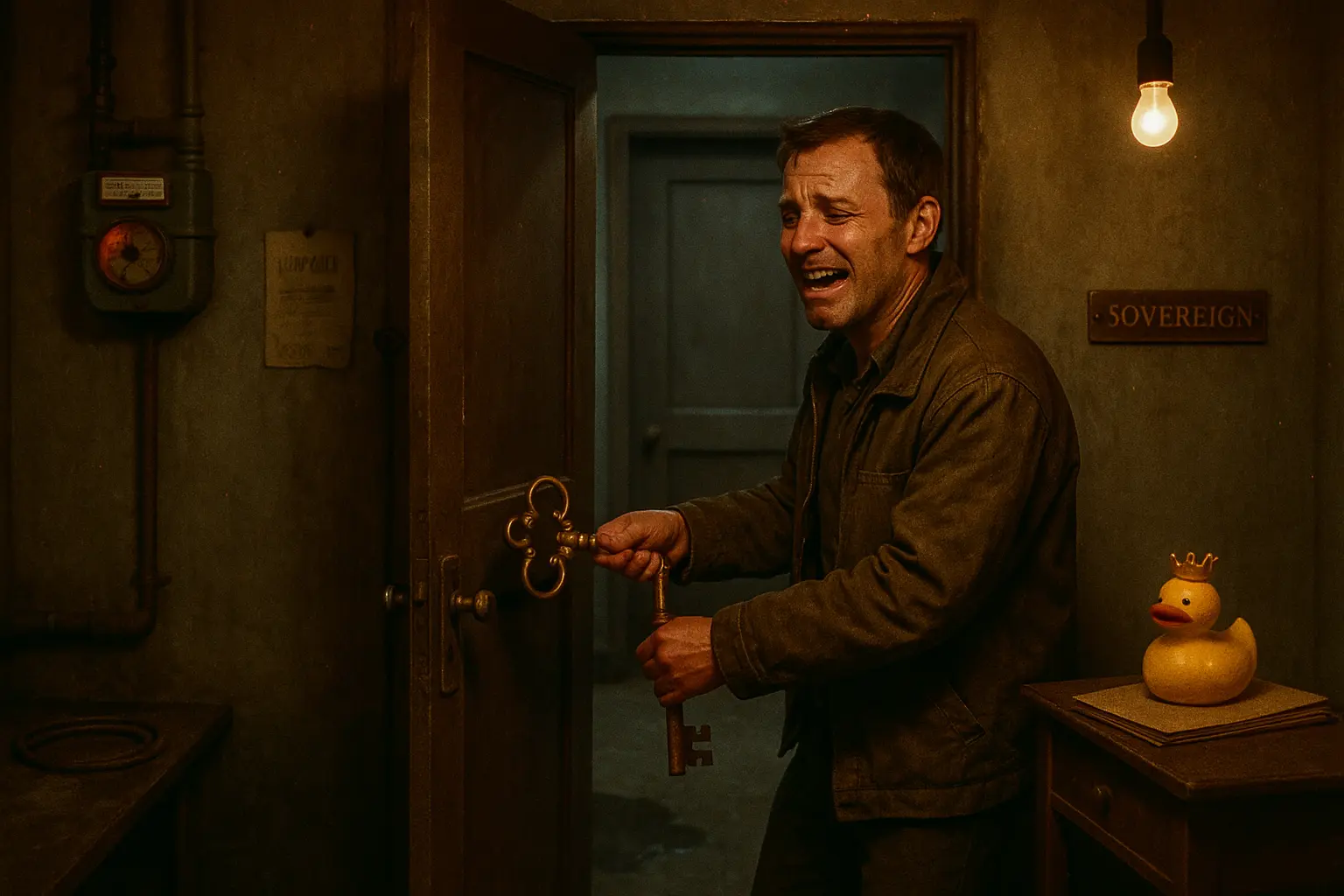
Imagine you were sold a key to a door marked “Exit.” Not just a door — the Door, capital D: out from under the tax office, out from under the bank, out from under a government that prints your savings into pulp while you sleep. You saved for that key for years, stood in line, paid the fee, memorized twelve English words on which everything hangs. And now you turn the key, push the door — and behind it is exactly the same grey rented room. With the next locked door in the far wall. And a meter on the side wall already spinning.
It’s the ending of The Truman Show, only inside out. Truman sails to the edge of the painted sky, touches the wall of his world, finds a little door — and steps out into the darkness of real freedom. The bitcoiner also reaches the edge, also finds the door and pushes it with the same heartbeat. But behind his door there’s no ocean — just another studio. Another waiting room with a KYC scanner and vending-machine coffee. You didn’t leave the building. They cut you another room inside the same building and called it freedom.
This is bitcoin as an “exit.” Not a lie — but also not what you were sold. You were sold a door and given a room. The marketing promised liberty; the engineering delivered a change of landlord. The new owner doesn’t print money — but he does charge for gas (network fees), never fixes the plumbing (lost your seed — your problem, no one to call), and at the entrance still demands a passport the moment you want to turn your “freedom” back into something that pays for bread. Bitcoin doesn’t abolish the state. It postpones your meeting with it to the moment you need the money most.
Let me say up front where my skin is in this game. I hold bitcoin. I consider it the most honest monetary experiment in fifty years. And that’s exactly why the euphemism “exit” infuriates me: it turns a sober hedge into a religion of escape — and a religion of escape always ends with a person confusing the room for the door and sitting in it for years, proudly calling themselves free. The worst cage is the one with “Exit” written on the inside of its door.
II. Exit Liquidity: four cold questions for any escape
Let’s give this an honest name, because it will show up in every section. Exit liquidity isn’t a philosophy but four cold questions that measure any “exit”: Who will buy? Where’s the till? What happens if I forget? Who gets this after I die? If even one answer sounds like “well, somehow” — you didn’t exit. You rented a room with an “Exit” sign and no handle on your side.
“Exit liquidity” is actually a traders’ insult. It’s the contemptuous name for the crowd that comes in last and buys the bag from whoever sells first: you’re not a market participant, you’re exit liquidity for the smarter ones. Remember the night office in Margin Call: at three a.m. an analyst sees in the model that the bag is toxic and the liquidity is an illusion that will last exactly until morning. The whole plot is a race to sell first, while others still believe it’s an asset and not a bag. Every “escape” into an asset is a bet that on the other side there’ll be someone you can hand it to before they wise up.
And here’s the bitter irony there’s no escaping: when you “exit the state” into bitcoin, the state doesn’t go anywhere. It just waits for you on the other side of the trade. Because the moment you need fiat (and you will: try paying rent, a child’s school, or a lawyer in satoshis), the only counterparty big and liquid enough is the regulated system you supposedly left. The biggest buyer of your freedom isn’t “the market” — it’s that same regulated system: the exchange, the bank, the OTC desk, compliance, and the tax office standing nearby not as a buyer but as the notary of your return. You walked out of the room into a corridor that leads back into the same building — only now there’s a KYC frame at the entrance.
Hold one number in your head, because it’s the most honest metaphor for the whole asset. Chainalysis and Glassnode estimate that between 2.3 and 3.7 million bitcoins are lost forever — roughly 11–18% of the entire 21-million supply (a model estimate, not a precise count). Almost every fifth coin is in a room with no doors: technically it exists, it’s visible on-chain, the price runs away upward, and it can never be exited. Bitcoin is brilliant at being a room — and it only borrows doors: from KYC, from a bank, from a jurisdiction, from a live buyer. We’ll keep returning to people whose “exit” turned out to be a room locked from the inside by their own memory.
III. Off-ramp: a passport frame at the exit from “stateless” money
Let’s start with the most mundane thing, which ruins the romance fastest: for “stateless” money to become rent for an apartment, it almost always has to pass through an off-ramp — an exchanger that gives you fiat. And an off-ramp isn’t a door into an open field. It’s a metal-detector frame with passport control, except instead of metal it pings on your name, address, and tax number. KYC isn’t the gate into the system. It’s the coat-check where you hand in the coat of sovereignty and get a tag.
From 2026, CARF — the OECD’s Crypto-Asset Reporting Framework — and the updated CRS 2.0 are rolling out: automatic exchange of crypto data between tax authorities. As of early 2026, over 50 jurisdictions have committed to begin exchanges in 2027 (76 Global Forum members have announced intent to implement CARF in total); in practice this means that regulated ramps in the first wave are already collecting data from January 1, 2026, to exchange it in 2027. The mechanism is lethal in its simplicity: your cold wallet itself doesn’t interest the OECD. But the moment it touches a regulated on/off-ramp, the regulated service has a due-diligence and reporting obligation regarding your transaction. Self-custody stays private exactly as long as you’re in the room. At the exit — passport on the table.
If you’re reading this from Ukraine — for you it’s not a hypothetical building that’s burning, but a very concrete one. Since 2022 Ukraine has lived under a regime of wartime currency restrictions: the NBU eases them gradually, but the cross-border movement of money is still not a “normal peacetime corridor” — limits on buying currency and on transfers get revised, not abolished. For a person who wants to move savings out of a hot zone or support relatives abroad, this isn’t a policy footnote but a door whose queue rules keep changing. The same twelve words that for a Zurich resident are hobby-sovereignty were, for a Ukrainian refugee in Berlin from late 2022, the only way to cross the border with value above the limit.
Here’s how it looks in everyday life, and it hurts exactly that much. Your broker politely asks for “source of funds,” and you open your transfer history: Binance → Bybit → some P2P on Telegram — and you realize that explaining this to a person in a suit will be longer and more humiliating than any DeFi. In crypto you don’t avoid KYC. You just postpone the meeting with it to the day you have the least time, the worst look, and the greatest need for money.
| What the "exit" marketing promises | What actually stands at the exit |
|---|---|
| "Stateless money" | Off-ramp with KYC; from 2026 — a CARF/CRS report to your tax office |
| "Be your own bank" | A bank that has to agree to accept funds "from crypto" (often refuses) |
| "Freedom from borders" | Passport + a residence jurisdiction that taxes you anyway |
| "Exit from the system" | The buyer of your exit liquidity = mostly that same system |
| "Unfreezable assets" | Frozen instantly — at the on/off-ramp, the bank, the exchange's curb |
The list reads like a vegan restaurant menu: the names are pretty, but on the plate it’s the same soy, just under a different sauce. The black joke is that the most principled maximalist, at the moment of buying an apartment, does exactly the same thing as the “fiat slave” he despises: goes to a bank, shows a passport, explains the origin of funds, and prays the compliance officer is in a good mood. The only difference is that the slave did it without illusions, and the maximalist does it in a “Don’t trust, verify” T-shirt, standing in a line he officially abolished four years ago.
IV. Self-custody: when the single point of failure becomes you
Now the holiest thing — self-custody. Twelve words you hold yourself, with no intermediary. It’s genuinely revolutionary: for the first time in history a person can own value that is physically impossible to confiscate while the words are in their head. The problem isn’t the idea. The problem is that the very design that makes you invulnerable to the bank makes you absolutely vulnerable to yourself.
“Being your own bank” isn’t only about rights. It’s about the bank’s duties, which you suddenly took on all at once and for free: securing the vault, recovering access, inheritance law, protection from robbery. A bank keeps staff, insurance, lawyers, and backups precisely so that one mistake by one clerk doesn’t erase your money. Becoming a bank, you become a bank with a staff of one person who also sleeps badly, forgets passwords, and will one day die. The nuance is that a bank usually has branches, security, and a procedure for the death of its director. In your bank, the director, the guard, and the inheritance department are one person who yesterday couldn’t find the laptop charger.
Next — three routes into the room with no doors. The first: you forget on your own.
The canonical scene is Stefan Thomas. In 2011 he receives 7,002 bitcoins as a fee for an explainer video about bitcoin. He puts them on an IronKey hardware wallet and writes the password on a slip of paper. The slip gets lost. The IronKey allows 10 password attempts — after the tenth it wipes its contents forever. Thomas used eight. Two left. At its peak this vault was worth nearly three-quarters of a billion dollars. Picture it physically: a man sits before a piece of metal with a colossal fortune inside and is afraid to touch it — because every touch could be the last. He exited the state perfectly. He walled himself into a room with his own wealth and swallowed the key with his own hand. The state at least has a court of appeal. The IronKey hears no appeals.
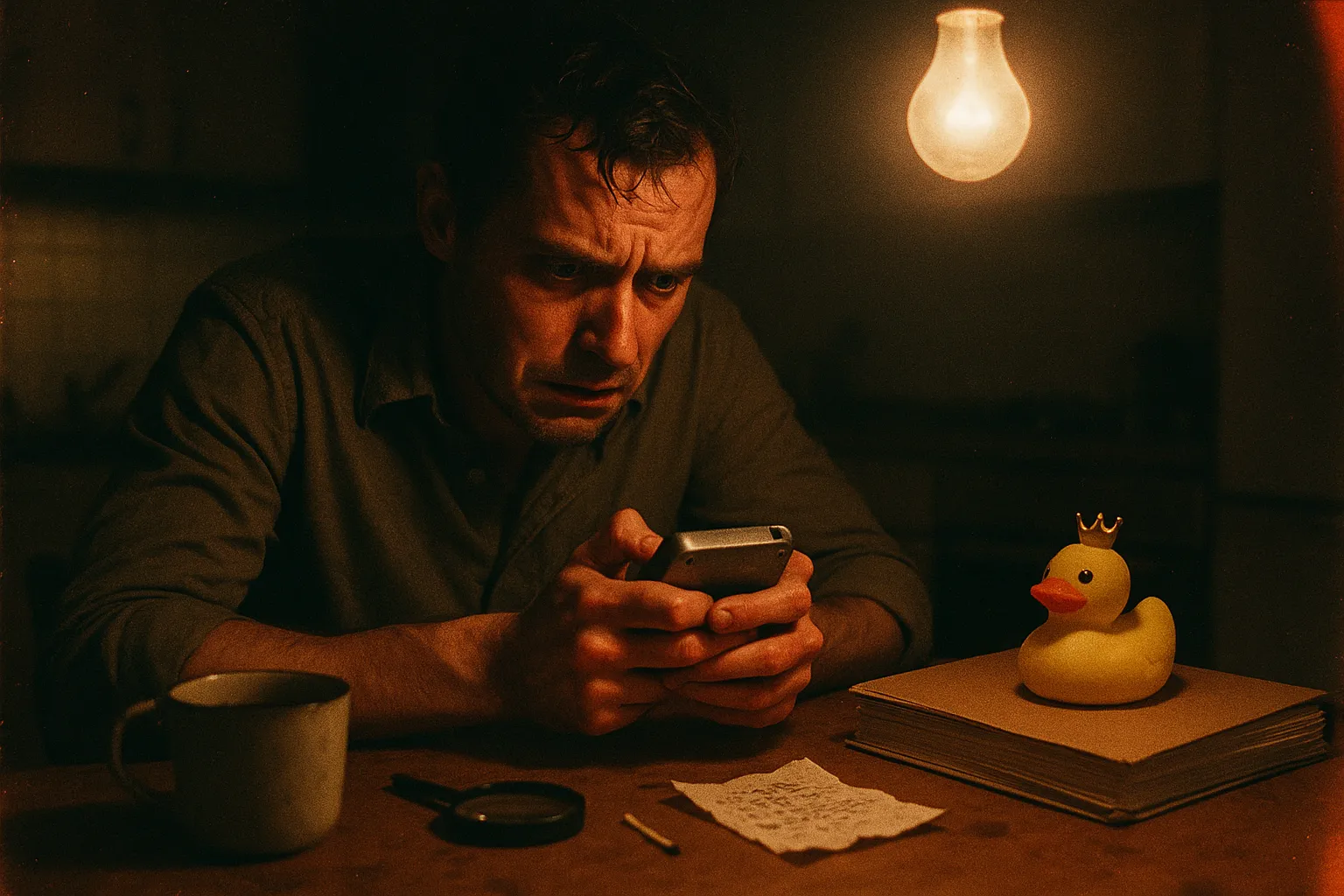
The man is afraid to press his own wallet, because every touch could be the last of ten. This isn’t a safe — it’s a trap with a fortune locked inside. The bank’s staff is one person, and she’s in a panic right now.
V. The $5 wrench: cryptography that a plumber’s wrench smashes through
The second route into the room: others find out.
In 2009, xkcd comic #538, “Security,” buried a whole industry of self-soothing in a single frame. A nerdy security guy fantasizes: to get the enemy’s data, the villains will build a billion-dollar supercomputer and crack 4096-bit encryption for a million years. In the next panel — reality: two guys hit him with a $5 wrench on the knees and politely ask for the password. That’s how the term $5 wrench attack was born: all the cryptography in the world weighs exactly as much as your knees can bear. Cryptography protects keys. It doesn’t protect ribs.
In 2025 this is no longer a comic but a casualty report. In March, streamer Amouranth (who had earlier flaunted a screenshot of $20M+ in crypto) was dragged from her home at night, struck with a pistol grip, and ordered to hand over wallet access — the attackers fled when her armed husband opened fire; four suspects were charged. In New York that same year, two crypto investors were charged with holding and torturing a 28-year-old Italian man for nearly three weeks in a SoHo townhouse to beat a bitcoin-wallet password out of him (electric shocks, beatings, a saw; the accused pleaded not guilty). In January, a Ledger co-founder in France had a finger cut off and sent for ransom. These aren’t street muggings — this is high-tech wealth that met low-tech violence, and low-tech showed up without a whitepaper.
And it’s already statistics, not anecdotes. Researcher Jameson Lopp keeps a public database of physical attacks on crypto holders — 2025 was a record year (by various counts around 65–70 documented cases, and Lopp himself notes the database captures only what the media reported, so it undercounts). The firm CertiK estimated “wrench attacks” rose roughly 75% over the year. Bankers spent years scaring clients with hackers. The hackers laughed, called in two athletes with a wrench — and won.
Self-custody moves the point of attack from a bank server guarded by a crowd of engineers to your own body, guarded only by you — and which, unlike a server, holds up very poorly under torture. A bank can be robbed — and that’s the bank’s problem: insurance, police, recovery of funds. “Be your own bank” can be robbed too — and that’s now your knees’ problem. With a bank, worst case, you file a police report. With self-custody — to yourself in the mirror.
| Failure point | In the "slave" system (a bank) | In the "sovereign" one (self-custody) |
|---|---|---|
| Forgot access | Password reset, passport, branch | Irreversible loss (Thomas: 2 of 10 attempts) |
| Robbery | Insurance, police, chargeback | $5 wrench → your knees, no refund |
| Death of the owner | Notary, estate, bank pays the family | Seed died with you — funds locked forever |
| Transfer error | Reversal, investigation | Wrong address — funds gone forever |
| Who bears the risk | The institution (that's what it's for) | One person, no backup and no sleep |
The state you fled had a monopoly on violence — and spent it, among other things, on making sure you weren’t tortured at home for your money. By exiting, you didn’t get rid of violence. You only privatized it and moved it to your own doorstep. Now the monopoly belongs to whoever shows up first with a wrench.
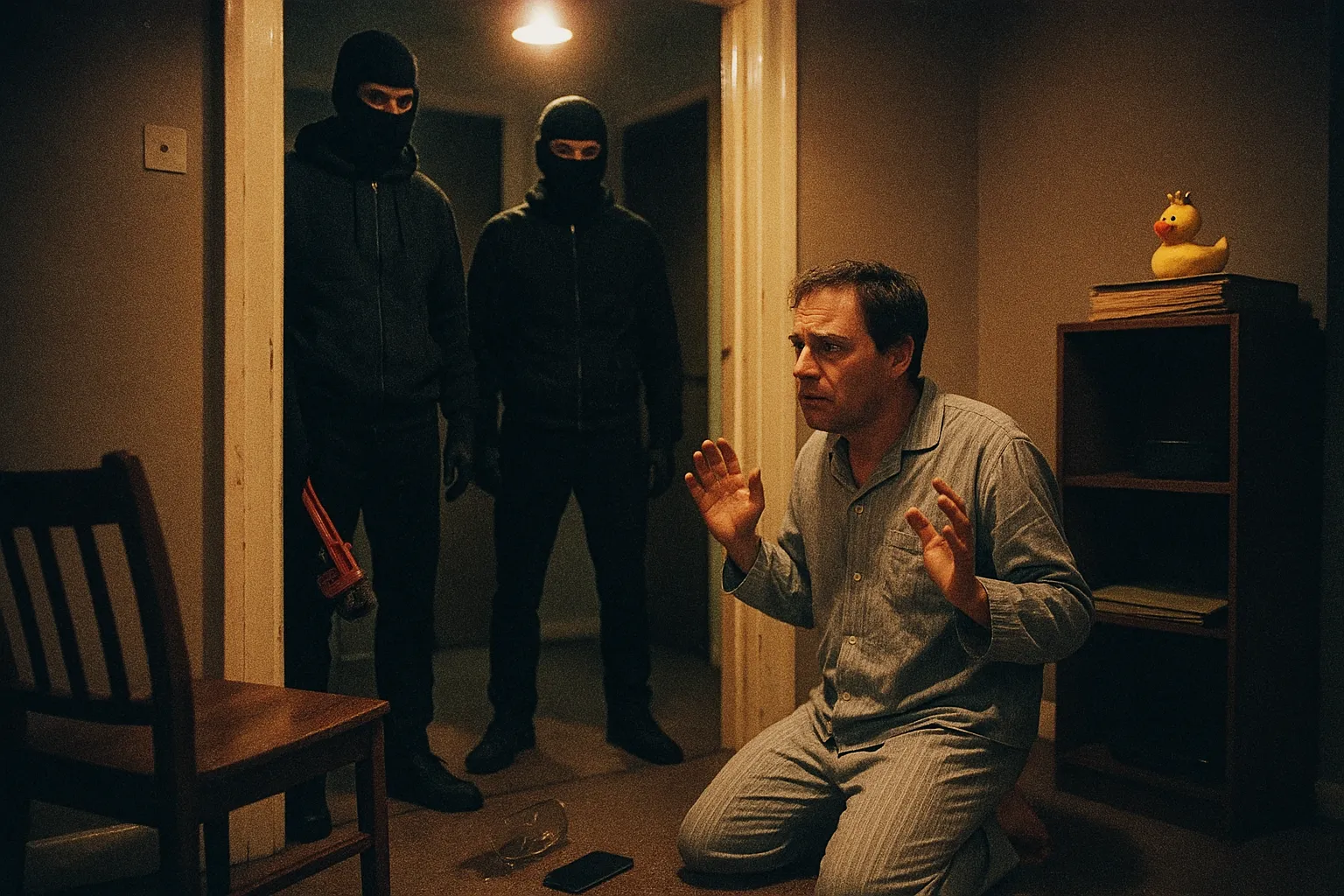
The most expensive cryptography in the world weighs exactly as much as the knees can bear. The owner cancelled insurance and police, calling them slavery — and privatized violence to his own doorstep. The landlord-duck watches, as always, with no receipt and no sympathy.
VI. Inheritance: an exit that leaves behind an encrypted room
The third route — and the most final: you die.
There’s a point where the “exit” fails even for someone who did everything perfectly: never forgot the password, never showed anyone a screenshot, kept the seed on a titanium plate in a safe. That point is your own death. A sovereignty that cannot be transferred isn’t freedom. It’s a life sentence on value that ends when you do.
Remember that fifth coin from the second section — millions of bitcoins in rooms with no doors. A large part of them are locked not by stupidity but by death: people who held the keys flawlessly died — and took the twelve words with them. The black irony of self-preservation: the better you hid the seed from a thief, the more reliably you hid it from your own widow. The paranoiac who trusted no one with the phrase defeated everyone — the bank, the state, the hacker, the tax office. And lost to the one opponent you can’t negotiate with. Your child will inherit not bitcoin but a family legend: “Dad wrote down twelve words somewhere, but he was very sovereign and told no one where.”
The systems he despised solved this problem boringly: notary, will, court — but the value outlives the owner. A bitcoin inheritance, by contrast, still mostly rests on the homemade genre of “a letter to my wife in case of my death, where I’ll finally explain what multisig is” — a document that either gives away your key while you’re alive or doesn’t work when you’re dead. Exiting the state turned out to be easier than exiting the notary.
The summary of the human-failure trilogy: forgot — a room. They found out — a room. Died — also a room. All three routes equally locked from the inside.
VII. Spot ETFs: a sovereignty held for you by BlackRock
And now the funniest part — how the market “solved” all the previous problems, and at what price.
Most people, tired of seed phrases, wrenches, and letters to the wife, bought the “exit” the most convenient way: through a spot ETF. Press a button in your broker — and you’re “in bitcoin.” No wallet, no twelve words, no fear of swallowing the key. Except if your “bitcoin” lives in a broker’s app, you don’t hold bitcoin. You hold a claim against the broker, who tomorrow can simply change the API.
The largest such fund — BlackRock’s iShares Bitcoin Trust (IBIT) — as of mid-2025 held about 738,000 bitcoins, roughly 3.5% of the entire supply, worth over $87 billion; they’re kept by Coinbase Prime, which as of June 30, 2025 reported $245.7 billion in assets under custody. Stop and appreciate the trajectory. Satoshi launched bitcoin in 2009 with an epigraph in the genesis block — a newspaper headline about yet another bank bailout. The meaning: an exit from under banks and the state. Fifteen years later, millions of people buy that same “exit from under banks” as a share of a fund run by the planet’s largest asset manager, with the coins guarded for them by an exchange holding a quarter-trillion in custody.
Bitcoin, conceived as a virus against banks, mutated into one more financial instrument in their portfolio. IBIT is monetary sovereignty from BlackRock’s reception desk: a rebellion that took a ticket. And let’s close the loop that’s easy to miss: who pays for this “sovereignty”? The ETF machine earns when the price rises and draws in new buyers — most often retail, who see IBIT in the news at the peak and become exit liquidity for the institutions that got in earlier. The irony is complete: you bought an “exit from the system” — and your purchase ultimately secured BlackRock’s exit from a position opened when you were still hesitating. You’re not just in the same building. You paid the landlord for his own exit.
An ETF is an honest and safer way to hold exposure for most people. But let’s call it by its name: this is no longer an exit. It’s exposure to the price of an exit. An ETF is when you didn’t leave the building but bought a derivative on the rumor that someone once saw a door. The tragedy begins when the IBIT owner in a broker app sincerely considers himself a cyberpunk who beat the state. His “exit from the system” ends with a push notification: “Your broker is your tax agent. Amount withheld…”
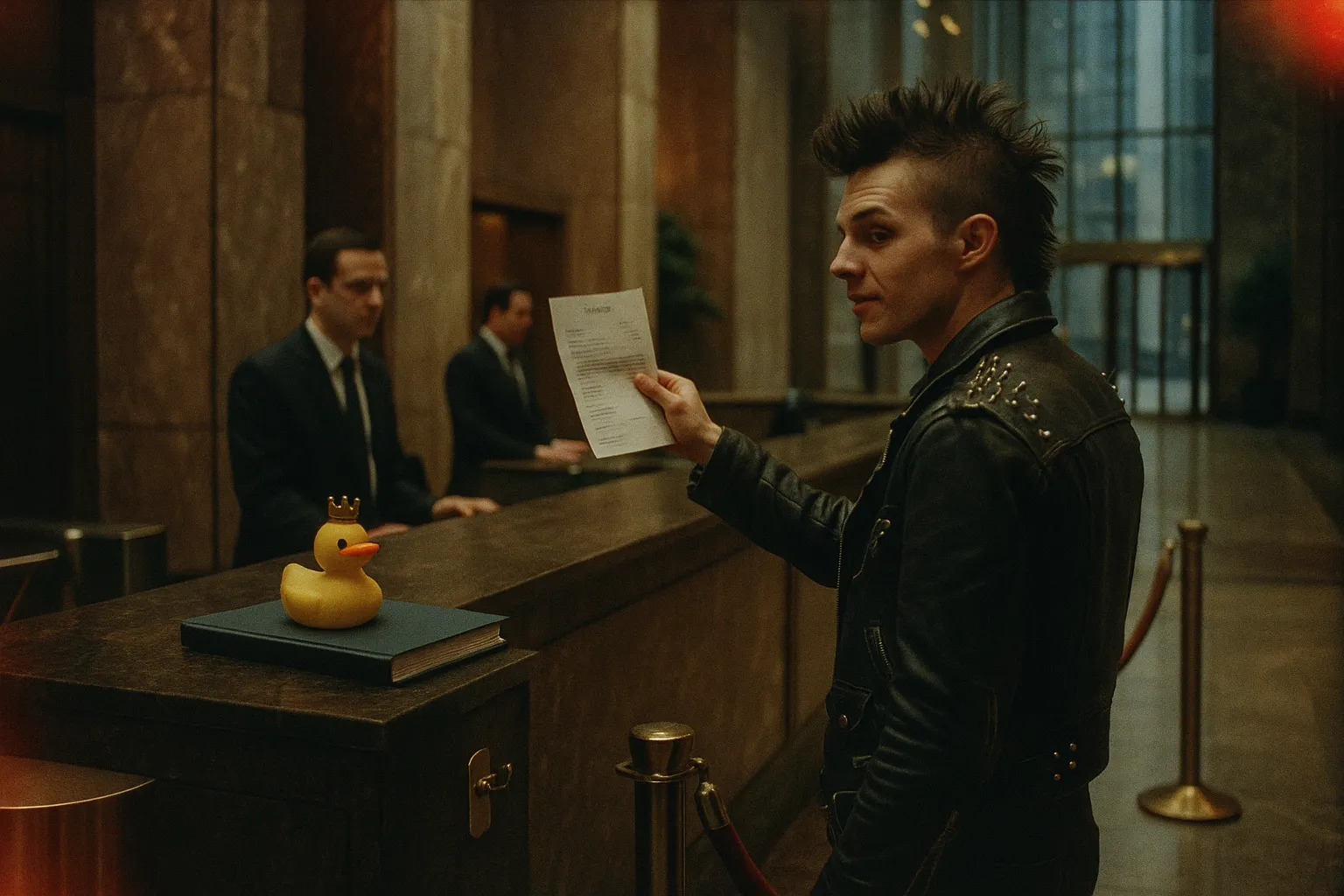
The cyberpunk who beat the banks stands politely in line inside the planet’s largest bank, holding his certificate of rebellion. Better view, higher floor — same building. At the desk presides the real owner of the house: a duck in a crown with a “Client Relations” badge.
VIII. Where the exit is real: when the doors aren’t painted on
There are places where bitcoin isn’t an exit cosplay but literally a door that saves real people from a real state — and they must be named out loud.
Look at the demand map — and it’s mercilessly hard. Bitcoin and stablecoins explode not where it’s trendy but where the local currency is burning. Argentina, per Chainalysis for the year to mid-2024, with inflation over 100%, ran roughly $91 billion through crypto, escaping capital controls that ban freely buying dollars. Nigeria — about $59 billion, while the naira lost more than half its value since the 2023 float, and by some counts about two-thirds. Venezuela showed about 110% year-over-year growth in crypto activity — the highest in the region — as an escape from the devalued bolívar. For a person whose salary turns to garbage overnight while a decree shuts the bank’s dollar access, bitcoin isn’t a philosophy of sovereignty. It’s a door she physically steps through, out of the burning room of her currency.
For someone in Caracas, bitcoin is a staircase up out of a half-basement — even if into someone else’s house. For a resident of Zurich (or Warsaw, or Berlin), it’s one more room in an already-warm building. Here “exit” is no euphemism. Asking a person leaping from a window in a fire whether her door is elegant is obscene.
The same with censorship. When a state flips the financial kill-switch — as Canada did during the “convoy” protests of 2022, when emergency powers let banks freeze the accounts of people and entities linked to the blockades — bitcoin becomes a channel you can’t shut with a single phone call to a bank. Here it’s worth being precise, because precision finishes the job harder than the myth: the RCMP stated outright that it did not give banks lists of ordinary small donors, and the freezes (around two hundred accounts) targeted organizers, “influencers,” and the owners of the vehicles that blockaded the city. But the very fact that the kill-switch exists and was pulled once advertised bitcoin better than any laser-eyes conference. A cross-border transfer that asks no permission is a real, measured freedom for those whose centralized freedom has already been switched off.
Here — and only here — runs the asset’s one real dividing line. A Ukrainian refugee in 2022 who crossed a checkpoint with twelve words in her head and didn’t hit the limit — for her this is literally the difference between capital and zero. A Kyiv IT worker with a stable USDT salary who bought IBIT in Revolut as “inflation protection” — for him it’s an exit cosplay out of a stable room. Both hold “bitcoin.” One holds a door. The other holds a curtain on the wall with “Exit” written on it. The difference isn’t in the asset — the difference is in the fire.
| Scenario | Door or room? | Honest verdict |
|---|---|---|
| Hyperinflation (Venezuela, Argentina) | Door | A real exit from a currency that's burning |
| Capital controls (a ban on $) | Door | Bypassing a wall the state put up |
| Account censorship (journalists, NGOs, protests) | Door | A channel you can't shut with a call to a bank |
| Fleeing war/sanctions with value in your head | Door | Capital that crosses a border in 12 words |
| "Exit" from a stable jurisdiction (US, EU, Switzerland) | Room | Exit cosplay: the off-ramp returns you to the same system |
| "Sovereignty" via an ETF in a broker | Room | Exposure to the price of an exit, not an exit |
| A hedge against debasement (diversification) | More a door | The honest role: an insurance policy, not an escape |
Bitcoin is a real door exactly to the degree that the state you’re exiting is bad; as the state grows tolerable, the “exit” quietly turns into a room with rent on your own life. It’s a brilliant emergency exit and a poor way of life. Bitcoin is a great trench when artillery is overhead. Just don’t wallpaper it, take out a mortgage, and call the trench urbanism.
IX. El Salvador: when a whole country was led into a room and told it was an exit
The most honest field experiment was run not by a person but by a state — and it failed so demonstratively that the result itself became a document. In September 2021 El Salvador made bitcoin legal tender: the first country in the world. The president changes his avatar to laser eyes. A whole nation’s exit from under the dollar and the IMF — live, with a press release.
Three years passed. In December 2024, in exchange for a $1.4 billion IMF loan, El Salvador quietly walked back almost everything. In January 2025 Congress, by 55 to 2, rewrote the law: it repealed bitcoin’s status as legal tender, made acceptance by businesses voluntary, banned paying taxes in it (USD only), and began winding down the state Chivo wallet. And the population’s verdict had been delivered earlier: in a survey by the University of Central America (UCA, n=1269, 2022), 66% called the project a failure, 77% wanted the state to stop pouring budget money into it; and a FUSADES business survey found that about 98% of companies had not made a single sale in bitcoin.
And now the scene this section exists for. At a market in San Salvador a vendor holds a bag of rice, a phone, and a line of people who did not come for a lecture on monetary sovereignty. In front of her is not a whitepaper but a buyer with $3 in bitcoin and a queue behind him that needs to eat. She doesn’t follow Saylor on X. She needs those $3 not to become $2.70 between “tap the QR” and “next.” This is where the revolution runs not into the IMF but into a bowl of rice.
The conclusion is more precise and more uncomfortable: you can’t decree a door out of something that behaves like slippery tile at the till. The decree made bitcoin legal — but it didn’t make it convenient where a person just wants to buy rice without volatility. A freedom imposed from above on those for whom it mostly got in the way at the till isn’t freedom, it’s an administrative rite. El Salvador didn’t exit the IMF. It walked a circle around the room and came back to the same doors, on which someone else’s hand has now written: “closed, condition of the loan.”
X. The “door or room” test before every “exit”
So you don’t wake up in a room with no doors, run every “exit” — in crypto, gold, a second passport, a relocation, anything sold as escape — through six brutal questions. Each is tied to a specific person from this essay, because abstraction sounds good and a room is felt painfully.
- Who's the buyer of my exit liquidity? When I need to exit back into fiat — who physically buys, and will they be solvent then? "I don't know" = a room. (BlackRock and Coinbase have an answer to this. Do you?)
- Where's the off-ramp and what does it know about me? Through which frame will I exit, and how much of my passport will it take (KYC/CARF)? An exit without an off-ramp is a one-way entrance. For a Kyiv IT worker in 2026, CARF and the NBU regime apply simultaneously.
- What happens when I forget? Does one forgotten phrase mean irreversible loss, or is there recovery? Stefan Thomas sits with two of ten attempts. If your architecture isn't better than his — you don't have a safe, you have a trap.
- What about the wrench? If someone learns how much I have and where the key is — am I protected by an institution or by my knees?
- What will my child get if I die tomorrow? Access, or a permanently locked room? If I'm the only one who knows the seed — I'm not sovereign, I'm temporary.
- Is it a door or a curtain on the wall? Am I exiting a real fire (inflation, controls, censorship) — or buying the feeling of rebellion in a stable jurisdiction with a working ATM around the corner? The woman with rice at the market didn't believe in painted doors. Don't you either.
The rule is brutally simple: if an asset has no honest answer to “who’s the buyer” and “what happens when I die,” it isn’t a door but a room with a nice “Exit” sign on the inner side. Bitcoin gives honest answers in some circumstances and shamefully dodges in others. Adulthood is in the ability to look, every time, at whether what’s before you is a door or a painted arch that everyone who believed the drawing smashes into.
XI. Instead of a conclusion: an exit that’s honestly called a hedge
Assemble the picture with no euphemism. Bitcoin is hard as a state of ownership and weak as an act of exit. It’s a door in a burning house and a room with rent in a house that isn’t on fire. All of this is true at once, and anyone who sells you only half is either naive or has your purchase down as their exit liquidity.
What you actually buy, handing over fiat for “sovereignty”: the absolute right to own — and the full set of a bank’s duties, which you now carry alone, with no sleep, no insurance, and no successor. Protection from the state — and a new dependence on the off-ramp, the passport, the jurisdiction, and a live buyer who has to agree to take your freedom back in exchange for something edible. A door out from under one landlord — into the room of another, who charges for gas and doesn’t fix the plumbing. Bitcoin isn’t an escape from prison. It’s renting another cell with a prettier “Freedom” sign.
A policy doesn’t replace a doctor and doesn’t cancel death; it only pays for the ambulance. That’s reason enough to stop calling the policy an escape. Because the moment a hedge becomes a religion of exit, a person stops checking whether what’s in front of them is a door or a wall.
Stefan Thomas already lives in the utopia maximalists dream of: the state has nothing to do with his money. Nor does he. And the harshest thing at the end: the most reliable way to exit from under any state forever has already been invented, it’s free, and it’s available to everyone. It’s called “forget the seed phrase” — and it exited the system more finally than any maximalist with laser eyes in his profile. It’s just that you don’t come back through those doors.
In a fire — a door. In calm — rent. To own — absolutely. To exit — only with a passport, a buyer, and a living heir. And that's more honest than any slogan: not an escape from the state but a sober policy against it — with the clear understanding that the policy, too, is written in your name, kept in someone else's safe, and dies along with whoever forgot where the key is.
Frequently asked
What is exit liquidity and why does the author turn it into an analytical framework?
Exit liquidity is a trader slur for the crowd that enters last and lets early players cash out — you are not a market participant, you are someone else's off-ramp. The author extends it into four cold questions for any asset: who is the buyer, where is the till, what happens if you forget, who inherits after your death. If any answer sounds like a shrug, it is not an exit — it is a room with a nice sign.
If bitcoin is not a real exit for someone in a stable country, why hold it at all?
As an insurance policy, not an emigration ticket: a hedge against fiat debasement, diversification outside the banking system, and an asset that crosses borders in twelve words. The problem is not the instrument — it is the euphemism of calling it an exit. That turns a sober hedge into an escape religion and makes people confuse the room for the door.
But for people fleeing hyperinflation or capital controls, bitcoin clearly worked — does the room argument not dismiss them?
The opposite: the article devotes a full section to Argentina, Venezuela, Nigeria, and Ukrainian refugees of 2022 precisely because for someone whose salary turns to pulp overnight or whose bank account is frozen by decree, bitcoin is a real door, not a painted one. The thesis is not that bitcoin never saves anyone, but that it saves in proportion to how bad the fire actually is — the more tolerable your state, the more your exit is a rental.
How many bitcoins are permanently lost and what does that imply for the rest?
Chainalysis and Glassnode models estimate 2.3 to 3.7 million BTC — roughly 11 to 18 percent of the 21-million cap — locked in addresses with no recoverable access: lost seeds, deaths without inheritance plans, early Satoshi wallets. The scarcity is structurally more real than the nominal cap suggests, and every new roomless door quietly raises the relative rarity of the coins that remain accessible.
What should I do right now if I hold bitcoin in self-custody and do not want to become Stefan Thomas or leave my family a permanently encrypted room?
Three things: verify that your seed is stored somewhere inaccessible to a thief but accessible to your heir (not both conditions solved by the same hiding spot); write a plain-language access guide and hand it to a notary or trusted person; and map your actual fiat exit — the specific off-ramp, the specific jurisdiction, the specific tax consequence. If any answer is still a vague plan, your architecture is no better than Thomas and his IronKey.
Comments
Signed-in readers only — to keep it human, not a bot swamp.