Excess Optionality in Relationships: Why a Permanent Tender of Alternatives Blocks Attachment — Investment Thinking in Private Life
In business, optionality often saves you. In love, too much optionality almost always destroys. If every relationship runs through a tender of alternatives, no person ever becomes home. How investment thinking quietly migrates into the bedroom — and why some forms of freedom come not from open options but from closing the right doors.
On this page
- 3 a.m. at the Airport
- What Optionality Promises
- Why Love Works Differently
- When Investment Thinking Migrates into the Bedroom
- Choice Overload in Dating
- Founder Loneliness — a Separate Class of Loneliness
- Nomadism and the Instability of Attachments
- Helen Fisher and the 4-Year Cycle
- ”Up in the Air” as the Face of the Disease
- ”Lost in Translation”: Transit Loneliness
- Closing the Right Doors
- Instead of a Conclusion
3 a.m. at the Airport
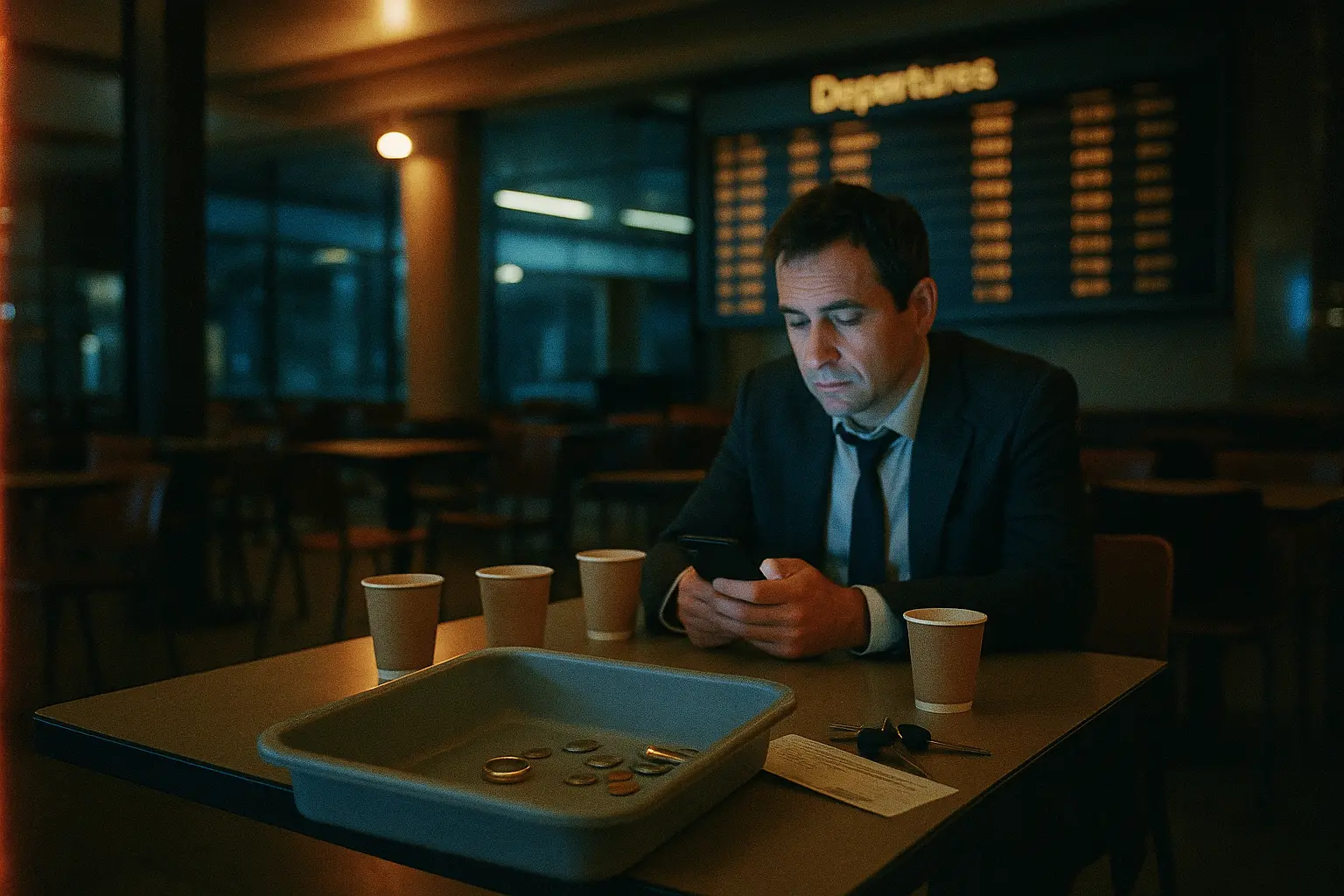
A founder at 3 a.m. in the transit terminal in Istanbul. The flight to Dubai is delayed by an hour and a half. He’s sitting in a Starbucks with his sixth coffee of the day, looking exactly like every successful 42-year-old in a transit zone: well-dressed, very tired, three tabs open in his head — investors, two deals, a possible acquisition of a small company in Helsinki.
Telegram is open on his phone. Third chat from the bottom — his wife. She wrote at 23:14: “when are you back?” He opened the message but didn’t reply. Not because he didn’t want to. Because the answer “not sure yet” feels rude, and the truth — “I might route through Dubai for another day” — would worry her too much. He’ll write later. Soonest, after landing. Best case, tomorrow.
Ten minutes later they announce the flight. He stands. The cup stays on the table. The wife gets no reply. In his head — three open possibilities, nine serious people, four time zones, two possible futures.
This is not a description of a bad husband. It’s a description of the average successful founder in 2026. He didn’t cheat. Didn’t forget. Isn’t angry. He’s just busy keeping options open — and one of those options happens to have a name, a joint mortgage, and thirteen years of seniority.
A financier would recognize the state instantly. The entire value of an option is in the right not to exercise it: under the Black-Scholes model (1973), the more uncertainty ahead, the more expensive the option. Keeping it open is profitable. There’s exactly one asset that works the other way: love is the only option that’s worth zero until you exercise it and hold it to maturity. Our hero keeps a dozen options open — and doesn’t notice that the only one capable of paying dividends is quietly losing value at 23:14, in an unread “when are you back?”
This article is about a specific disease that mostly strikes three categories of people: founders, HNWIs, digital nomads. They share one thing: they’re used to thinking of life as a portfolio of options. In business, that saves you. In the bedroom, it slowly kills. Let’s unpack why, how, and what to do about it.
What Optionality Promises
In business, optionality isn’t cheap philosophy but a technical concept. Nassim Taleb devoted a whole chapter to it in “Antifragile” (2012). Option pricing in finance has existed since 1973 (the Black-Scholes model), and the term “real options” was coined by Stewart Myers in 1977. Venture capital as an industry is built directly on the idea of keeping the maximum number of options open and betting incrementally.
Optionality gives you three things:
- Upside without commitment. You can try without closing the other doors. It worked — good. It didn’t — you haven’t invested everything.
- Cheap insurance. The more options, the less catastrophic when one doesn’t fire. Distributed risk.
- Fast learning. The more parallel experiments, the faster you see what works.
All of this is genuinely useful. In business. In a startup. In a portfolio. In a career.
In love, the math is structurally different. And this is exactly where most founders trip.
Why Love Works Differently
A deep relationship is a compound asset. Like stocks with reinvested dividends. A forty-year marriage, a complex long friendship, a long-running account — all these assets share one feature:
Your return depends not on how many options you keep open, but on how much time you spend inside one of them.
In 2004, Barry Schwartz described an adjacent mechanism in “The Paradox of Choice”: people who maximize (always searching for the better option), per his own research with colleagues (Schwartz et al., 2002), report lower life satisfaction and more depression than those who satisfice — find a good-enough option and stop.
Sheena Iyengar, in the famous “jam study” (Iyengar & Lepper, 2000), showed: when shoppers were offered 6 kinds of jam, ~30% bought; when offered 24, only ~3%. More options — less action. An honest footnote: a later meta-analysis of 50 experiments (Scheibehenne, Greifeneder & Todd, 2010) found that on average the “choice overload” effect is close to zero and works only under certain conditions. So it’s not an iron law — it’s a tendency of the brain that, in some people, switches on full.
And in founder mode, it’s always on. Love, for such a brain, is 24 jars of jam on the shelf. If you’re permanently in “maybe the next one will be better” mode — you don’t taste what’s already in your hands. Not because the jam is bad. Because you’ll never eat it whole.
When Investment Thinking Migrates into the Bedroom
This is where the quiet catastrophe begins. The engineering that makes you a successful founder transfers to human relationships automatically. Not out of malice. Out of an ingrained cognitive habit.
| In business (where it works) | In relationships (where it destroys) |
|---|---|
| Always hunt the better deal | Inability to root in one specific person |
| Keep optionality open | A chronic emotional tender: the partner constantly "proving their value" |
| A/B-test reality | Nothing matures past the testing horizon |
| Pivot fast | Fleeing repair: easier to "switch" than to work it out |
| Maximize upside | Underestimating the hidden cost of permanent openness |
| Decide by data | Trying to convert feeling into KPIs — and not getting why it fails |
| Diversification of bets | Spread thin across ten mediocre relationships instead of one deep one |
A founder in this mode rarely states it explicitly. He just notices that:
- three years after the wedding “something faded”;
- he catches himself thinking “what if I’d met someone else”;
- he compares his wife to other women — and the wife somehow loses;
- the wife says he’s “emotionally unavailable”;
- he doesn’t understand why — after all, he’s physically present and pays for everything.
This is not a sign of a bad husband. It’s a sign of a brain running in continuous-optimization mode that can’t switch to compound-investment mode. A wife isn’t a deal you optimize monthly. A wife is stock that grows only if you don’t sell it every six months.
Choice Overload in Dating

“Maybe I rushed it” isn’t temptation. It’s the background hum of optionality, whispering around the clock. The ring lies next to the phone, taken off.
The same effect exists in dating. Researchers D’Angelo and Toma (University of Wisconsin, published 2017) showed: a week after choosing, those who chose from 24 profiles were less satisfied with their choice and more likely to want to change it than those who chose from 6. And the ability to “reconsider” made everything worse.
Every founder with at least 1.5 million in the bank and decent English effectively lives in this mode always — even married. New interesting women keep appearing in his orbit: at conferences, at the gym, in business class, at investor dinners, in those same morning cafés in Lisbon or Dubai. Not as romantic candidates. As the background hum of optionality, whispering all the time: “maybe you rushed it.”
This isn’t “temptation.” It’s a cognitive background you have to consciously switch off. It doesn’t switch off — it stays for 20 years. And marital satisfaction creeps down the whole time — not because the marriage is bad, but because the brain keeps comparing.
Founder Loneliness — a Separate Class of Loneliness
Michael Freeman of UCSF (“Are Entrepreneurs Touched with Fire?”, 2015; peer-reviewed version — Small Business Economics, 2019) produced numbers that shocked the VC world: 49% of founders reported at least one mental-health condition, 30% depression, 29% ADHD, 11% bipolar disorder. Roughly 2-3 times more often than in the control group.
A more recent slice — Startup Snapshot, “The Untold Toll” (2024, over 400 founders): 72% reported stress affecting their mental health, 37% anxiety, 36% burnout.
A separate cut of this data shows: founder loneliness isn’t just “few friends.” It’s a specific isolation on two pillars:
- Your problems interest no one except you and other founders — whom you rarely see.
- Your partner physically cannot understand the specifics of your pressure — and you know it.
This is where the optionality disease compounds. A lonely founder starts looking for a mirror. It might be a businesswoman who “gets it.” A coach. A therapist. A young employee who looks at you the way your wife no longer does. Not out of betrayal. Out of a simple fact: there’s no one at home with whom you’re fighting for a Series C 14 hours a day. At home they no longer look at you as a startup — at home they look at you as the man who, again, didn’t take his sneakers off in the hallway.
And in this structural asymmetry an affair is born — not through sex, but through the mirror. Statistics give no honest number specifically for founder couples, so I won’t invent one. The mechanism matters more than the percentage: your wife loves you, but no longer admires you the way she did in 2018, when you were a startup, not a man who comes home at 23:30 and asks where her toothbrush is.
Nomadism and the Instability of Attachments
A separate subset of founders — digital nomads. Over the past decade the model has become culturally attractive: Lisbon for three months, Bali for four, Tbilisi for six. Instagram, cheap income, flexible visas, freedom from the office.
What the model doesn’t advertise: nomadism is structurally hostile to deep relationships. Qualitative research on mobile life (e.g., Müller et al., Information, Communication & Society, 2025) records that constant movement breeds conflicts over attitudes, place, and time, and the nomads themselves name “constant relocation” as the main blocker of lasting relationships. It’s not about a duration figure — it’s that depth requires time in one place, and the format itself doesn’t allow it.
The paradox is that many young nomads discover this after five to seven years. Before thirty, it’s drive and freedom. After thirty-five, it starts to look like a chronic inability to put down roots. By forty, it often turns into an anxious-depressive baseline that smoothies on the beach won’t cure.
Helen Fisher and the 4-Year Cycle
The anthropologist Helen Fisher, in “Anatomy of Love” (1992), laid out her thesis: in the human species there’s a natural four-year itch. Analyzing UN data across dozens of societies, she saw that divorces peak around the fourth year — just long enough to raise a child through infancy; after that, biology hints “you can look for the next partner for genetic diversity.”
The thesis is widely criticized. But the temporal shape of divorces is real even without evolutionary explanations. Per US Census Bureau and Pew data (2025): about 16% of divorces happen in the first 5 years of marriage and another ~24% in years 5-9; the average first marriage that ends in divorce lasts about 8 years. So the first big rupture is somewhere between year 4 and year 9. And this is exactly where a founder’s optionality disease activates hardest:
- First 18 months — limerence, passion, novelty. Everything works.
- 18-36 months — building infrastructure (housing, finances, in-laws).
- 36-48 months — a child, or a serious decision about one. A stress test.
- 4-8 years — the first big dip in satisfaction. The wife is tired. The founder looks for a mirror.
- 8-10 years — either a return to a deeper version, or quiet erosion.
A founder in optionality mode typically moves from point 4 to point 5 via the search for another woman. Not as conscious betrayal. As “freedom.” As “a new chapter.” As “I’m interesting to someone again.” And it almost always ends in a second marriage that, in five years, lands in the same cycle — only now with a bigger divorce, alimony, and a second run of the same mistakes.
”Up in the Air” as the Face of the Disease
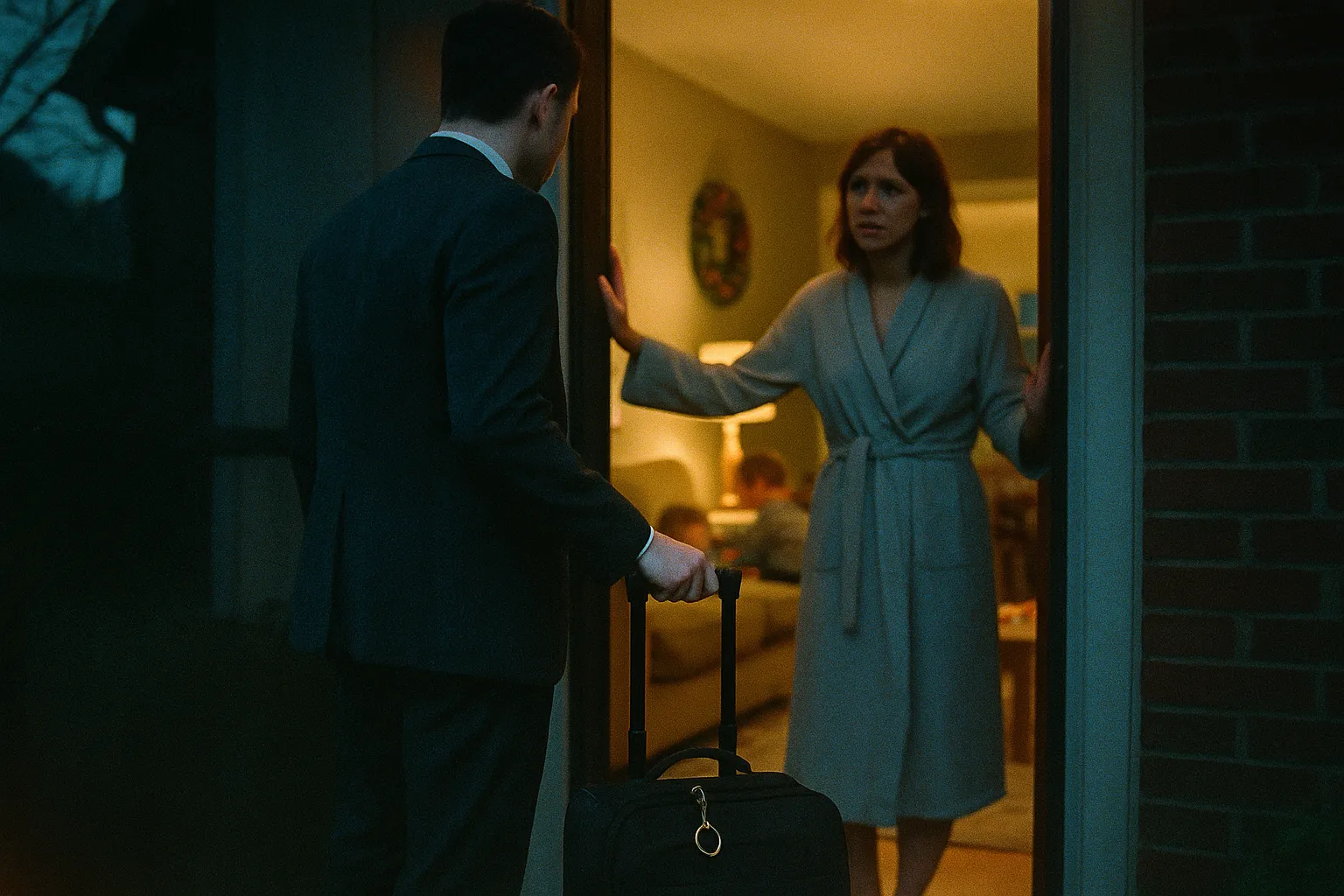
The ring is on the suitcase keyring, not the finger. Maximum freedom, every door open — and not a single home you want to come back to.
In 2009 Jason Reitman made “Up in the Air” with George Clooney. Ryan Bingham is a professional firer: companies hire him to fly in and tell people they’ve lost their jobs. He lives on planes; his sole ambition is to rack up ten million American Airlines bonus miles. On screen he says he spent “322 days on the road last year, which means 43 miserable days at home.”
Ryan tours a motivational speech, “What’s in your backpack?”: people carry too many things, too many people, too many obligations; free them of all that — and you free them for life.
The film silently dismantles this philosophy over two hours. Clooney meets Alex (Vera Farmiga) — a transit businesswoman just like him. A relationship on the fly. In the finale he suddenly shows up at her home unannounced, ready for a serious step. She opens the door — in a robe, and behind her you see a happy domestic scene: kids, a husband, a normal home, from which she’d been flying for a week into the transit zone where he met her. She quietly asks him to leave.
Ryan goes back to the plane. In the final shot — the display: ten million miles, the coveted card. He got it. And he doesn’t care.
”Lost in Translation”: Transit Loneliness
The second necessary parallel is Sofia Coppola’s “Lost in Translation” (2003). Bob Harris (Bill Murray) is a successful actor in Tokyo for a week shooting a whisky commercial. Charlotte (Scarlett Johansson) is a photographer’s young wife, left alone in a hotel room. The two find each other in a night bar. Between them — not an affair, but a quiet complicity in one shared transit loneliness.
The most precise scene — when Bob phones his wife in Los Angeles. She’s checking carpet colors with him for a new room. He nods into the receiver. She talks about their son. He nods. He looks out the window at nighttime Tokyo. Between them, twenty years of domestic life and zero contact. He isn’t cheating. Isn’t angry. He’s simply in the transit zone of his own marriage, which he left long ago and never noticed.
This is a scene for everyone who lives on planes 80 nights a year. You can be perfectly faithful. You can never once touch another woman. And still be in the transit zone of your own marriage, where your partner discusses a carpet with you and you nod from another continent.
The optionality disease isn’t about affairs. It’s about the chronic transit position of a person always ready to fly off somewhere and never letting any home hold for good.
Closing the Right Doors
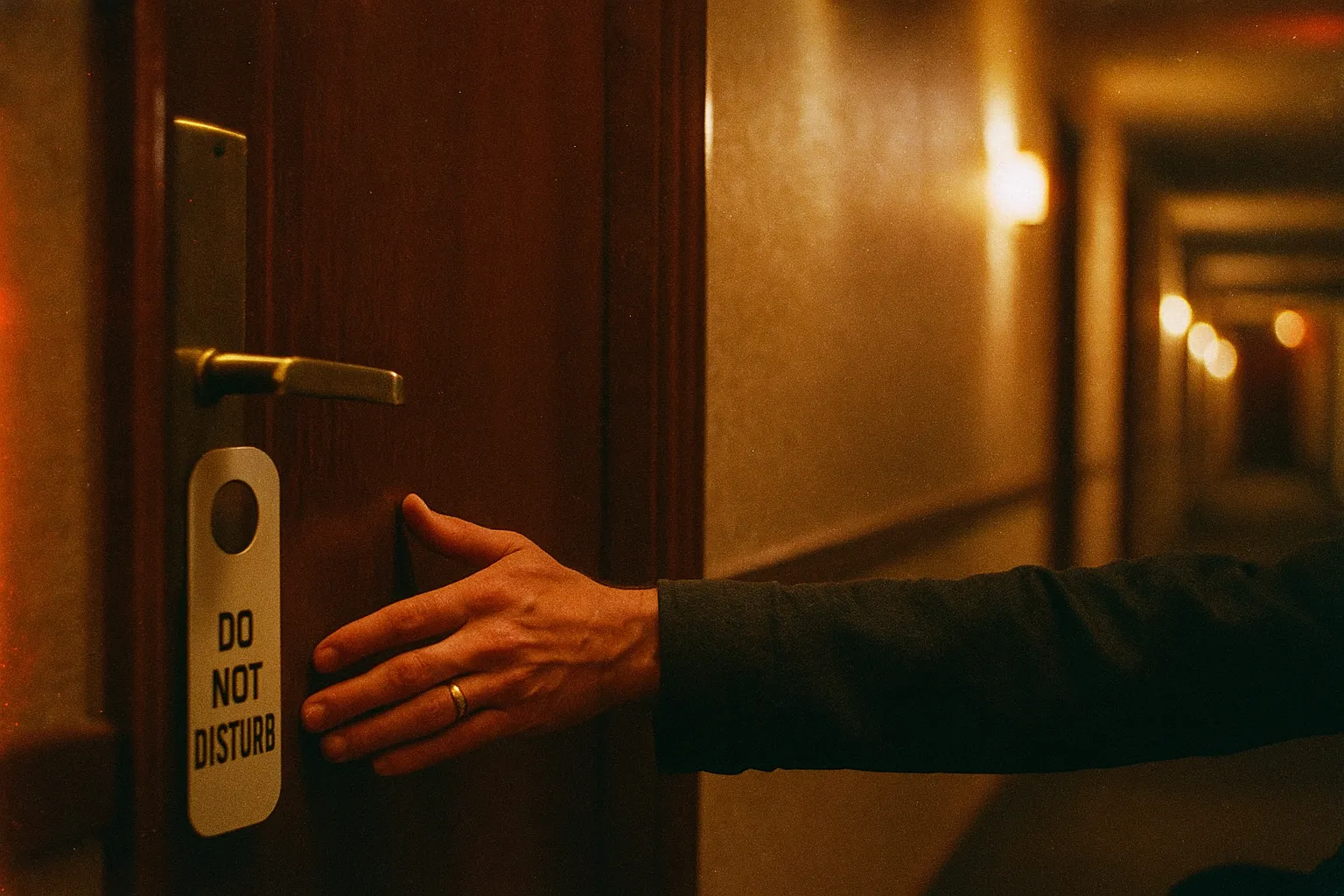
The coolest freedom isn’t “I have many options,” but “I shut the right doors and now I don’t have to think about them.” The ring is finally on the finger.
The harshest thesis of this text: some forms of freedom arise not from open options but from closing the right doors.
In finance this is called a commitment device — a structure that deliberately limits your future choice so today’s “you” can build what tomorrow’s “you” will want to tear down.
The classic example is Odysseus, who ordered himself tied to the mast so he wouldn’t yield to the sirens’ song. He knew his future self. He didn’t trust him. So he constrained his freedom of choice in the crucial moment in advance. Not out of cowardice. Out of wisdom.
Marriage 2.0 for a founder is a commitment device. The deliberate closing of doors in situations where the transit brain will want to open them. It’s the proactive:
- not staying alone with a specific assistant in a hotel room at 23:00;
- not running the “what if” game in your head;
- not comparing your wife to other women — at all. This isn’t “cheating in your head,” it’s rehearsing the cheating;
- not keeping chats on your phone with people toward whom there’s even 1% of sexual interest;
- not “running into” exes “by accident”;
- not flying to Lisbon for a week without inviting your wife;
- not scheduling one-on-one business dinners with a young partner if you’re already in transit-loneliness mode.
It sounds like conservative rhetoric. It isn’t. It’s engineering. A venture capitalist has fund discipline: you don’t invest in the next deal, even when you itch to, because you already allocated 20% of the portfolio to the previous one. A family should have relationship discipline: you don’t keep the “what if” option, because it structurally destroys what you’re building.
Instead of a Conclusion
This text isn’t a moral condemnation of optionality. In business it saves you. In a startup it’s cheaper than commitment. In a venture portfolio it’s the foundation.
This text is about correct switching between modes. In the work loop, keep options open. In relationships, consciously close them. This isn’t a contradiction — it’s a dual-functionality a founder develops the same way he develops different registers of language for investors and for the team.
If the optionality disease is left untreated, it leads to three points you can see for yourself among the successful people around you:
- A first marriage of 4-8 years. Ends either through children or through erosion. A quiet catastrophe.
- A second marriage at 35-45. Often with someone younger. The first three years — passion. After that, the same thing, because the brain hasn’t changed.
- A third installment at 50+. Either a long cycle of lonely affairs. Or a declared “open relationship” that’s actually a quiet series of betrayals. Or final loneliness, in which there’s a house in Tuscany but no one to ask how you slept.
This isn’t a doom sentence. It’s the typical trajectory if nothing changes. The same brain that found a $50M Series C is perfectly capable of closing the right doors in its own marriage. It’s no harder than venture math. Just a less familiar instrument.
In business, optimize. In love, choose. In business, keep your options. In love, close them. In business, a fast pivot is the norm. In love, a fast pivot is a slow form of self-catastrophe. You just won't notice it on a Tuesday. You'll notice it on a Monday, sixteen years later, when you're 58 and suddenly realize you never had a home you actually live in.
It’s not too late. The doors can be shut today. Not out of repentance. Out of math. Because in love, compound interest only starts to grow once you stop rolling the capital into the next option.
Frequently asked
What is the optionality disease and where does the term come from?
Optionality disease is the author's term for a cognitive pattern where venture-capital thinking -- keep the maximum number of options open -- automatically migrates from business into personal relationships. In finance, an unexercised option holds value. In love, the math reverses: relationships only compound when you deliberately close the alternatives and stay inside one of them.
If a founder recognizes this pattern in himself, what does he actually do next?
The article proposes an engineering solution, not therapy: a commitment device -- a structure that pre-limits future choice. Concretely: stop running the what-if game internally, stop comparing your partner to other women entirely, avoid being alone with anyone toward whom there is even 1 percent of sexual interest. This is fund discipline applied to a marriage, not moral prescription.
What if the relationship is genuinely bad, not just starved of attention by optionality?
The article does not claim every marriage is worth saving. It claims something narrower: a founder running in continuous-optimization mode is structurally unable to distinguish a bad marriage from a marriage he never gave a real chance. If you are benchmarking your wife against imaginary alternatives instead of repairing actual problems, you do not yet have honest data for a verdict.
Is the stat that 49% of founders have a psychiatric diagnosis not inflated?
The figure comes from Michael Freeman at UCSF, published in the peer-reviewed journal Small Business Economics in 2019, with rates 2 to 3 times higher than the control population. The point is not that founders are mentally ill -- it is that the operational reality of founding systematically generates the conditions for isolation and depression, and the loneliness that results then feeds the optionality pattern in relationships.
Does closing the right doors just mean restricting your own freedom?
The opposite. Odysseus tied himself to the mast not out of cowardice but to free the rest of the voyage from having to fight the sirens every second. Pre-closing specific doors -- not being alone with certain people, not entertaining certain thoughts, not traveling to certain places without your partner -- liberates cognitive bandwidth from a permanent background tender and finally lets compound interest in the relationship grow.
Comments
Signed-in readers only — to keep it human, not a bot swamp.