Burnout of the Group's Central Person: What Happens When Every Relationship Rests on One Node — and How to Return Agency to Others
Burnout doesn't come from the number of friends, but from the absence of subjecthood in them: when everyone orbits you because they don't shine on their own. You're the gravity of your group, round-the-clock tech support with no salary and no days off. Why friendship without the other's autonomy isn't friendship but caretaking — and why the stars that hold other people's orbits burn out first.

The Price of Being the Center
To hold its planets in orbit, the Sun converts about four million tons of itself into energy every second. It doesn’t just “shine.” It spends mass — constantly, irreversibly. Gravity isn’t the status of being the center. It’s work the center pays for with its own substance. The second law of thermodynamics is merciless: heat always flows from hot to cold, never the reverse. That’s why you’re always the one giving.
Picture an ordinary dinner with friends. Who chose the place? You. Who texted everyone? You. Who’ll make peace if two of them quarrel, remember that one is depressed and another is mid-renovation, and rescue the conversation when it sags? You. You’re the Sun of this group. And, like every star, you don’t notice you shine at the expense of your own mass — until one day you find there’s less of you left than there was.
This isn’t the complaint “I’m underappreciated.” It’s a structural diagnosis. There’s the friendship of two subjects — and there’s a gravitational system where one is the mass and the rest are satellites. The second looks no different from the first — until you stop being the center for a week and see that the system simply grinds to a halt.
A Friend, or an Unlimited-Plan Subscriber
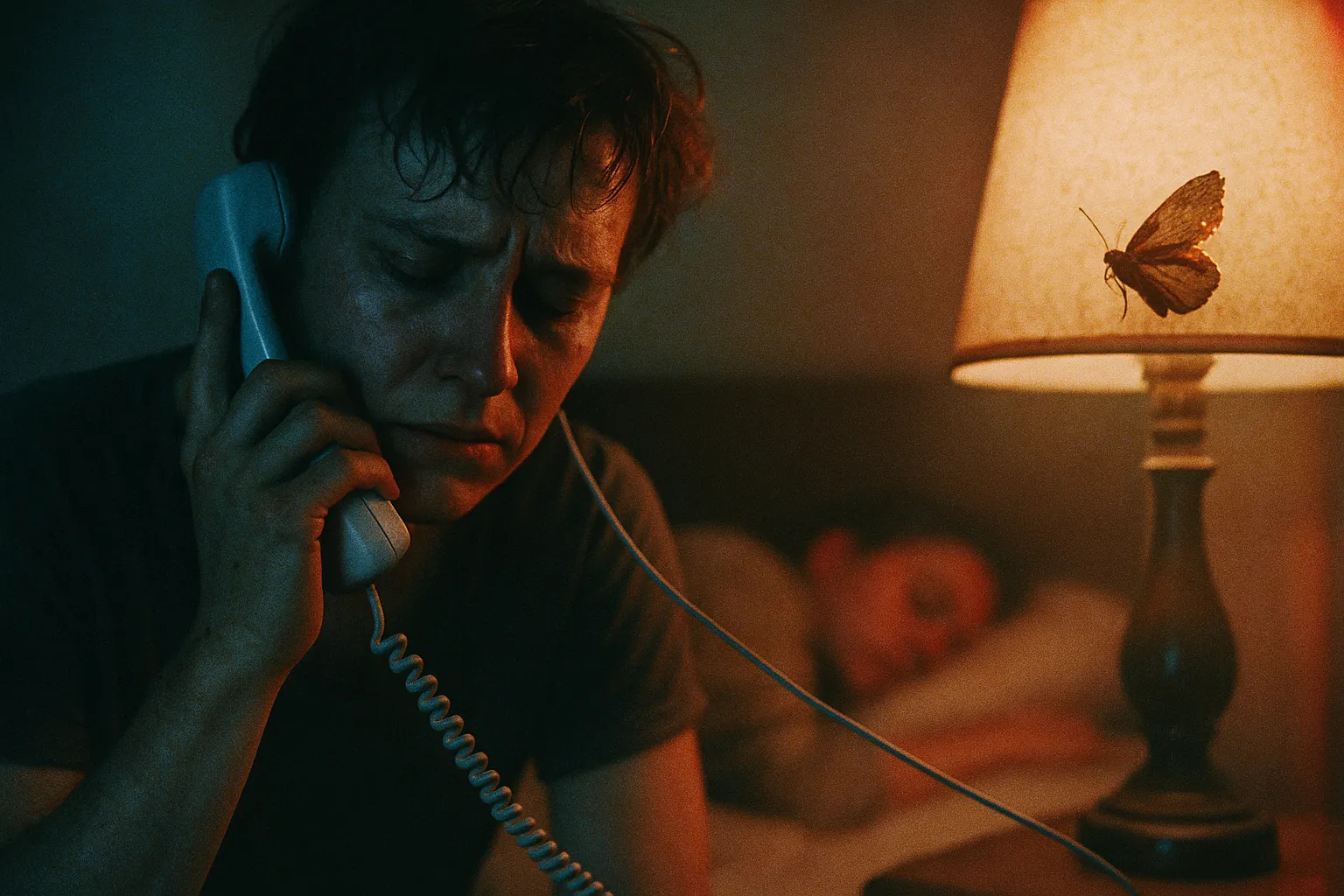
The 23:40 call isn’t “how are you?” but “let me discharge my whole day into you.” The blood flows from the center. Friendship without the other’s subjecthood is unlimited-plan tech support.
There are friends, and there are subscribers. A subscriber calls when they need to discharge their day into you, to have you make their decision (“just tell me what to do”), to be their external spine for an hour. They don’t ask how you are, and don’t even notice they didn’t. There’s a name for this, and it’s a boring one. Put simply: one of you is forever adjusting someone else’s mood, and no one adjusts his.
The marker is simple and merciless: recall your last ten contacts. How many did you initiate? In a healthy friendship of two subjects, it hovers around 50/50. In a gravitational system — 90/10, and those 10% arrive precisely when the satellite needs something from you. You’re not loved — you’re used, warmly. And these are different things that feel identical to the touch right up until your light starts to fade. The subscriber isn’t evil. He just assumes you’re a function that’s always online.
How You Grew Your Own Satellites (and Called It Friendship)
Let’s start with a scene you know. A group chat of eight. Someone drops a question — and it hangs for three days. Everyone thinks: “someone else will answer.” This is the diffusion of responsibility (Darley and Latané): the more people, the less each one acts. In any group there’s one for whom “someone else” = him. That’s you. And you answer — every time.
The most unpleasant part: you didn’t find the satellites — you grew them. Family psychologists noticed something banal: exactly as much as one person over-functions, the other unlearns. You always pick the restaurant (because “you lot are bad at it”). You always make peace (because “without me you’d fall apart”). You always remember birthdays — and see your own mentioned at lunch the next day, and then get shamed for being hurt about it.
And here’s the trap: this isn’t friendship, it’s caretaking. Friendship needs two people who each have their own “I.” Take one “I” away (because you took it, or it was handed to you) — and what’s left is care. You’re lending a shoulder to a person who didn’t break their leg — they just got used to you being there.
Dunbar: You Can’t Be the Sun for Fifty

You’re the gravitational center, and leaving the room means the orbits scatter. So you stay. And shine. And tire.
Robin Dunbar showed that the inner circle of the truly close is about five (then layers of 15, 50, 150). This isn’t a character weakness — it’s the bandwidth of the nervous system. Count how many people you try to be the emotional center for. If it’s more than five, you’re not generous, you’re spread thin. Being the Sun for fifty isn’t magnanimity. It’s physically the same plan as “I’ll cold-call every client myself” — followed by genuine surprise at the heart attack.
In stars it ends precisely. A star above a certain mass doesn’t shine brighter — it collapses into a black hole that releases nothing anymore, only swallows. An overloaded center becomes the same: it takes, and takes — and around it, darkness.
Cinema Already Filmed This About You
“Magnolia” (1999) has a shot more precise than any theory: the caretaker Phil Parma (Hoffman) spends hours on the phone, begging strangers to connect a dying man with his son. A person whose only role is to hold someone else’s world together while having none of his own. And “The Big Chill” (1983) is a supernova in reverse: the star has gone out (a friend has taken his own life), and the light of its orbits holds the group together for a few more days — until they all realize the center is gone, and on their own they’re just a set of satellites.
This is the hidden fear of every “Sun”: that your value to people isn’t you, but the function of gravity. That when you stop shining, they won’t stay beside you in the dark — they’ll scatter to find the next star. There’s only one way to find out: switch off your light for a week and watch who brings a candle, who writes “you’ve been kind of strange lately,” and who simply vanishes and resurfaces a month later with “hey, so, there’s this thing, I need your advice.”
Many Lamps Instead of One Sun

The goal isn’t to stop shining, but to stop being the only source of light. Many lamps, not one exhausted Sun. (The moth is finally on its own flame.)
The cure is the same as for an overloaded commander: give the subjecthood back. Not “become colder” and not “cut your friends off” — but stop doing for them what they’re capable of themselves:
- Don’t initiate the next three meet-ups. See who writes. Half your calendar will suddenly turn honest.
- To “just tell me what to do,” answer “what do you think?” A spine carried for someone atrophies.
- Let the pause hang. Don’t rescue every silence at the table — in it, someone else finally lights up.
- Keep the circle honest, capped at five. Better a living Sun for five than a burned-out one for fifty.
The paradox is the same as everywhere in this theme: by giving away the center, you save both yourself and the friendship. Because a friendship of two stars who light each other in turns outlives any in which one burns and the rest warm themselves. Shining in turns isn’t weakness. Weakness is being afraid you’ll be abandoned in the dark.
Instead of a Conclusion
The Sun didn't choose to be the center — it was simply the most massive, and everything rolled toward it on its own. But there's a difference between a star and a person: a star must burn until it goes out. A person can one day say: "I'm no longer burning myself so your orbits don't fall apart — learn to shine on your own." Half the satellites will take offense and fly off to find a new Sun — and write in the group chat "where did everyone go?", not understanding the silence. The other half will pull their own little flashlight from a pocket — and it'll turn out these were your real friends all along. You just never gave them the chance to switch it on.
Frequently asked
What is subjecthood in friendship — and why does its absence turn friendship into caretaking?
Subjecthood means having your own self: a person makes their own decisions, initiates contact, takes responsibility for their own state. When one person constantly handles the choices, the peacemaking, and the remembering, the other unlearns how to do it. What remains is not a friendship of equals but a relationship where one functions for two.
If I recognize myself as the Sun in my group — what does that mean for my current relationships?
It means roughly half of them probably would not survive a week without your initiative, and that is already an answer about who is actually there. Not all these people are bad: some simply adapted to your pattern and are capable of shifting if the space for it opens up.
But some people are genuinely weaker and need more support — is that not okay?
The difference between support and chronic over-functioning is whether the need shrinks over time. If someone has not learned to hold their own orbit after years, you are not helping them, you are keeping them helpless. Real support has an endpoint; caretaking does not.
Dunbar says the true inner circle is about five people. Is it really impossible to maintain more?
This is not a moral rule but a neurobiological limit: that is how many deep relationships the human nervous system can sustain without quality degradation. Trying to be the emotional center for twenty is not generosity, it is scheduled exhaustion — the resource divides but does not multiply.
What can I do this week, concretely, to break this pattern?
Stop initiating the next three meetups and watch who writes first. When asked to make a decision for someone, answer with a question back. Let a silence at the table hang without rescuing it. Three actions, no explanations required, no relationships destroyed — but each one immediately reveals the real structure of what you have.
Comments
Signed-in readers only — to keep it human, not a bot swamp.